The Reality Check: Understanding What Makes BBL Uniquely Risky
Let's address the elephant in the room. The Brazilian Butt Lift isn't dangerous because surgeons are incompetent or the procedure is fundamentally flawed. It's dangerous when corners are cut.
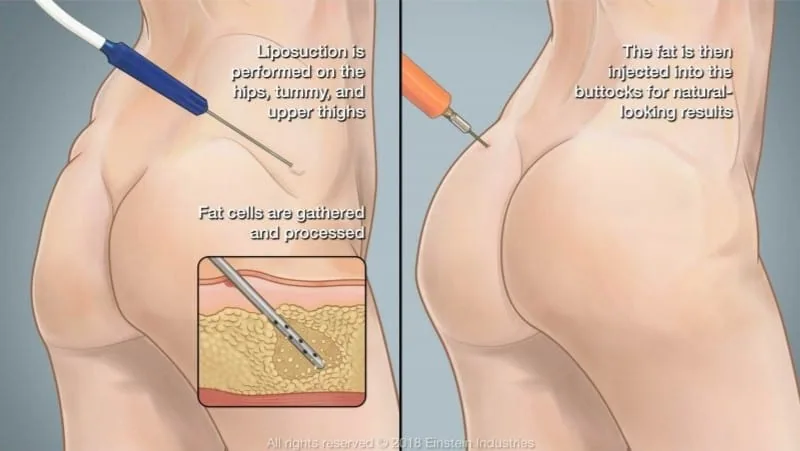
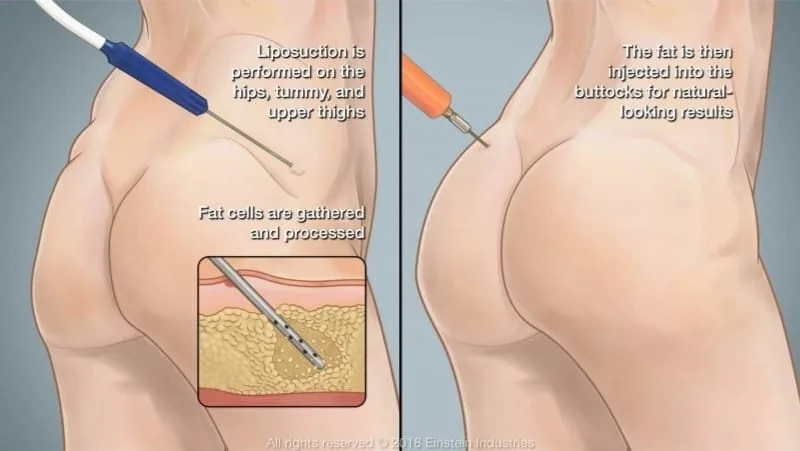
The primary culprit behind BBL fatalities is something called fat embolism a potentially fatal complication that occurs when fat enters the bloodstream. During a BBL, fat harvested from areas like your abdomen or thighs gets transferred to your buttocks through injection. If that fat is injected too deeply into or beneath the gluteal muscle rather than into the subcutaneous fat layer just beneath the skin, it can enter large blood vessels. Once in the bloodstream, that fat can travel to your lungs, brain, or heart, causing catastrophic blockages Centre for Surgery.
This is why technique matters so profoundly. According to research published in the Aesthetic Surgery Journal, when surgeons inject fat superficially above the muscle and use real-time ultrasound guidance to visualize exactly where they're placing that fat, the risk of fat embolism essentially disappears. In fact, ultrasound-guided BBL procedures have reported zero fatalities to date Centre for Surgery.
But here's the catch: not all surgeons use these advanced safety protocols. And that's where your due diligence becomes absolutely critical.
Your Candidacy: Are You Actually a Good Fit for This Procedure?
Before you fall in love with the idea of a curvier silhouette, let's talk about whether you're genuinely a suitable candidate. This isn't one-size-fits-all surgery!
Body Composition and BMI Requirements
Most surgeons prefer candidates with a BMI between 18.5 and 30, though some may work with patients up to 35 depending on individual health factors Get Snatched. You need sufficient fat stores in donor areas typically the abdomen, flanks, thighs, or back to harvest and transfer. Patients with a BMI between 23-28 generally have optimal fat availability for maximum enhancement CREO Clinic.
If you're very lean, you might still be a candidate for what's called a "skinny BBL," but understand that the results will be more modest. You simply can't create volume that doesn't exist in your body somewhere.
Medical Clearance and Health Status
Your surgeon should require comprehensive medical evaluation 3-4 weeks before surgery, including laboratory testing and potentially specialist consultations Virginia Facial Plastic Surgery. You're not a good candidate if you
Smoke (it compromises healing and increases complications)
Have certain medical conditions that increase surgical risk
Take medications that interfere with blood clotting
Have unrealistic expectations about outcomes
Good skin tone and elasticity in your hips and buttocks also matter tremendously. Saggy, inelastic skin won't mold around your new contours as beautifully as firm, youthful skin.
The Surgeon Selection Process: Your Life Depends on Getting This Right
This is where I need you to channel your inner detective. Finding the right surgeon isn't about who has the flashiest Instagram or the cheapest price. It's about credentials, experience, and safety protocols.
Non-Negotiable Qualifications
Your surgeon must be board-certified in plastic surgery specifically by the American Board of Plastic Surgery (ABPS) if you're in the United States. This certification means they've completed at least six years of surgical training with a minimum of three years in plastic surgery residency, and they've passed rigorous written and oral examinations American Society of Plastic Surgeons.
But board certification is just the starting point. You need a surgeon who specifically specializes in BBL procedures and performs them regularly. Don't be shy about asking:
-
How many BBL procedures do you perform monthly or annually?
-
What specific techniques do you use to prevent fat embolism?
-
Do you use ultrasound guidance during fat injection?
-
Where will my surgery be performed, and is the facility accredited?
-
What is your complication rate?
An experienced, confident surgeon won't be offended by these questions. In fact, they'll appreciate your thoroughness. If someone gets defensive or dismissive when you ask about safety protocols, walk away Dr. Schulman Plastic Surgery.
The Red Flag Checklist
Run don't walk away if:
The surgeon isn't board-certified in plastic surgery
The procedure will be performed in an unaccredited facility
-
General anesthesia won't be used (local anesthesia is riskier for BBL)
-
The price seems too good to be true (bargain BBLs are deadly BBLs)
-
You can't find substantial before-and-after photos of the surgeon's actual work
The surgeon promises results that sound unrealistic
Yes, you might find BBL procedures for $2,500 in Turkey or the Dominican Republic compared to $7,500 in the UK or US. But those savings could cost you your life. The overwhelming majority of BBL fatalities occur in unregulated settings with unlicensed practitioners Dr. Schulman Plastic Surgery.
Recovery Reality: What the Next Six Months Actually Look Like
Let's talk about what happens after you wake up from surgery, because this is where many patients' expectations collide with reality.
The First Three Weeks: The No-Sitting Zone
You absolutely cannot sit directly on your buttocks for three full weeks post-surgery. Period. This isn't a suggestion it's mandatory for fat graft survival. You'll need to sleep on your stomach or side, stand for most activities, and use a special BBL pillow when absolutely necessary. After week three, you can sit with a cushion under your thighs to distribute weight away from your buttocks for an additional two weeks Centre for Surgery.
Think about your lifestyle. If you have a desk job, you'll need to arrange for standing desk options or significant time off work. If you have young children who need lifting, you'll need help. This isn't a "get it done Friday, back to normal Monday" situation.
The Six-Month Journey
Full recovery takes approximately six months, though you'll return to most normal activities much sooner. You can typically resume light work and daily activities within 2-3 weeks, and more strenuous exercise after four weeks. But here's what most patients don't realize: only about 60-70% of the transferred fat will survive permanently Centre for Surgery.
Read more: Why BBL Surgery Has Become the Most Talked About Body Procedure Today
Your body will absorb and eliminate 30-40% of the injected fat during those first 3-6 months as the surviving fat cells establish blood supply and integrate into the tissue. This is why surgeons intentionally inject more fat than the final desired amount they're accounting for this natural absorption. Your buttocks will look larger immediately after surgery, then deflate somewhat, and finally "fluff" back up as swelling resolves and the surviving fat settles.
Setting Realistic Expectations: The Truth About Long-Term Results
Once those surviving fat cells establish themselves after six months, they're essentially permanent as long as you maintain stable body weight. This is critical! Those transferred fat cells behave like all your other fat cells. If you gain 20 pounds, they'll expand. If you lose 20 pounds, they'll shrink.
The BBL doesn't stop the aging process either. Over time, your skin will naturally lose elasticity, which can affect the shape and projection of your buttocks even though the volume remains. Gravity is undefeated, friends!
Expect to see final results stabilize around 6-8 months post-surgery. That's when you'll truly understand what you're working with long-term. Patience during this process is absolutely essential and that's something you need to make peace with before committing to surgery.
The Bottom Line: Knowledge Is Your Best Protection
Look, I'm not here to talk you out of getting a BBL if it's genuinely what you want and you're a good candidate. This procedure can deliver truly transformative results when done right. But "when done right" is doing an enormous amount of heavy lifting in that sentence.
Your safety depends on choosing a qualified, experienced, board-certified plastic surgeon who uses modern safety techniques like ultrasound guidance and subcutaneous fat injection. It depends on having realistic expectations about recovery, candidacy, and long-term results. And it depends on being willing to invest properly in the procedure rather than bargain hunting with your life.
The difference between a BBL horror story and a BBL success story isn't luck it's preparation, education, and making informed decisions. Now you have the information. What you do with it is up to you.