The Foundation of Success: Understanding What Makes Arteries Work
Before diving into replacement techniques, we must understand what makes an artery successful in the first place. Your arteries are far more than simple tubes carrying blood they're dynamic, living structures that must withstand approximately 2.5 billion heartbeats over an average lifetime while maintaining flexibility, strength, and the ability to self-repair.
This biological complexity explains why arterial replacement isn't simply about finding the right-sized tube. The most successful procedures work because they respect three fundamental principles: biomechanical compatibility, biological integration, and long-term durability. When any of these elements fails, the replacement inevitably follows.
EVAR vs. Open Surgery: The Great Debate Settled by Data
The endovascular revolution has fundamentally changed how we approach arterial replacement, particularly for abdominal aortic aneurysms. Recent comprehensive analysis of over 32,000 patients in the Medicare-matched database has provided definitive answers to the long-standing question of which approach delivers superior outcomes JAMA Network Open.
The short-term winner is clear: Endovascular aneurysm repair (EVAR) demonstrates dramatically lower perioperative mortality just 1.2% compared to 4.0% for open surgery. Patients undergoing EVAR also experience significantly fewer complications: lower rates of leg ischemia, intestinal complications, and respiratory issues. The numbers are compelling enough that EVAR now accounts for 74-76% of intact aneurysm repairs.
But here's where the science gets fascinating and controversial. Long-term data reveals a surprising reversal. After six years, patients who underwent open surgery showed significantly lower mortality rates (35.6% vs 41.2%), fewer ruptures (5.8% vs 8.3%), and reduced need for reintervention (11.6% vs 16.0%).
The explanation lies in the fundamental differences between the procedures. EVAR works by inserting a synthetic graft through small incisions, essentially creating a new pathway within the existing artery. Open surgery physically removes the diseased segment and replaces it with either synthetic material or the patient's own vessel. While EVAR offers immediate benefits, the long-term surveillance burden and potential for graft-related complications create ongoing risks that accumulate over time.
The Materials Science Revolution: Synthetic vs. Biological Grafts
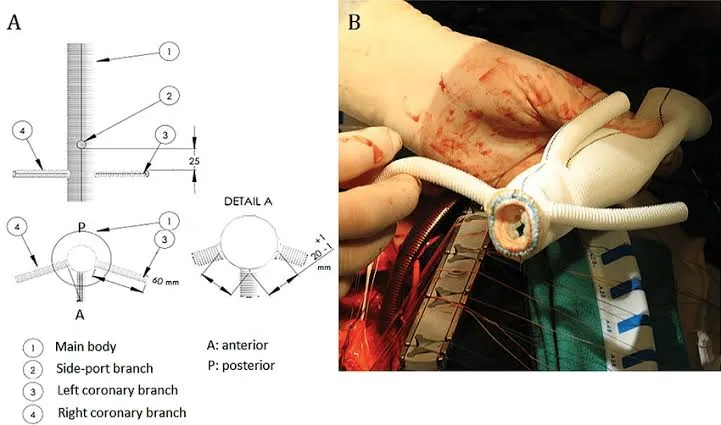
The choice of graft material represents one of the most critical decisions in arterial replacement surgery. The data reveals striking differences in performance that directly impact patient outcomes.
Synthetic grafts, primarily made from Dacron (polyethylene terephthalate) or expanded polytetrafluoroethylene (ePTFE), excel in large-diameter applications. These materials demonstrate 85% patency rates at five years for grafts larger than 8mm diameter. Their advantages include consistent manufacturing quality, unlimited availability, and resistance to infection. However, synthetic materials face significant challenges in smaller vessels due to their inability to integrate biologically with surrounding tissue.
Biological grafts whether autologous (from the patient's own body) or tissue-engineered tell a different story. Autologous saphenous vein grafts show superior biocompatibility and demonstrate 92% patency at one year and 80% at five years for radial artery applications PMC. The biological advantage is clear: these grafts can adapt, remodel, and integrate with the patient's cardiovascular system.
Recent breakthrough research in tissue-engineered vascular grafts has shown superior durability and reduced late-term calcification compared to conventional options Nature. These grafts, grown from the patient's own cells, represent the holy grail of arterial replacement a living vessel that grows and adapts with the patient.
Robotic Precision: The Technology Transforming Outcomes
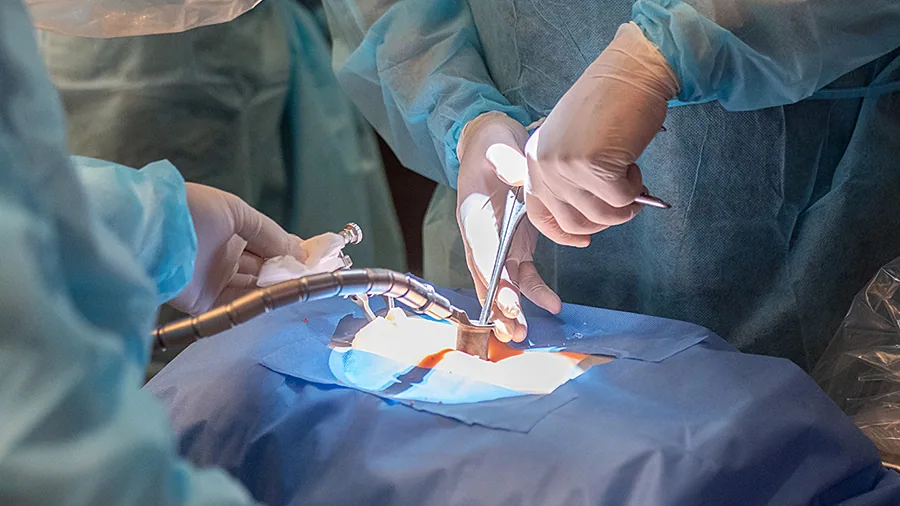
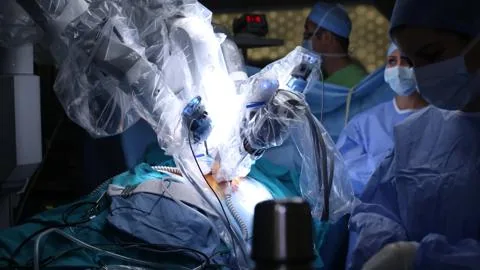
The integration of robotic assistance has revolutionized surgical precision in arterial procedures. Current data from high-volume centers shows that robotic-assisted multivessel procedures achieve 98.5% 12-month survival with 97.1% major adverse cardiac event-free survival Journal of Thoracic and Cardiovascular Surgery.
What makes robotic surgery so successful isn't just precision it's the ability to perform complex procedures through minimal incisions while maintaining optimal graft positioning. 96% of robotic vascular cases are completed successfully, with only 0.45% requiring conversion to open surgery due to technical complications Journal of Vascular Surgery.
The robotic advantage becomes particularly evident in challenging cases where traditional approaches would be extremely difficult. The three-dimensional visualization and tremor-free manipulation allow surgeons to create precise anastomoses (connections) between grafts and native vessels, reducing the risk of technical failures that can compromise long-term patency.
Perhaps the most critical factor determining procedural success isn't the technique or materials
it's choosing the right patient for the right procedure. Advanced centers now use sophisticated algorithms that consider multiple variables to predict outcomes with remarkable accuracy.
The key predictive factors include:
Anatomical considerations: Vessel size, calcification patterns, and the presence of suitable landing zones for endovascular procedures. Research shows that procedural success rates reach 87.4% for above-knee interventions and 98.3% for below-knee procedures when anatomical criteria are properly assessed ScienceDirect.
1. Physiological status: Cardiac function, pulmonary capacity, and overall frailty scores. Patients with optimized medical management show significantly better outcomes across all procedure types
2. Technical factors: The complexity of required reconstruction and surgeon experience. High-volume centers consistently demonstrate superior outcomes, with some reporting 30-day mortality as low as 2.9% for EVAR procedures European Journal of Vascular and Endovascular Surgery.
The Future: Personalized Medicine Meets Arterial Surgery
The next frontier in arterial replacement combines artificial intelligence with personalized medicine. Emerging technologies are developing patient-specific grafts using 3D bioprinting and the patient's own stem cells. Early clinical trials show these bioengineered vessels demonstrate superior infection resistance and better limb preservation compared to conventional synthetic grafts Rutgers Health.
Read also: Discover the Warning Signs That May Lead to an Urgent Artery Replacement
Machine learning algorithms now analyze thousands of variables to predict individual patient outcomes with unprecedented accuracy. These systems consider everything from genetic markers to vessel architecture, creating personalized treatment plans that optimize both short-term safety and long-term durability.
The Bottom Line: Success is Multifactorial
The science behind successful arterial replacement procedures reveals that excellence requires the intersection of multiple factors: appropriate patient selection, optimal technique selection, superior materials, and meticulous execution. The data clearly shows that no single approach works for every patient.
For younger, healthier patients with complex anatomy, open surgery often provides superior long-term outcomes despite higher initial risk. For older patients with significant comorbidities, endovascular approaches offer the best chance of surviving the immediate procedure. The key is matching the right technique to the right patient at the right time.
What excites me most about current research is how rapidly the field continues to evolve. Success rates that seemed impossible just a decade ago are now routine. As we better understand the biological principles governing arterial healing and develop more sophisticated materials and techniques, we're approaching the goal of truly durable, lifelong arterial replacements.
The future belongs to procedures that combine the immediate safety of minimally invasive techniques with the long-term durability of biological solutions. We're not there yet, but the science is pointing us in exactly the right direction.