Understanding the Core Difference
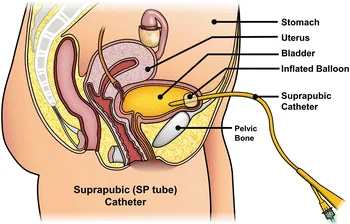
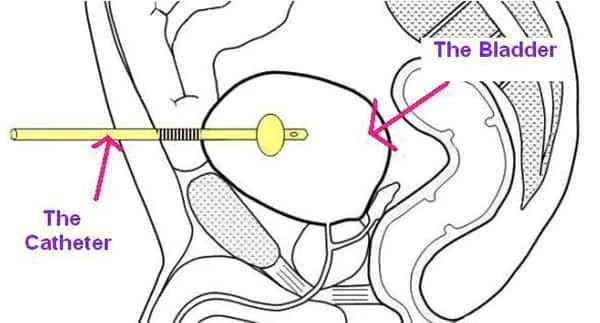
First, let's clarify what we're talking about. An indwelling urethral catheter (often called a Foley catheter) threads through your urethra into the bladder. Simple enough. A suprapubic catheter, however, enters through a small surgical opening in your lower abdomen, just above the pubic bone. It bypasses the urethra entirely.
That seemingly small difference? It matters tremendously.
The Infection Question: What the Data Actually Shows
Catheter-associated urinary tract infections (CAUTIs) are the most common hospital-acquired infection globally, accounting for roughly 20% of all nosocomial infections. These aren't trivial annoyances they prolong hospital stays, require additional antibiotic treatment, and in severe cases, lead to life-threatening sepsis.
Here's where the research gets interesting. A comprehensive study published in the Journal of Hospital Infection followed 208 nursing home residents with indwelling catheters over 21,700 device-days. The results revealed that residents with suprapubic catheters experienced 6.6 infections per 1,000 device-days compared to 8.8 infections per 1,000 device-days for those with urethral catheters, a 25% reduction in infection rates after adjusting for other factors.
Even more striking? Patients with suprapubic catheters were half as likely to be hospitalized and 23% less likely to need antibiotics within any given 30-day period. Those aren't marginal improvements they're clinically significant differences that translate to better patient outcomes and lower healthcare costs.
Why does this happen? The answer lies in basic microbiology. Your perineal area (where urethral catheters enter) naturally harbors high concentrations of gram-negative bacteria exactly the organisms that cause most urinary tract infections. The abdominal wall, by contrast, has far fewer of these troublemakers. Additionally, suprapubic catheters are typically handled with sterile technique by trained nurses, while urethral catheters may be managed by various staff members using standard hygiene rather than surgical sterility.
The Pain Factor: An Often-Overlooked Reality
I've spoken with numerous patients who've experienced both types of catheterization. Their descriptions of urethral catheter discomfort range from "constantly aware of it" to "genuinely painful." The statistics back up these testimonials.
A Cochrane systematic review analyzing data from 535 participants across four trials found something remarkable: patients with indwelling urethral catheters were more than five times as likely to report pain compared to those with suprapubic catheters (risk ratio 5.62). Think about that. More than five times.
The explanation is straightforward: the urethra contains numerous nerve endings and is simply more sensitive than abdominal skin. Moreover, movement, particularly in men, can cause the catheter to pull or rub against urethral tissue, creating ongoing irritation. A suprapubic catheter, anchored through the abdominal wall, largely avoids this problem.
When Doctors Actually Choose Suprapubic Placement
So when do physicians specifically opt for suprapubic catheterization? Several scenarios make it the preferred or sometimes only viable option:
Urethral trauma or obstruction. If a patient has suffered pelvic fractures, urethral injury, or severe urethral strictures, attempting urethral catheterization could cause further damage. Suprapubic placement becomes not just preferable but necessary.
Long-term catheterization needs. Patients requiring bladder drainage for weeks or months (such as those with neurogenic bladder from spinal cord injury) fare better with suprapubic catheters. Chronic urethral catheterization carries significant risks of urethral erosion, particularly in males. One study documented that 21% of suprapubic catheter patients experienced recurrent UTIs but the alternative of long-term urethral catheterization often produces worse outcomes, including permanent urethral damage.
Failed urethral catheterization. Severe benign prostatic hyperplasia, anatomical abnormalities, false urethral passages, or morbid obesity can make urethral catheterization technically impossible. Suprapubic access provides a reliable alternative.
Quality of life considerations. This matters more than many clinicians initially recognize. For sexually active patients, a urethral catheter presents obvious mechanical obstacles. A suprapubic catheter, while still present, interferes less with intimate activity. Additionally, changing suprapubic tubes is typically more convenient and comfortable for patients.
The Trade-offs: Nothing Comes Without Risk
I'd be irresponsible if I didn't discuss the downsides. Suprapubic catheterization isn't universally superior it involves surgical placement, which carries its own risks.
The insertion procedure itself has a 10% intraoperative complication rate and 19% 30-day complication rate, according to research published in the Annals of the Royal College of Surgeons. Potential complications include:
-
Bowel perforation (rare but potentially catastrophic)
-
Bleeding or vascular injury during placement
-
Wound infection at the insertion site
-
Bladder stone formation with long-term use
-
Tube blockage or malfunction
There's also a counterintuitive finding: while suprapubic catheters reduced symptomatic infections, patients with these catheters were more likely to be colonized with multidrug-resistant organisms (MDROs), particularly at the groin and wound sites. The mean number of MDROs among suprapubic catheter patients catheterized for 90+ days was significantly higher (0.57 vs. 0.44) than urethral catheter patients.
This creates a clinical dilemma. Fewer symptomatic infections are obviously desirable, but increased MDRO colonization could pose risks for transmission to other patients and make any future infections harder to treat.
What the Evidence Still Doesn't Tell Us
Despite decades of research, significant gaps remain. A comprehensive Cochrane review examining 42 trials with 4,577 participants concluded that evidence for symptomatic UTI differences was "inconclusive" when comparing catheter types. The quality of evidence was rated as "low" or "very low" for most outcomes.
Surprisingly, none of these 42 trials adequately reported on:
-
Quality of life measures
-
Ease of use from the patient's perspective
-
Formal cost-effectiveness analyses
These aren't trivial omissions they're exactly the outcomes patients care most about!

The Bottom Line for Clinical Practice
So what's a physician to do with this mixed evidence? Here's my practical synthesis:
Suprapubic catheters make sense when:
-
Urethral access is impossible or contraindicated
-
Long-term catheterization (beyond 14 days) is anticipated
-
The patient has experienced repeated urethral trauma from prior catheterizations
-
Quality of life and comfort are paramount considerations
-
The patient has adequate bladder volume and no contraindications to abdominal surgery
-
Urethral catheters remain appropriate when:
-
Short-term drainage (under two weeks) is needed
The patient requires immediate bladder decompression in an emergency
Suprapubic placement risks outweigh benefits (active abdominal infection, coagulopathy, prior pelvic surgery with bowel adhesions)
Surgical placement isn't feasible due to patient condition
Looking Forward
The catheterization debate reflects a broader truth in medicine: there's rarely one "best" approach for everyone. Patient-specific factors, clinical context, and individual preferences all matter.
What I'd like to see? More high-quality trials that actually measure what patients care about pain during use, impact on daily activities, sexual function, and overall quality of life. We also need better data comparing suprapubic catheters to intermittent catheterization, particularly in men (current research overwhelmingly focuses on women).
Until then, the decision between suprapubic and urethral catheterization remains an individualized one, requiring honest discussion between physician and patient about realistic expectations, lifestyle considerations, and tolerance for different types of risks.