Overview
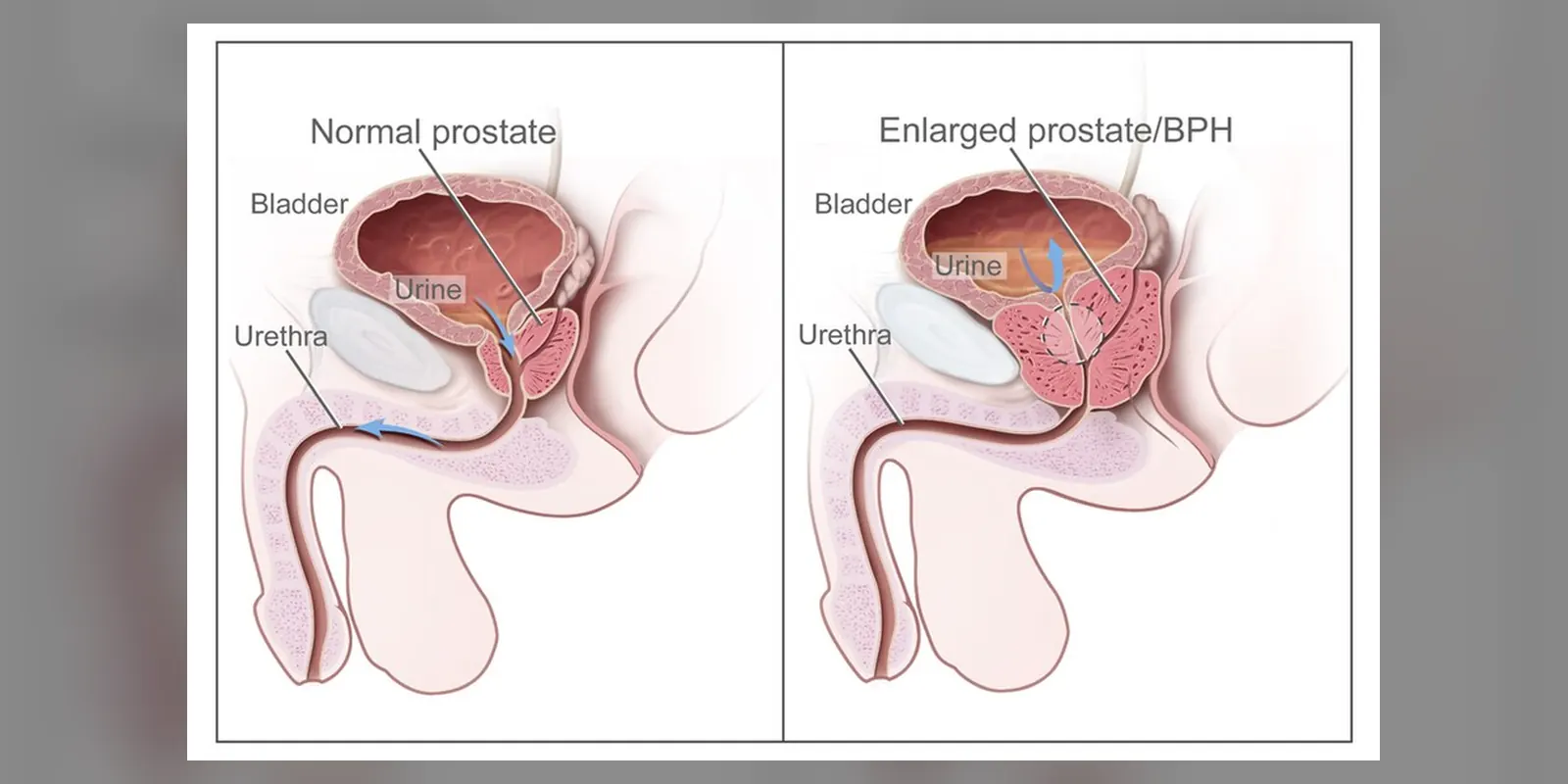
Benign prostatic hyperplasia (BPH) is a non-cancerous enlargement of the prostate gland, which sits below the bladder and surrounds the urethra, the tube that carries urine out of the body. As the prostate grows, it can squeeze the urethra and make it harder to pass urine.
BPH is very common in older men: about half of men over 50 and most men over 80 have some degree of prostate enlargement. Symptoms include a weak stream, difficulty starting to urinate, needing to urinate often, especially at night, and feeling that the bladder has not emptied fully. BPH is not cancer and does not increase the risk of prostate cancer, but symptoms can affect quality of life. Treatments range from lifestyle changes and medicines to surgery.
When to get urgent help
Seek emergency care if you cannot pass urine at all, have severe lower abdominal pain, fever with urinary symptoms, or blood clots in the urine.
Causes and risk factors
- Ageing: the main risk factor
- Hormonal changes: the prostate depends on male hormones, particularly dihydrotestosterone (DHT)
- Family history
- Obesity, diabetes and metabolic syndrome
- Lack of physical activity
- Men who have had their testicles removed before puberty do not develop BPH
How it develops (pathophysiology)
Normal prostate anatomy and function
The prostate is a walnut-sized gland that produces fluid that forms part of semen. It is made of glandular tissue and smooth muscle, and is divided into zones. The transition zone surrounds the urethra. The prostate grows during puberty under the influence of testosterone, which is converted into the more potent dihydrotestosterone (DHT) by the enzyme 5-alpha reductase.
What goes wrong
- Hormonal stimulation: throughout adult life, DHT continues to stimulate prostate cells. With ageing, the balance of growth signals changes.
- Cell overgrowth: glandular cells and stromal (smooth muscle and connective tissue) cells multiply, mainly in the transition zone around the urethra, forming nodules. This is hyperplasia (more cells), not cancer.
- Static obstruction: the enlarged prostate physically narrows the urethra.
- Dynamic obstruction: smooth muscle in the prostate and bladder neck is controlled by alpha-1 adrenergic receptors. Increased muscle tone further squeezes the urethra.
- Bladder changes: the bladder muscle works harder to push urine through the narrowed urethra. Over time, it thickens and becomes overactive, causing urgency and frequency. Eventually, it may weaken, leading to incomplete emptying and urinary retention.
- Complications: urine left in the bladder can cause infections and bladder stones. Back pressure can damage the kidneys in severe cases.
The size of the prostate does not always match symptom severity, because dynamic obstruction and bladder function also matter.
Why the symptoms happen
Voiding (obstructive) symptoms, caused by the narrowed urethra:
- Weak or interrupted stream
- Hesitancy (delay in starting)
- Straining
- Dribbling at the end
- Feeling of incomplete emptying
Storage (irritative) symptoms, caused by bladder changes:
- Frequency
- Urgency
- Waking at night to urinate (nocturia)
- Urge incontinence
How treatment acts on the mechanism
Alpha-blockers (such as tamsulosin) relax smooth muscle in the prostate and bladder neck, improving urine flow within days. 5-alpha reductase inhibitors (finasteride, dutasteride) block conversion of testosterone to DHT, shrinking the prostate over months. Antimuscarinics or beta-3 agonists calm an overactive bladder. PDE5 inhibitors (tadalafil) relax smooth muscle. Surgery, such as transurethral resection of the prostate (TURP), removes tissue blocking the urethra.
Types
BPH symptoms are graded by severity, often using the International Prostate Symptom Score (IPSS): mild, moderate or severe.
Signs and symptoms
- Weak urine flow
- Difficulty starting to urinate
- Straining
- Stopping and starting
- Dribbling after urination
- Needing to urinate often
- Urgency
- Waking at night to urinate
- Feeling the bladder is not fully empty
- Leaking urine
How it is diagnosed
- Symptom questionnaire (IPSS) and a frequency-volume diary
- Digital rectal examination to assess prostate size and texture
- Urine tests for infection and blood
- Blood tests: kidney function and PSA (prostate-specific antigen), after discussion of benefits and limitations
- Urine flow rate test
- Bladder ultrasound to measure urine left after voiding
- Further tests if needed: cystoscopy or urodynamics
Possible complications
- Acute urinary retention: sudden inability to pass urine
- Chronic urinary retention
- Urinary tract infections
- Bladder stones
- Blood in the urine
- Kidney damage from back pressure
Goals of treatment
Treatment aims to relieve symptoms, improve quality of life and prevent complications.
Medicines
- Alpha-blockers: tamsulosin, alfuzosin, doxazosin
- 5-alpha reductase inhibitors: finasteride, dutasteride
- Combination therapy for larger prostates and more severe symptoms
- Antimuscarinics (such as oxybutynin, solifenacin) or mirabegron for overactive bladder symptoms
- Tadalafil for urinary symptoms, especially with erectile dysfunction
- Desmopressin in some men with night-time urination
Other treatments
- Watchful waiting for mild symptoms
- Lifestyle measures: reducing fluids in the evening, limiting caffeine and alcohol, bladder training
- Transurethral resection of the prostate (TURP)
- Laser procedures: HoLEP, photoselective vaporisation
- Prostatic urethral lift (UroLift)
- Water vapour therapy (Rezum)
- Prostate artery embolisation
- Open or robotic prostatectomy for very large prostates
- Catheter for urinary retention
Living with it and prevention
- Stay physically active
- Maintain a healthy weight
- Limit fluids in the evening
- Reduce caffeine and alcohol
- Empty the bladder twice (double voiding)
- Avoid decongestants and antihistamines, which can worsen symptoms
- Do pelvic floor exercises
Monitoring and follow-up
Symptoms and treatment side effects are reviewed regularly. Men on 5-alpha reductase inhibitors should know that these medicines lower PSA levels.
Outlook
BPH is common and usually manageable. Many men have good symptom relief with medicines, and procedures are effective for more severe symptoms.
Special considerations
- Older men taking many medicines: some medicines worsen symptoms
- Men with heart disease or low blood pressure: alpha-blockers may cause dizziness
- Men planning cataract surgery: tamsulosin can affect surgery and should be mentioned to the eye surgeon