Overview
Benign paroxysmal positional vertigo (BPPV) is the most common cause of vertigo, a false sensation that you or the room is spinning. It causes short bursts of intense spinning, usually lasting less than a minute, triggered by changes in head position, such as rolling over in bed, getting up, lying down or looking up.
BPPV happens when tiny calcium crystals in the inner ear become loose and move into the balance canals. It is most common in people over 50, but can happen at any age. It is not serious, but it can be frightening and increases the risk of falls, especially in older people. It can usually be treated quickly with simple head movements called repositioning manoeuvres, such as the Epley manoeuvre.
Although the spinning can be very unpleasant, BPPV does not damage the ear or brain. Many people are reassured to learn that a simple manoeuvre in the clinic often cures it in a single visit.
When to get urgent help
Seek emergency care if vertigo is accompanied by severe headache, double vision, difficulty speaking, weakness, numbness, loss of coordination, or if vertigo is constant and not triggered by movement, which may indicate a stroke.
Causes and risk factors
- Ageing: the most common cause
- Head injury
- Inner ear conditions, such as vestibular neuritis or Ménière's disease
- Prolonged bed rest or lying in one position, such as after surgery or at the dentist or hairdresser
- Osteoporosis and low vitamin D
- Often no cause is found
How it develops (pathophysiology)
Normal inner ear balance system
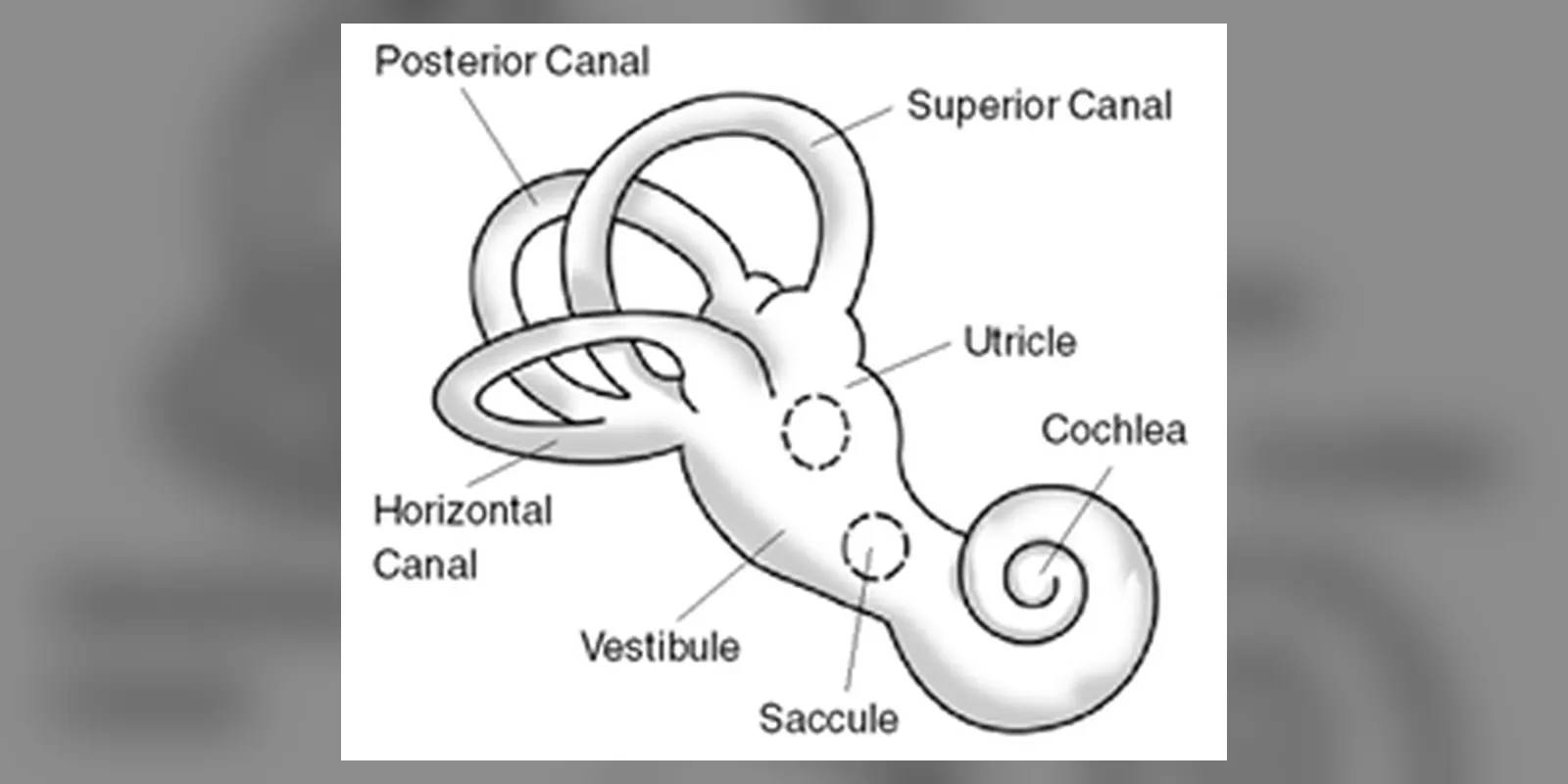
The inner ear contains the vestibular system, which senses head movement and position:
- Three semicircular canals (posterior, anterior and horizontal), filled with fluid (endolymph), detect rotation. Each has a sensor (cupula) that bends when fluid moves.
- Two otolith organs (utricle and saccule) detect gravity and straight-line movement. They contain tiny calcium carbonate crystals (otoconia) embedded in a gel layer.
Signals from the vestibular system are combined with information from the eyes and body to maintain balance and keep vision steady through the vestibulo-ocular reflex.
What goes wrong
- Crystal displacement: otoconia become dislodged from the utricle, due to ageing, injury or other causes.
- Entry into a canal: loose crystals float into one of the semicircular canals, most often the posterior canal because of its position when lying down.
- Canalithiasis: when the head moves, the crystals move through the canal fluid by gravity, dragging fluid with them. This bends the cupula abnormally, sending a false signal that the head is rotating.
- Cupulolithiasis: less commonly, crystals stick to the cupula itself, making it sensitive to gravity.
- Mismatch: the brain receives conflicting signals from the inner ear, eyes and body, causing a sensation of spinning.
Why the symptoms happen
- Brief, intense spinning vertigo occurs as crystals move and stop, usually lasting less than a minute.
- Triggered by head movements because crystals move with gravity.
- Nystagmus (involuntary eye movements) occurs because the false signal drives the vestibulo-ocular reflex. The direction of nystagmus shows which canal is affected.
- Nausea is caused by vestibular stimulation.
- Feeling off-balance between attacks may persist.
How treatment acts on the mechanism
Canalith repositioning manoeuvres, such as the Epley manoeuvre for the posterior canal, use a series of head positions to move the crystals out of the canal and back into the utricle, where they no longer cause symptoms. The Semont manoeuvre and Brandt-Daroff exercises are alternatives. Different manoeuvres (such as the barbecue roll) are used for the horizontal canal.
Types
- Posterior canal BPPV: the most common (80 to 90 percent)
- Horizontal (lateral) canal BPPV
- Anterior canal BPPV: rare
- Canalithiasis or cupulolithiasis
Signs and symptoms
- Sudden spinning sensation when moving the head, lying down, rolling over, getting up or looking up
- Episodes lasting seconds to under a minute
- Nausea, sometimes vomiting
- Feeling unsteady or off-balance
- Lightheadedness after episodes
- No hearing loss or ringing in the ears
People often notice the first attack when getting out of bed in the morning or rolling over at night. Between attacks, many feel well, though some feel slightly unsteady or 'woolly-headed' for hours or days.
How it is diagnosed
- History of brief positional vertigo
- Dix-Hallpike test: the head is turned and the person is laid back quickly; nystagmus and vertigo confirm posterior canal BPPV
- Supine roll test for horizontal canal BPPV
- Further tests, such as MRI, if symptoms are atypical or there are other neurological signs
Possible complications
- Falls and injuries, especially in older people
- Anxiety about movement
- Recurrence
Goals of treatment
Treatment aims to move the crystals out of the affected canal, relieve vertigo, and reduce falls and recurrence.
Medicines
- Medicines are generally not needed and do not cure BPPV
- Anti-sickness medicines such as prochlorperazine may help for a short time during severe episodes, but long-term use can delay recovery
Other treatments
- Epley manoeuvre (posterior canal)
- Semont manoeuvre
- Barbecue roll or Gufoni manoeuvre (horizontal canal)
- Brandt-Daroff exercises at home
- Vestibular rehabilitation for ongoing imbalance
- Surgery (canal plugging) in rare cases that do not respond
Living with it and prevention
- Get up slowly from lying down
- Sleep with the head slightly raised
- Avoid sudden head movements
- Treat osteoporosis and low vitamin D
- Learn to perform home manoeuvres if BPPV recurs
Monitoring and follow-up
Symptoms often settle after one or two treatments. Recurrence is common, affecting up to half of people within five years.
Outlook
BPPV is not dangerous and usually responds quickly to repositioning manoeuvres. It can recur but is easily treated again.
Special considerations
- Older adults: higher fall risk; early treatment is important
- People with neck or back problems: manoeuvres may need modification
- After head injury: BPPV may affect more than one canal