Overview
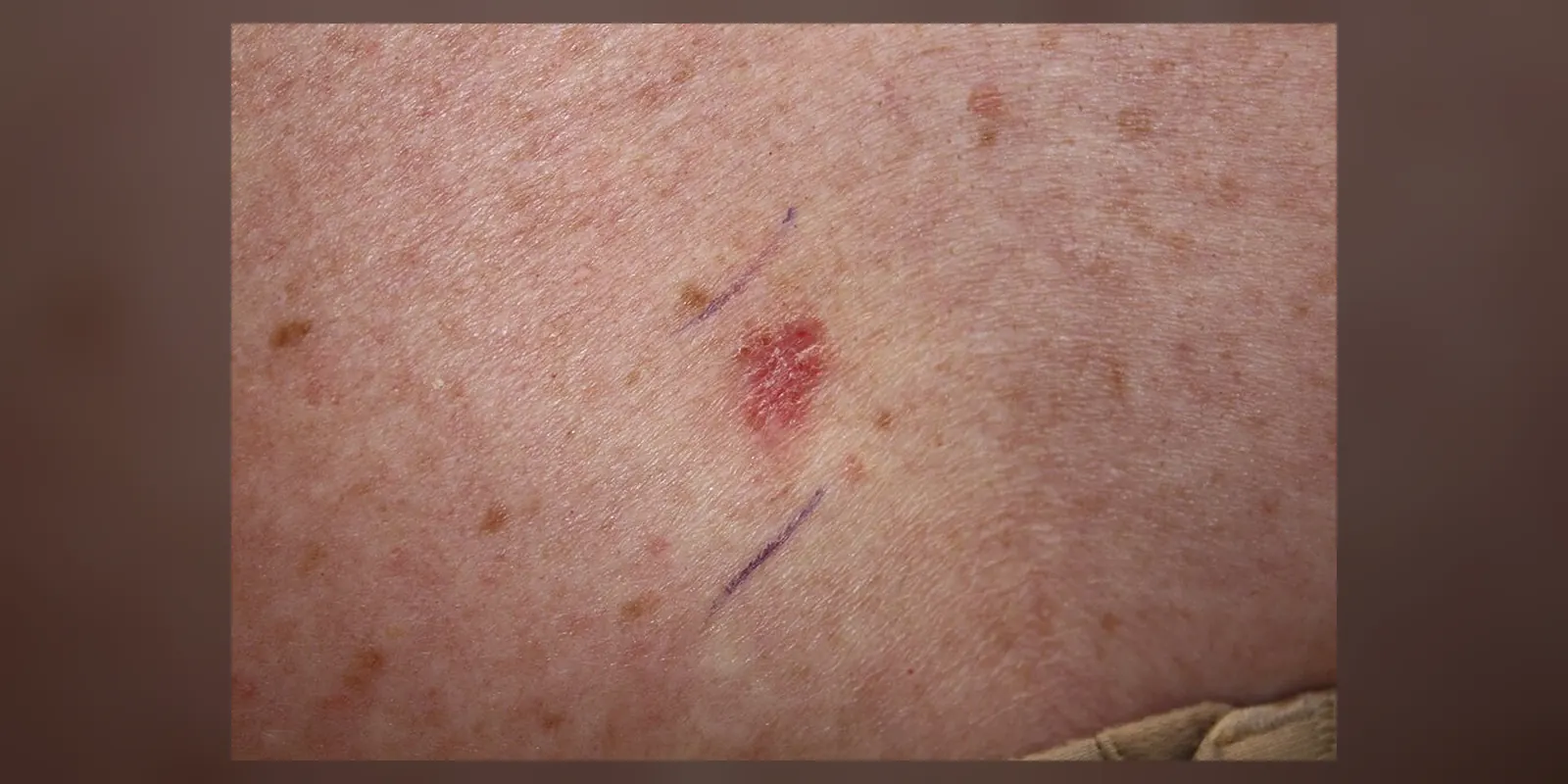
Basal cell carcinoma (BCC) is the most common type of skin cancer and the most common cancer of any kind in many countries. It develops from basal cells in the deepest layer of the epidermis, the outer layer of the skin. BCCs usually appear on sun-exposed areas, such as the face, scalp, ears, neck, shoulders and back.
BCCs grow slowly and very rarely spread to other parts of the body, so they are rarely life-threatening. However, if left untreated, they can grow deeper and damage surrounding skin, cartilage and bone, especially on the face. BCCs are highly treatable, usually with simple surgery, and are often called "rodent ulcers" because of the way they can slowly erode tissue. Protecting the skin from the sun reduces the risk.
When to get urgent help
See a doctor promptly for a spot that bleeds, does not heal within a few weeks, grows, or changes in appearance.
Causes and risk factors
- Ultraviolet (UV) radiation from the sun and sunbeds: the main cause
- Fair skin, light eyes, red or blond hair, freckles and a tendency to burn
- Older age
- History of sunburn, especially in childhood
- Previous BCC or other skin cancers
- Weakened immune system, such as after organ transplant
- Radiation therapy
- Arsenic exposure
- Genetic conditions: basal cell naevus syndrome (Gorlin syndrome), xeroderma pigmentosum
How it develops (pathophysiology)
Normal skin structure
The epidermis has several layers. The deepest layer, the basal layer, contains basal cells that divide to replace skin cells as they are shed from the surface. Cell division is tightly controlled by signalling pathways and tumour-suppressor genes. Melanin pigment helps protect basal cells from UV damage.
What goes wrong
- UV damage: UV radiation, mainly UVB, damages DNA in basal cells, creating characteristic mutations.
- Hedgehog pathway activation: the key change in almost all BCCs is abnormal activation of the Hedgehog signalling pathway, which normally controls cell growth during development. Most BCCs have mutations that inactivate PTCH1, a gene that normally acts as a brake on the pathway, or that activate SMO, which promotes signalling. This leads to uncontrolled growth of basal cells.
- Other mutations: changes in TP53, often UV-induced, help cells survive damage.
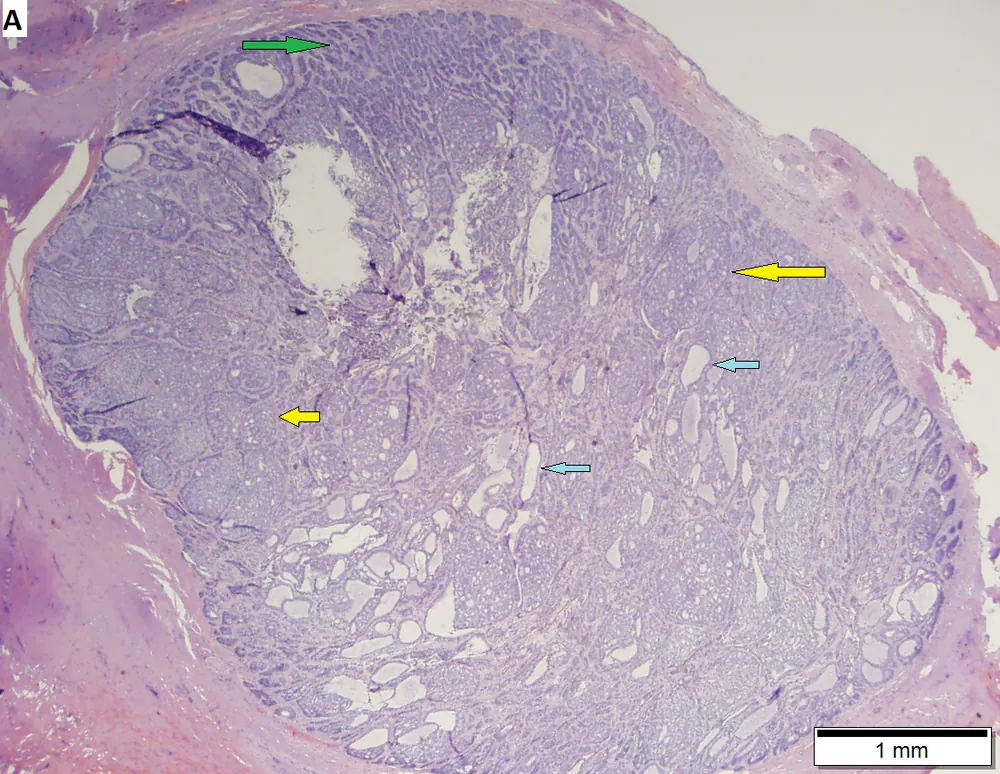
- Tumour growth: basal cells multiply, forming nests of tumour cells in the dermis, surrounded by a supporting stroma that the tumour depends on. This dependence on stroma may explain why BCCs rarely spread.
- Local invasion: if untreated, BCCs extend sideways and downwards, invading and destroying nearby tissue, including cartilage and bone.
In Gorlin syndrome, people inherit a faulty copy of PTCH1, so many BCCs develop from a young age.
Why the symptoms happen
- Pearly, shiny bump reflects nests of tumour cells under thin skin.
- Tiny visible blood vessels (telangiectasia) form on the surface as the tumour grows.
- Ulceration and bleeding occur when the centre of the tumour breaks down.
- Scabbing and healing that does not complete reflect fragile tumour tissue.
- Scar-like patches occur with morphoeic BCCs.
How treatment acts on the mechanism
Surgical excision removes the tumour with a margin of normal skin. Mohs micrographic surgery removes the tumour layer by layer, checking each layer under a microscope, preserving healthy tissue in sensitive areas. Curettage and cautery, cryotherapy, topical imiquimod and topical fluorouracil treat superficial BCCs. Photodynamic therapy uses a light-activated cream to destroy tumour cells. Hedgehog pathway inhibitors (vismodegib, sonidegib) block SMO for advanced or multiple BCCs. Radiotherapy treats people unable to have surgery.
Types
- Nodular BCC: the most common, a pearly lump
- Superficial BCC: a flat, red, scaly patch, often on the trunk
- Morphoeic (infiltrative) BCC: a scar-like patch, harder to treat
- Pigmented BCC: contains brown or black pigment
- Basosquamous carcinoma: rare, more aggressive
Signs and symptoms
- A shiny, pearly or translucent bump, often pink or skin-coloured
- Small visible blood vessels on the surface
- A sore that bleeds, crusts, heals and then returns
- A flat, red, scaly patch
- A pale, waxy, scar-like area
- A lump with a raised edge and a central dip or ulcer
- Usually painless and slow-growing
How it is diagnosed
- Skin examination, often using a dermatoscope
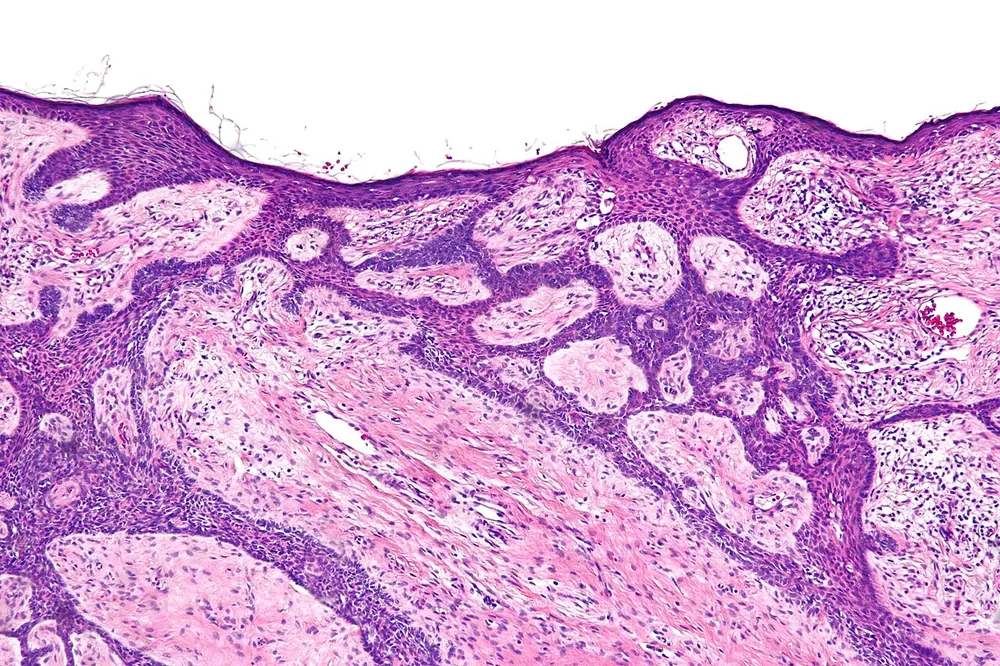
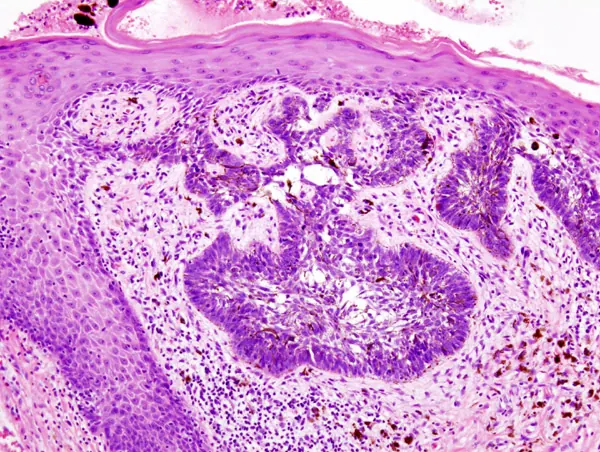
- Biopsy to confirm the diagnosis and identify the type
- Imaging (CT or MRI) rarely, for large or deeply invasive tumours
Possible complications
- Local destruction of skin, cartilage and bone, especially near the eyes, nose and ears
- Disfigurement
- Recurrence after treatment
- Development of new BCCs
- Very rarely, spread to other parts of the body
Goals of treatment
Treatment aims to remove the cancer completely, preserve appearance and function, and prevent recurrence.
Medicines
- Topical imiquimod or fluorouracil for superficial BCC
- Hedgehog pathway inhibitors (vismodegib, sonidegib) for advanced or metastatic BCC, or Gorlin syndrome
- Immunotherapy (cemiplimab) for advanced BCC after hedgehog inhibitors
Other treatments
- Surgical excision
- Mohs micrographic surgery for high-risk or facial BCCs
- Curettage and cautery
- Cryotherapy
- Photodynamic therapy
- Radiotherapy
Living with it and prevention
- Avoid sunburn and seek shade, especially in the middle of the day
- Wear protective clothing, hats and sunglasses
- Use broad-spectrum sunscreen (SPF 30 or higher) and reapply regularly
- Avoid sunbeds
- Check your skin regularly for new or changing spots
- Protect children from the sun
Monitoring and follow-up
After treatment, people are often checked for recurrence and new skin cancers, and taught to examine their own skin. People with many BCCs or weakened immunity need regular skin checks.
Outlook
BCC has an excellent outlook, with cure rates over 95 percent after treatment. However, people who have had one BCC are more likely to develop others.
Special considerations
- Organ transplant recipients: higher risk of skin cancers and need regular checks
- People with Gorlin syndrome: develop many BCCs from a young age
- Older adults: BCCs are most common