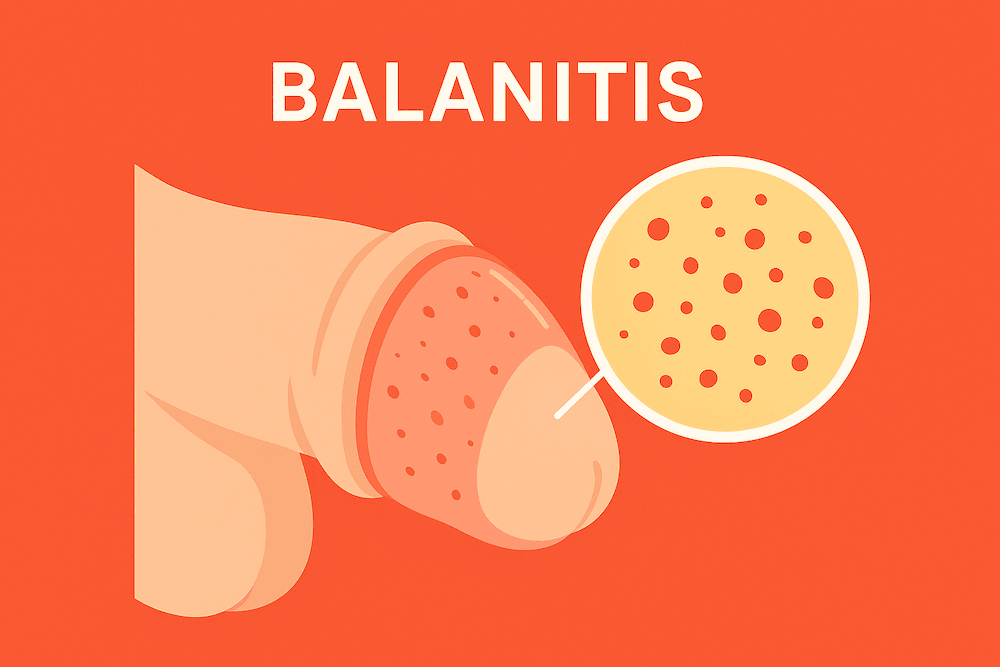
Overview
Balanitis is inflammation of the glans, the head of the penis. When the foreskin is also inflamed, it is called balanoposthitis. It causes redness, soreness, itching, swelling and sometimes a discharge or unpleasant smell.
Balanitis is common and can affect males of any age, but it is most common in young boys and in men who have not been circumcised. It is usually caused by an infection, most often thrush (candida), or by irritation from soaps or poor hygiene, and it is more common in men with diabetes. Balanitis is not usually serious and is easily treated with good hygiene and creams, but recurrent or persistent balanitis should be checked, as it can occasionally be a sign of an underlying condition.
When to get urgent help
Seek urgent care for a foreskin pulled back that cannot be returned (paraphimosis), inability to pass urine, or severe pain, swelling or fever.
Causes and risk factors
- Candida (thrush): the most common infectious cause
- Bacterial infections, such as streptococci, staphylococci or anaerobes
- Sexually transmitted infections, such as gonorrhoea, chlamydia, trichomonas, herpes or syphilis
- Irritation from soaps, shower gels, detergents, spermicides or latex
- Poor hygiene, or excessive washing
- Tight foreskin (phimosis), which traps moisture and debris
- Skin conditions: eczema, psoriasis, lichen sclerosus, lichen planus
- Diabetes, especially if poorly controlled
- Medicines: some antibiotics, painkillers, and SGLT2 inhibitor diabetes medicines (which increase sugar in urine)
- Obesity
- Rarely, precancerous conditions
How it develops (pathophysiology)
Normal anatomy
The glans is covered by a thin, moist layer of skin. In uncircumcised males, the foreskin covers the glans and creates a warm, moist space beneath it. Normally, a small amount of natural secretions (smegma) collects there, and regular gentle washing keeps the area healthy. The skin's normal bacteria and slightly acidic environment limit overgrowth of harmful organisms.
What goes wrong
- Moisture and warmth: the space under the foreskin traps moisture, sweat, smegma and urine, creating an environment where microbes can multiply.
- Microbial overgrowth: Candida yeasts, which normally live on the skin in small numbers, multiply, especially when sugar levels are high (in diabetes or with SGLT2 inhibitors) or after antibiotics, which reduce competing bacteria.
- Irritation: soaps, detergents and over-washing damage the skin barrier, allowing inflammation.
- Inflammation: microbes or irritants trigger an immune response, releasing inflammatory chemicals that cause redness, swelling, itching and soreness.
- Tight foreskin: phimosis prevents proper cleaning and drying, and chronic inflammation can itself cause scarring and tightening of the foreskin, creating a cycle.
- Chronic inflammatory skin conditions, such as lichen sclerosus, cause ongoing inflammation and scarring of the glans and foreskin.
Why the symptoms happen
- Redness and swelling result from inflammation and increased blood flow.
- Itching and soreness come from inflammatory chemicals irritating nerve endings.
- Discharge and smell result from microbial overgrowth and trapped secretions.
- Pain when urinating occurs when urine passes over inflamed skin.
- Difficulty pulling back the foreskin reflects swelling or scarring.
How treatment acts on the mechanism
Gentle hygiene removes trapped secretions and irritants. Antifungal creams (such as clotrimazole) kill candida. Antibiotics treat bacterial infections. Mild steroid creams reduce inflammation, particularly in irritant or allergic balanitis. Controlling blood sugar reduces candida growth. Circumcision removes the moist space under the foreskin, preventing recurrence in severe or recurrent cases.
Types
- Candidal balanitis
- Bacterial balanitis
- Irritant or allergic balanitis
- Zoon's (plasma cell) balanitis: in older uncircumcised men
- Circinate balanitis: associated with reactive arthritis
- Balanoposthitis: involving the foreskin too
Signs and symptoms
- Redness of the head of the penis
- Swelling
- Itching or soreness
- Discharge under the foreskin
- Unpleasant smell
- Pain when urinating
- Shiny or patchy skin
- Difficulty pulling back the foreskin
- Small spots or a rash
How it is diagnosed
- Examination of the penis
- Swabs to identify infection
- Urine and blood sugar tests to check for diabetes
- Tests for sexually transmitted infections
- Biopsy if the problem persists or looks unusual, to rule out skin conditions or precancerous changes
Possible complications
- Recurrent infections
- Phimosis (tight foreskin)
- Paraphimosis: a retracted foreskin that cannot be returned, an emergency
- Scarring and narrowing of the urinary opening
- Lichen sclerosus-related complications
- Rarely, increased risk of penile cancer with chronic inflammation
Goals of treatment
Treatment aims to relieve symptoms, clear infection or irritation, and prevent recurrence.
Medicines
- Antifungal cream (such as clotrimazole or miconazole) for candida
- Antibiotics (cream or tablets) for bacterial infections
- Mild steroid cream (such as hydrocortisone), sometimes combined with an antifungal, for inflammation
- Treatment of sexually transmitted infections
- Stronger steroid creams for lichen sclerosus, under specialist advice
Other treatments
- Gentle daily washing with warm water, pulling back the foreskin if possible
- Avoiding soaps and shower gels on the area; using an emollient instead
- Drying the area thoroughly
- Circumcision for recurrent balanitis or phimosis
Living with it and prevention
- Wash the penis daily with warm water, gently pulling back the foreskin
- Dry carefully after washing
- Avoid perfumed soaps and products
- Use condoms to reduce the risk of sexually transmitted infections
- Manage diabetes well
- Do not force back the foreskin in young boys
Monitoring and follow-up
Most balanitis clears within one to two weeks. Persistent or recurrent balanitis needs review and possibly referral to a urologist or dermatologist.
Outlook
Balanitis usually responds well to treatment. Recurrence is common if underlying causes are not addressed.
Gentle daily washing with water, drying carefully and avoiding perfumed soaps prevents most repeat episodes. Anyone with repeated balanitis should have a check for diabetes and for a tight foreskin, since treating these underlying problems is often what finally stops the inflammation returning.
Special considerations
- Boys: often caused by irritation; the foreskin should not be forcibly retracted
- Men with diabetes: higher risk of candida balanitis
- Older men: persistent balanitis may need biopsy
- Partners: may also need treatment if an infection is sexually transmitted