Overview
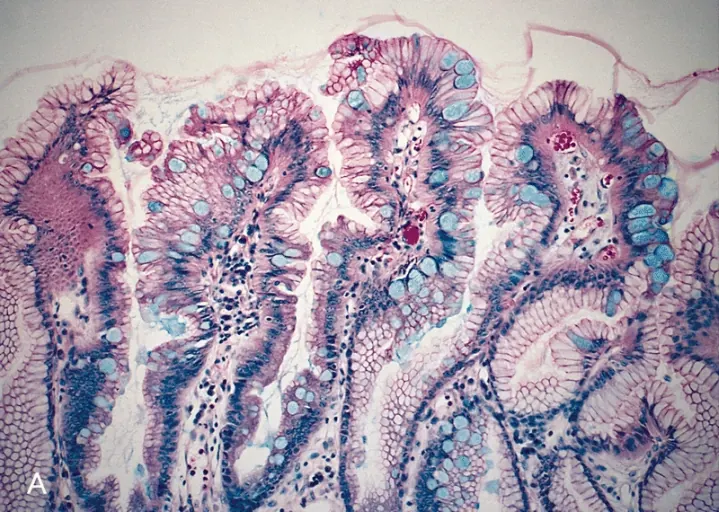
Barrett's oesophagus is a condition in which the normal lining of the lower oesophagus (food pipe) is replaced by a different type of lining, similar to the lining of the bowel. This change, called intestinal metaplasia, usually develops as a result of long-term gastro-oesophageal reflux disease (GORD), when stomach acid and bile repeatedly flow back into the oesophagus.
Barrett's oesophagus itself does not cause symptoms beyond those of reflux, such as heartburn and acid regurgitation. Its importance is that it slightly increases the risk of oesophageal adenocarcinoma, a type of cancer. Most people with Barrett's oesophagus never develop cancer, but regular check-ups with endoscopy allow early changes (dysplasia) to be found and treated before cancer develops.
Barrett's oesophagus is quite common, found in about one in ten people who have an endoscopy for long-standing reflux. Being told you have it can be worrying, but it is best thought of as a warning sign that allows early action, rather than a pre-cancer that will inevitably turn into cancer.
When to get urgent help
Seek prompt medical review for difficulty swallowing, weight loss, vomiting blood, black stools, or persistent vomiting.
Causes and risk factors
- Long-term gastro-oesophageal reflux disease
- Male sex
- Age over 50
- White ethnicity
- Obesity, especially abdominal fat
- Smoking
- Hiatus hernia
- Family history of Barrett's oesophagus or oesophageal cancer
How it develops (pathophysiology)
Normal oesophagus
The oesophagus is lined by stratified squamous epithelium, layers of flat cells that resist friction from swallowed food but are not designed to withstand acid. At the lower end, the lower oesophageal sphincter prevents stomach contents from flowing back. Beyond it, the stomach is lined by glandular (columnar) cells that produce protective mucus.
What goes wrong
- Chronic reflux: acid, pepsin and bile repeatedly wash up into the lower oesophagus, especially with a weak sphincter or hiatus hernia.
- Injury: these substances damage the squamous lining, causing inflammation (oesophagitis).
- Metaplasia: during repeated injury and healing, the lining is replaced by columnar cells with goblet cells, resembling intestinal lining (intestinal metaplasia). This lining is more resistant to acid. The change may arise from stem cells in the oesophageal glands or at the junction with the stomach, influenced by signals such as CDX2, a gene that drives an intestinal cell type.
- Genetic changes: over years, cells accumulate genetic changes, such as loss of TP53 and CDKN2A function, and chromosome instability.
- Dysplasia: cells become increasingly abnormal (low-grade then high-grade dysplasia).
- Cancer: in a small minority, high-grade dysplasia progresses to oesophageal adenocarcinoma.
The annual risk of cancer in people with Barrett's oesophagus without dysplasia is low, around 0.1 to 0.3 percent a year, but much higher with high-grade dysplasia.
Why the symptoms happen
- Heartburn and acid regurgitation reflect the underlying reflux.
- No specific symptoms come from the Barrett's lining itself; it may even reduce heartburn sensation.
- Difficulty swallowing, weight loss or vomiting blood suggest complications such as stricture or cancer.
How treatment acts on the mechanism
Proton pump inhibitors (PPIs) reduce acid production, controlling reflux symptoms and healing oesophagitis. Endoscopic surveillance detects dysplasia early. Endoscopic treatments, such as radiofrequency ablation and endoscopic mucosal resection, remove or destroy abnormal tissue, allowing normal squamous lining to regrow. Anti-reflux surgery strengthens the barrier against reflux.
Types
- Short-segment Barrett's: less than 3 cm
- Long-segment Barrett's: 3 cm or more
- Non-dysplastic Barrett's
- Barrett's with low-grade dysplasia
- Barrett's with high-grade dysplasia
Signs and symptoms
- Frequent heartburn
- Acid or food coming back up into the mouth
- Indigestion
- Chest discomfort
- Sometimes no symptoms
Warning signs of complications:
- Difficulty swallowing
- Unintended weight loss
- Vomiting blood or passing black stools
- Persistent vomiting
Many people have had reflux for years, sometimes managing it with over-the-counter antacids, before Barrett's is found. Others have few reflux symptoms and Barrett's is discovered during an endoscopy done for another reason.
How it is diagnosed
- Upper endoscopy (gastroscopy): shows salmon-coloured lining extending above the junction with the stomach
- Biopsies: confirm intestinal metaplasia and check for dysplasia
- The extent is recorded using the Prague classification
- Cytosponge (a capsule sponge test) in some areas as a screening tool
Possible complications
- Oesophageal adenocarcinoma
- Oesophageal stricture (narrowing)
- Ulcers and bleeding
Goals of treatment
Management aims to control reflux, detect dysplasia early, and prevent or treat early cancer.
Medicines
- Proton pump inhibitors (such as omeprazole or lansoprazole), usually long term
- H2 blockers occasionally for night-time symptoms
- Aspirin is not routinely recommended to prevent cancer, though studies continue
Other treatments
- Endoscopic surveillance every few years, depending on length and dysplasia
- Radiofrequency ablation for dysplasia
- Endoscopic mucosal resection or submucosal dissection for visible lesions or early cancer
- Anti-reflux surgery (fundoplication) for severe reflux
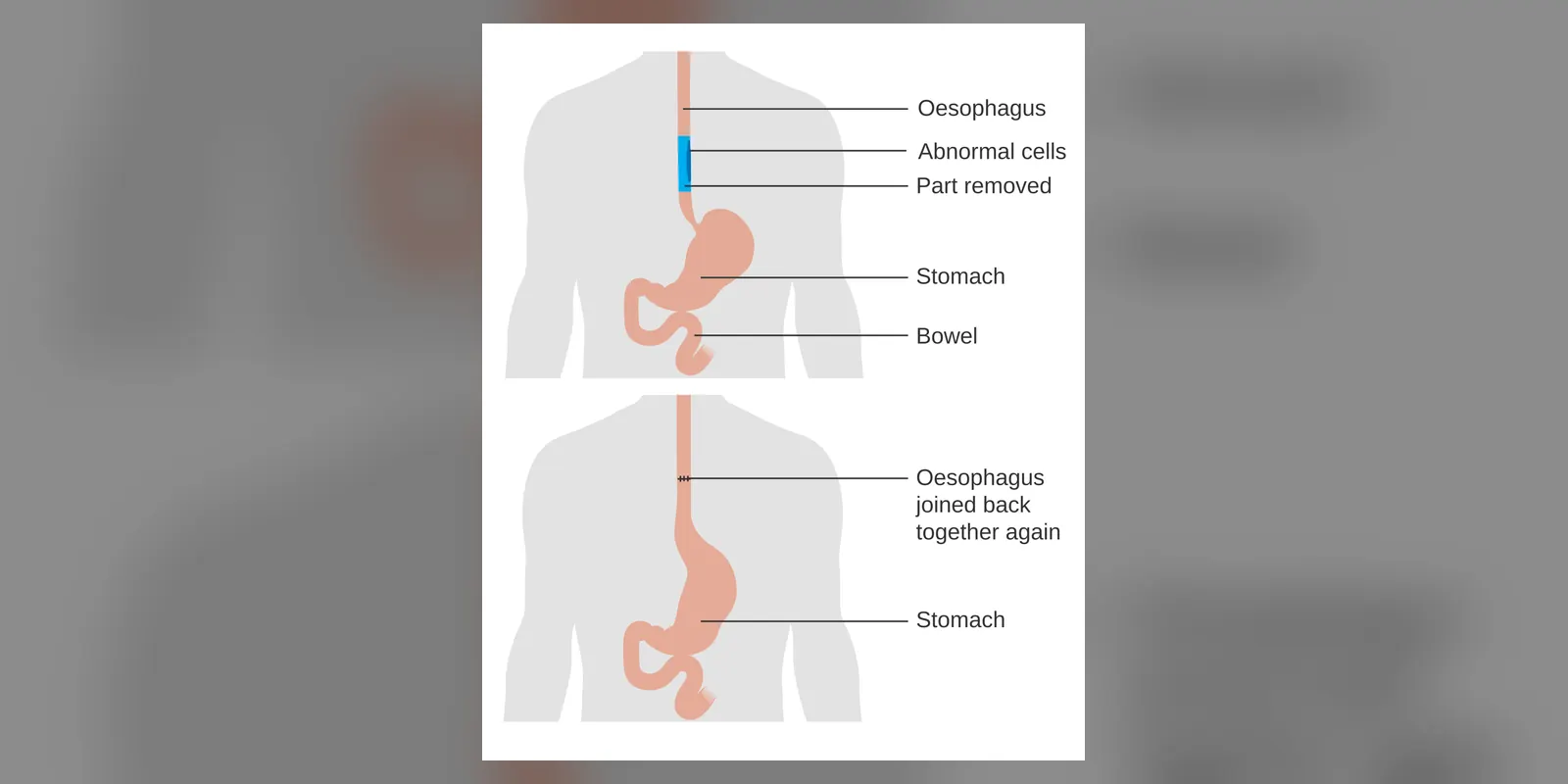
- Surgery (oesophagectomy) for more advanced cancer
Living with it and prevention
- Maintain a healthy weight
- Stop smoking
- Limit alcohol
- Eat smaller meals and avoid eating late at night
- Raise the head of the bed
- Avoid foods that trigger reflux
- Take PPIs as prescribed
- Seek advice for long-standing reflux symptoms
Monitoring and follow-up
Surveillance endoscopy intervals depend on the length of Barrett's and the presence of dysplasia, often every two to five years for non-dysplastic Barrett's, and more often with dysplasia.
Taking PPIs regularly and attending surveillance appointments are the two most important things people with Barrett's can do. If dysplasia is found, treatment is usually carried out in specialist centres.
Outlook
Most people with Barrett's oesophagus never develop cancer. Regular surveillance and treatment of dysplasia greatly reduce the risk of advanced cancer.
Special considerations
- Men over 50 with long-standing reflux and other risk factors may be offered screening
- People with a family history of Barrett's or oesophageal cancer
- Younger people: Barrett's is less common