Medical emergency? Call your local emergency number
First aid guides

Menu

Cataract Surgery: See the World Clearly Again

Cataract Surgery: See the World Clearly Again Eye surgery 5 min read
Not yet medically reviewed. This page has not been checked by a qualified medical reviewer. Use it for general education only and confirm anything important with a healthcare professional. Written by GeoMed Editorial Team. Last updated 24 October 2026.
Every patient and hospital is different. Your surgical team will explain what applies to you, including the benefits, risks and alternatives, before asking for your consent.

Blurred vision, dim lights, and an ever-present haze, cataracts creep up slowly, turning once-vibrant colors into a dull, lifeless blur. You might chalk it up to aging. You might even ignore it for a while. But here’s the truth: cataracts won’t go away on their own. The good news? Cataract surgery is one of the safest and most effective procedures out there, with over 95% of patients regaining clear vision after the procedure! If your vision is getting in the way of daily life, driving, reading, or even recognizing faces, it’s time to take action. Here’s everything you need to know about cataract surgery, from what to expect to how to make the smoothest recovery possible.

What Is Cataract Surgery?

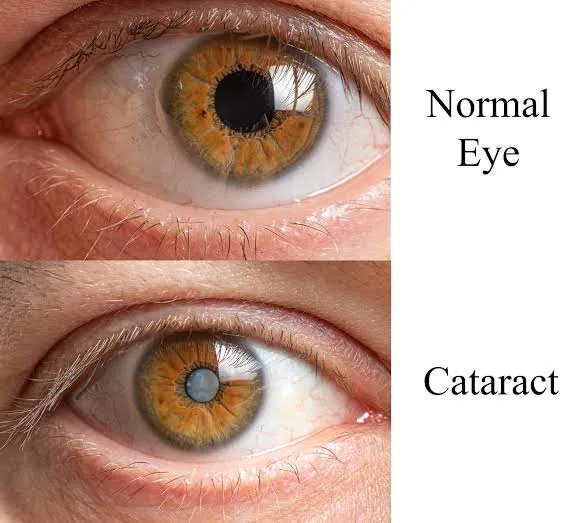
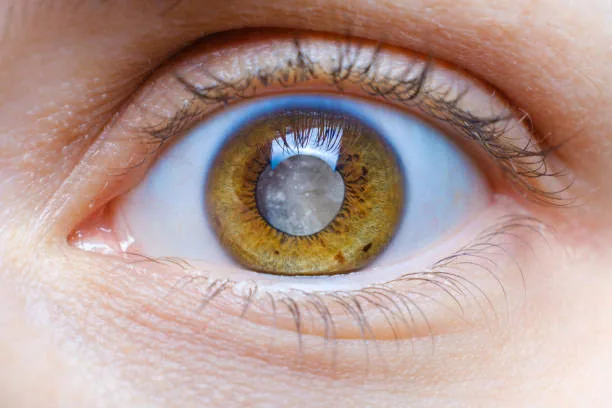
Cataract surgery is a simple yet life-changing procedure that removes a cloudy lens from the eye and replaces it with a clear, artificial intraocular lens (IOL). Cataracts form when proteins in the eye’s lens clump together, making vision blurry or distorted. While they’re most commonly age-related, cataracts can also be caused by diabetes, prolonged steroid use, excessive UV exposure, or past eye injuries.

The procedure is outpatient, quick (15-30 minutes per eye), and virtually painless. Most people go home the same day with improved vision within 24-48 hours!

Why Get Cataract Surgery?

Cataracts don’t just make things look fuzzy, they can seriously impact safety and quality of life. If you’re experiencing any of these symptoms, cataract surgery might be your best option:

  • Blurry, cloudy, or dim vision
  • Increased glare and halos around lights (especially at night)
  • Difficulty driving at night
  • Frequent changes in eyeglass prescriptions
  • Faded or yellow-tinted colors
  • Double vision in one eye

If left untreated, cataracts can lead to significant vision loss. But with cataract surgery, you don’t have to live in the haze.
Cataract Surgery: See the World Clearly Again

The Surgery: What to Expect

Cataract surgery is one of the most common surgeries in the world. Here’s a breakdown of what happens:

Before Surgery

A full eye exam determines the severity of your cataract and the best IOL for you.

  • You may need to stop certain medications beforehand.
  • Eye drops are prescribed to prevent infection and reduce inflammation.

During the Procedure

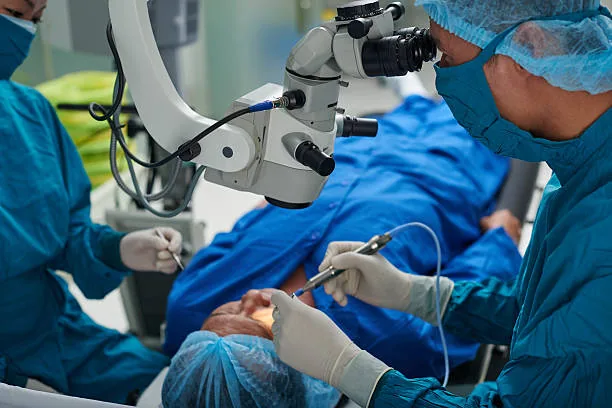
  • Anesthesia: Your eye is numbed with drops, and you may get a mild sedative. You’ll be awake but won’t feel a thing!
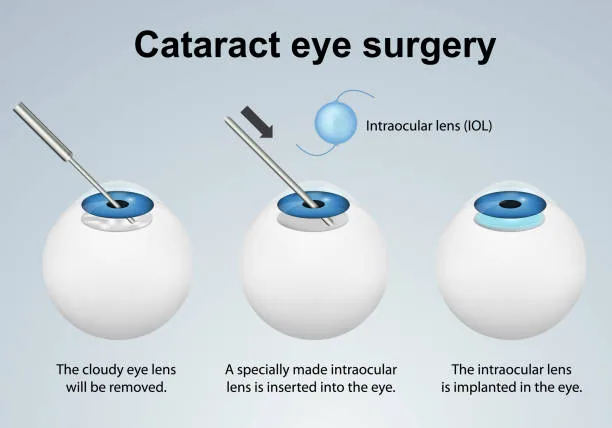
  • Tiny Incision: A small incision is made in your cornea.
  • Lens Removal: Using ultrasound waves, the surgeon breaks up the cloudy lens and removes it through suction.
  • Lens Replacement: A clear artificial IOL is placed in your eye.
  • Closure: No stitches needed, the incision heals on its own!
  • Total time? About 15-30 minutes per eye. Most people walk out seeing better almost immediately.
Cataract Surgery: See the World Clearly Again

Choosing the Right Lens (IOLs)

Your new artificial lens (IOL) determines how well you see after surgery. Options include:

  • Monofocal IOLs – Sharp vision at one distance (near OR far). You may still need glasses.
  • Multifocal IOLs – Clear vision at multiple distances, reducing dependence on glasses.
  • Toric IOLs – Corrects astigmatism for sharper focus.
  • Accommodating IOLs – Mimics the eye’s natural focus, offering flexibility at different distances.

Choosing the right lens depends on your lifestyle. Want to ditch glasses altogether? Premium IOLs may be worth considering

Recovery: Getting Back to Clear Sight

Most patients notice a dramatic improvement within 24-48 hours, though full recovery can take a few weeks. Follow these steps for a smooth healing process:

Immediate Recovery

Rest for the first 24 hours, avoid any strain.

Expect some blurriness initially as your eye adjusts.

You may experience mild discomfort or itching, but don’t rub your eye!
Cataract Surgery: See the World Clearly Again

The First Few Weeks

  • Use prescribed eye drops to prevent infection and reduce swelling.
  • Wear sunglasses to protect against light sensitivity.
  • Avoid heavy lifting and bending over (this reduces pressure on your eye).
  • Sleep with an eye shield for the first few nights to avoid accidental rubbing.
  • Skip swimming pools and hot tubs for at least two weeks (to prevent infection).

When to Call Your Doctor

While complications are rare, seek medical attention if you experience:

  • Severe pain or worsening vision
  • Flashes of light or sudden floaters (could indicate retinal detachment)
  • Persistent swelling, redness, or discharge

Potential Risks & Complications

Cataract surgery is incredibly safe, but like any medical procedure, there are risks:

  • Infection (Endophthalmitis) – Extremely rare but serious.
  • Swelling or inflammation – Usually temporary and treated with drops.
  • Posterior Capsule Opacification (PCO) – A cloudy membrane forms behind the lens but can be quickly fixed with a laser procedure.
  • Retinal Detachment – Very rare but requires immediate treatment.
  • Increased Eye Pressure – Can be managed with medication.

These complications are uncommon and treatable, which is why follow-ups with your eye doctor are essential.

Life After Cataract Surgery

Imagine seeing the world in high definition again. That’s what most people experience after cataract surgery!

  • Colors are brighter.
  • Vision is sharper.
  • Glare and halos disappear.
  • Night driving improves.

Many people find they need little to no glasses after surgery, especially if they opt for premium IOLs.

Final Thoughts

Cataracts don’t have to steal your vision. Cataract surgery is fast, safe, and can restore your ability to see clearly, drive confidently, and enjoy life without struggling to read menus or recognize faces. If cataracts are affecting your daily life, talk to your doctor today and take the first step toward clearer vision!
Image credits

  • Heading image: GeoMed

More Surgical procedures

View all
What You Must Know Before Choosing a BBL Procedure for Your Dream Shape Cosmetic & plastic surgery

What You Must Know Before Choosing a BBL Procedure for Your Dream Shape

The Brazilian Butt Lift carries a mortality rate that once reached 1 in 3,000 procedures making it the deadliest cosmetic surgery in plastic surgery history. That shocking statistic alone should make you pause before booking that consultation. But here's what the headlines don't tell you: when performed correctly by a qualified surgeon using modern techniques, the risk drops to less than 1 in 15,000. That's actually safer than a tummy tuck! I've spent years watching this procedure evolve from a high-risk gamble to a genuinely transformative option for patients. And I need you to understand something crucial right from the start: the difference between a safe BBL and a dangerous one often comes down to decisions you make before you ever set foot in an operating room. This isn't about scaring you away from achieving your aesthetic goals. It's about ensuring you walk into this with your eyes wide open, armed with the knowledge that could literally save your life.

8 min read
Why BBL Surgery Has Become the Most Talked About Body Procedure Today Cosmetic & plastic surgery

Why BBL Surgery Has Become the Most Talked About Body Procedure Today

A recent global cosmetic report revealed something striking fat-transfer butt enhancement has grown at a rate faster than almost any other aesthetic procedure in the last decade, and the trend shows no signs of slowing down. That number alone tells us something deeper is happening. People aren’t just chasing curves. They’re chasing confidence, body balance, and a sense of identity shaped by modern culture. I’ve watched the conversations around BBLs evolve from whispers to front-page discussions, and it’s fascinating how a single procedure has reshaped the beauty landscape so dramatically. The buzz isn’t random. It’s rooted in real, powerful reasons that many people don’t fully understand until they take a closer look. Let’s break it down with clarity, honesty, and real value!

5 min read
Why Doctors Prefer Suprapubic Catheters Over Regular Urinary Catheters in Some Cases Urology

Why Doctors Prefer Suprapubic Catheters Over Regular Urinary Catheters in Some Cases

Here's something most people don't realize: roughly one in four hospital patients needs a urinary catheter at some point during their stay. That's millions of people worldwide dealing with bladder drainage, and the decision about which type of catheter to use isn't just medical paperwork it can mean the difference between comfort and pain, between a smooth recovery and a serious infection. I've spent years examining catheterization strategies, and the truth is more nuanced than most healthcare discussions suggest. The traditional indwelling urethral catheter that familiar tube inserted through the urethra isn't always the best option. In fact, for certain patients, a suprapubic catheter might be significantly better. Let me explain why.

6 min read
See How Surgeons Use Metal Rods to Make a Woman 13 Inches Taller Orthopaedics & bone

See How Surgeons Use Metal Rods to Make a Woman 13 Inches Taller

Three feet, ten inches. That's where Chandler Crews stood when she was 16 years old. Born with achondroplasia the most common form of dwarfism she faced daily challenges most people never consider: reaching light switches, grabbing items from grocery shelves, even completing basic hygiene tasks. Then she made a decision that would change everything: she would undergo a series of surgeries to lengthen her limbs by more than a foot. This isn't science fiction. It's called limb lengthening surgery, and it's one of the most remarkable procedures in modern orthopedic medicine. What sounds like something from a medieval torture chamber surgeons literally sawing bones in half and pulling them apart with metal devices is actually a carefully controlled process that exploits your body's natural ability to regenerate bone. I've watched this procedure transform lives, and I'm going to show you exactly how it works, what it entails, and why some patients consider it life-changing while others view it as unnecessarily risky.

11 min read