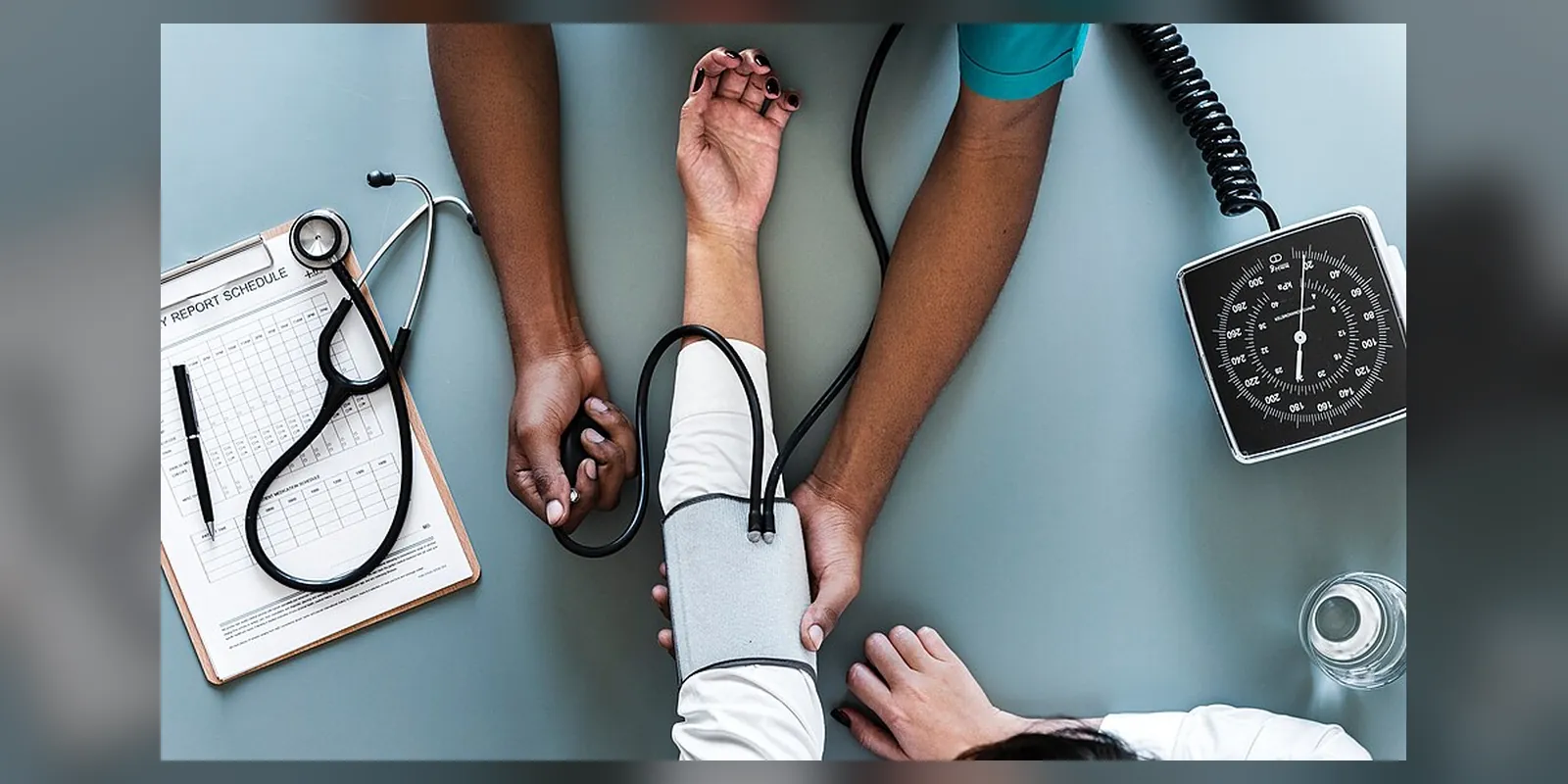
What this helps you do
Home readings help you and your doctor see your usual blood pressure, away from the stress of a clinic.
Safety: before you start
Avoid caffeine, smoking and exercise for 30 minutes before measuring, and empty your bladder. A wrist monitor is less accurate than an upper-arm one.
What you will need
- A validated, automatic upper-arm blood pressure monitor
- A cuff that fits your arm (check the size range printed on it)
- A table and a chair with a back
- A notebook or app to record readings
Step by step
- Sit quietly for 5 minutes with your back supported and both feet flat on the floor.
- Rest your arm on the table so the cuff is at the level of your heart.
- Wrap the cuff on bare skin, about 2 to 3 cm above the bend of your elbow, snug but not tight.
- Stay still and do not talk, then press start.
- After 1 minute, take a second reading.
- Write down both readings, the date and the time.
Tips and common mistakes
Measure at the same times each day, for example morning and evening, for a week before an appointment. Do not measure over clothing. Bring your monitor to a check-up so it can be compared with the clinic's.
When to stop and get help
Call emergency services if your reading is 180/120 mmHg or higher and you have chest pain, breathlessness, severe headache, confusion, vision changes or weakness. If readings are high without symptoms, repeat after 5 minutes and contact your doctor the same day.