Overview
Biliary atresia is a rare but serious condition in babies in which the bile ducts, the tubes that carry bile from the liver to the bowel, become inflamed, scarred and blocked in the first weeks of life. Bile gets trapped in the liver, damaging it and leading to cirrhosis and liver failure if untreated.
The main signs are prolonged jaundice (yellow skin and eyes) beyond two weeks of age, pale or white stools, and dark urine. Biliary atresia is the most common reason for liver transplantation in children. Early diagnosis is crucial because an operation called the Kasai portoenterostomy, ideally done before eight weeks of age, can restore bile flow in many babies and delay or avoid the need for a transplant.
Biliary atresia affects about one in every 10,000 to 20,000 babies in Europe and North America, and is more common in parts of East Asia. It is not caused by anything the parents did during pregnancy. Because many newborns have mild jaundice in the first days of life, it is easy to miss, which is why checking stool colour is so important.
When to get urgent help
Seek urgent medical advice for a baby with jaundice lasting more than two weeks, pale or white stools, dark urine, or a baby with fever after Kasai surgery.
Causes and risk factors
The exact cause is unknown. Possible factors include:
- Abnormal immune or inflammatory response in the bile ducts
- Viral infections, such as cytomegalovirus or rotavirus, which may trigger damage
- Genetic factors
- Developmental abnormalities in some babies, including those with other birth defects (syndromic biliary atresia)
- More common in East Asia and in girls
How it develops (pathophysiology)
Normal bile flow
Bile is made by liver cells and drains through small ducts that merge into the right and left hepatic ducts, then the common bile duct, which empties into the duodenum. Bile helps digest fats and carries waste products such as bilirubin out of the body in stools, giving stools their brown colour.
What goes wrong
- Inflammation of bile ducts: in the weeks after birth, an immune-mediated inflammation, possibly triggered by a virus, damages the bile ducts outside and inside the liver.
- Scarring and blockage: inflamed ducts become scarred (fibrosed) and blocked, or disappear completely.
- Bile build-up (cholestasis): bile cannot drain, so it accumulates in the liver.
- Liver damage: trapped bile is toxic to liver cells, causing inflammation and scarring (fibrosis), progressing to cirrhosis within months.
- Portal hypertension: scarring increases pressure in blood vessels of the liver, causing spleen enlargement, fluid in the abdomen and swollen veins.
- Malabsorption: without bile reaching the gut, fats and fat-soluble vitamins (A, D, E, K) are poorly absorbed, causing poor growth, bleeding problems and bone problems.
Why the symptoms happen
- Jaundice results from conjugated bilirubin building up in the blood because it cannot be excreted.
- Pale stools occur because no bile pigment reaches the gut.
- Dark urine occurs as bilirubin is excreted by the kidneys instead.
- Enlarged liver and spleen reflect liver damage and portal hypertension.
- Poor weight gain reflects fat malabsorption.
- Bleeding or bruising reflects vitamin K deficiency.
How treatment acts on the mechanism
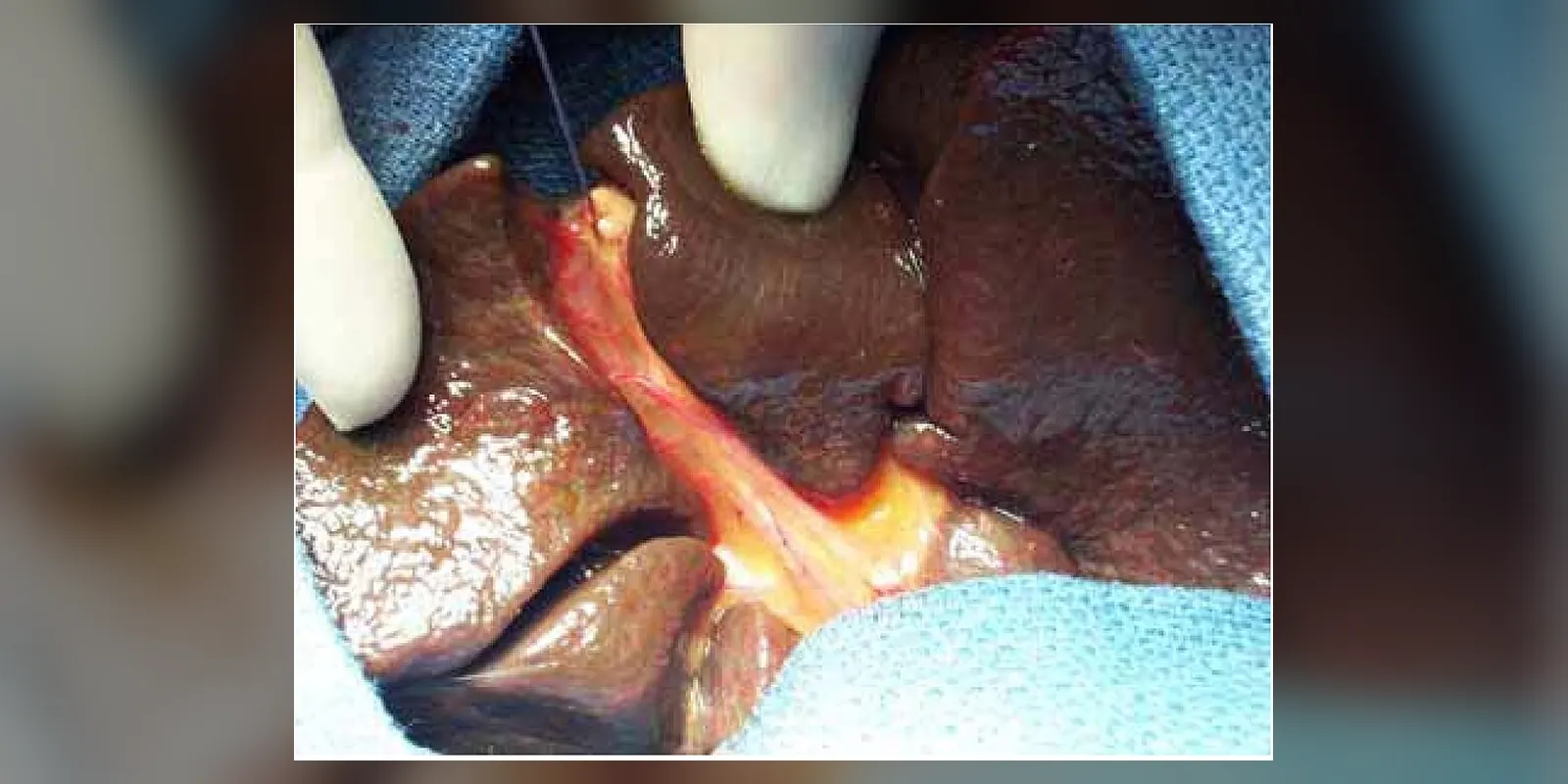
The Kasai portoenterostomy removes the blocked ducts and connects a loop of intestine directly to the liver where tiny ducts remain, allowing bile to drain. Success depends on early surgery, before scarring becomes severe. Vitamin supplements correct deficiencies. Liver transplantation replaces the damaged liver if the Kasai procedure fails or cirrhosis progresses.
Types
- Isolated biliary atresia: the most common
- Syndromic biliary atresia: with other birth defects, such as heart or spleen abnormalities (biliary atresia splenic malformation syndrome)
- Cystic biliary atresia
Signs and symptoms
- Yellow skin and eyes lasting more than two weeks after birth (or three weeks in premature babies)
- Pale, white or clay-coloured stools
- Dark yellow urine
- Swollen abdomen
- Poor weight gain
- Irritability
- Easy bruising or bleeding
Babies may otherwise appear well initially.
Stool colour is one of the most useful clues. Healthy baby stools are yellow, green or brown; stools that are pale yellow, grey, white or putty-coloured are a warning sign that bile is not reaching the bowel.
How it is diagnosed
- Blood tests: conjugated (direct) bilirubin, liver function tests
- Stool colour charts: screening tool used in some countries
- Ultrasound of the liver and bile ducts
- Hepatobiliary scan (HIDA)
- Liver biopsy
- Intraoperative cholangiogram: an X-ray during surgery to confirm the diagnosis
Possible complications
- Cirrhosis and liver failure
- Portal hypertension, bleeding varices
- Cholangitis (infection of the bile ducts), especially after surgery
- Poor growth and malnutrition
- Vitamin deficiencies
- Death without treatment
Goals of treatment
The goals are to restore bile flow as early as possible, support growth and nutrition, and treat complications, with liver transplantation when needed.
Medicines
- Fat-soluble vitamin supplements (A, D, E, K)
- Ursodeoxycholic acid to improve bile flow
- Antibiotics to prevent or treat cholangitis
- Steroids after surgery in some centres
Other treatments
- Kasai portoenterostomy, ideally before 60 days of age
- Special formula with medium-chain triglycerides for easier fat absorption
- Liver transplantation, often in early childhood if the Kasai fails
Living with it and prevention
Biliary atresia cannot be prevented. Early detection is key:
- Check any baby with jaundice beyond two weeks
- Look at the colour of the baby's stools; pale stools should be reported urgently
- Stool colour card screening programmes improve early diagnosis
Monitoring and follow-up
Children are followed closely by paediatric liver specialists, with regular blood tests, growth monitoring and scans. Those after transplant need lifelong care.
Outlook
Without treatment, biliary atresia is fatal. With the Kasai procedure, many children survive with their own liver, though most eventually need a transplant. Liver transplant outcomes are excellent.
Special considerations
- Premature babies: jaundice beyond three weeks should be checked
- Families: need support through surgery, follow-up and possible transplant