Overview
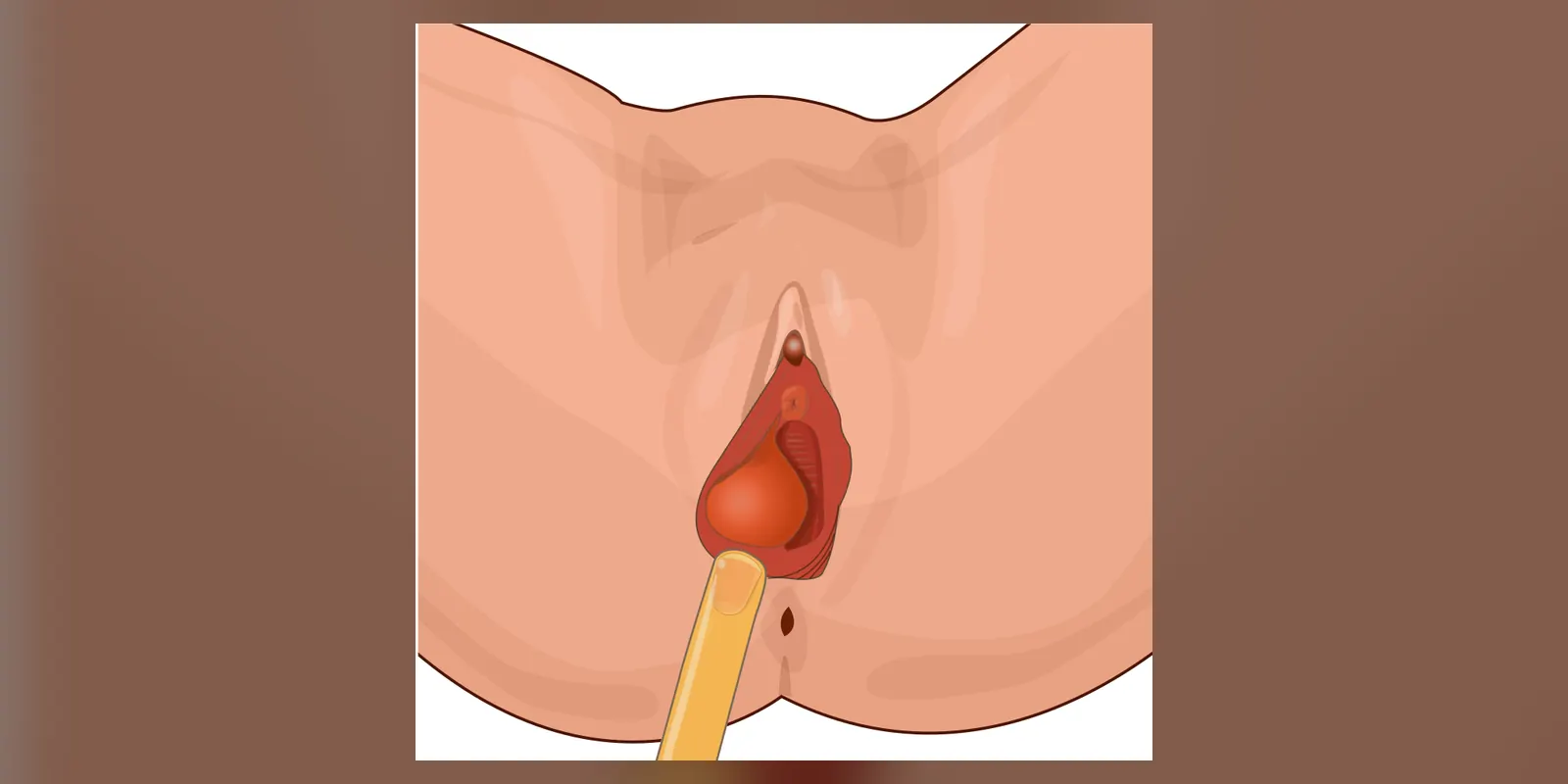
An anal fissure is a small tear or split in the thin lining of the anal canal. It causes sharp, often severe pain when passing stools, sometimes lasting for hours afterwards, and bright red blood on the toilet paper.
Anal fissures are very common, affecting people of all ages, including babies. They are often caused by passing hard or large stools. Most short-term (acute) fissures heal on their own within a few weeks with simple measures such as softening stools. Fissures that last longer than six weeks are called chronic fissures and may need ointments or a minor procedure to help them heal.
When to get urgent help
See a doctor promptly for heavy bleeding, fever, severe pain, swelling or discharge (possible abscess), or if bleeding is accompanied by weight loss or a change in bowel habit.
Causes and risk factors
- Constipation and straining
- Passing hard or large stools
- Persistent diarrhoea
- Pregnancy and childbirth
- Anal sex or insertion of objects
- Inflammatory bowel disease (especially Crohn's disease)
- Infections such as sexually transmitted infections, tuberculosis or HIV
- Anal cancer (rarely)
- Reduced blood flow to the anal area in older people
How it develops (pathophysiology)
Normal anatomy
The anal canal is lined by sensitive tissue called anoderm and surrounded by two rings of muscle: the internal anal sphincter, an involuntary muscle that stays partly contracted at rest to keep the anus closed, and the external anal sphincter, which we control voluntarily. Blood supply to the back (posterior midline) of the anal canal is relatively poor.
What goes wrong
- Initial tear: a hard or large stool stretches the anal canal and tears the anoderm, usually in the posterior midline where the tissue is least supported.
- Pain and spasm: the tear exposes sensitive nerve endings. Pain triggers spasm of the internal anal sphincter, raising resting pressure in the anal canal.
- Reduced blood flow: high sphincter pressure compresses small blood vessels, reducing blood flow to the area. Because the posterior midline already has relatively poor blood supply, the tear does not get enough oxygen to heal.
- Vicious cycle: pain makes people avoid opening their bowels, stools become harder, and passing them reopens the tear. This explains why some fissures become chronic.
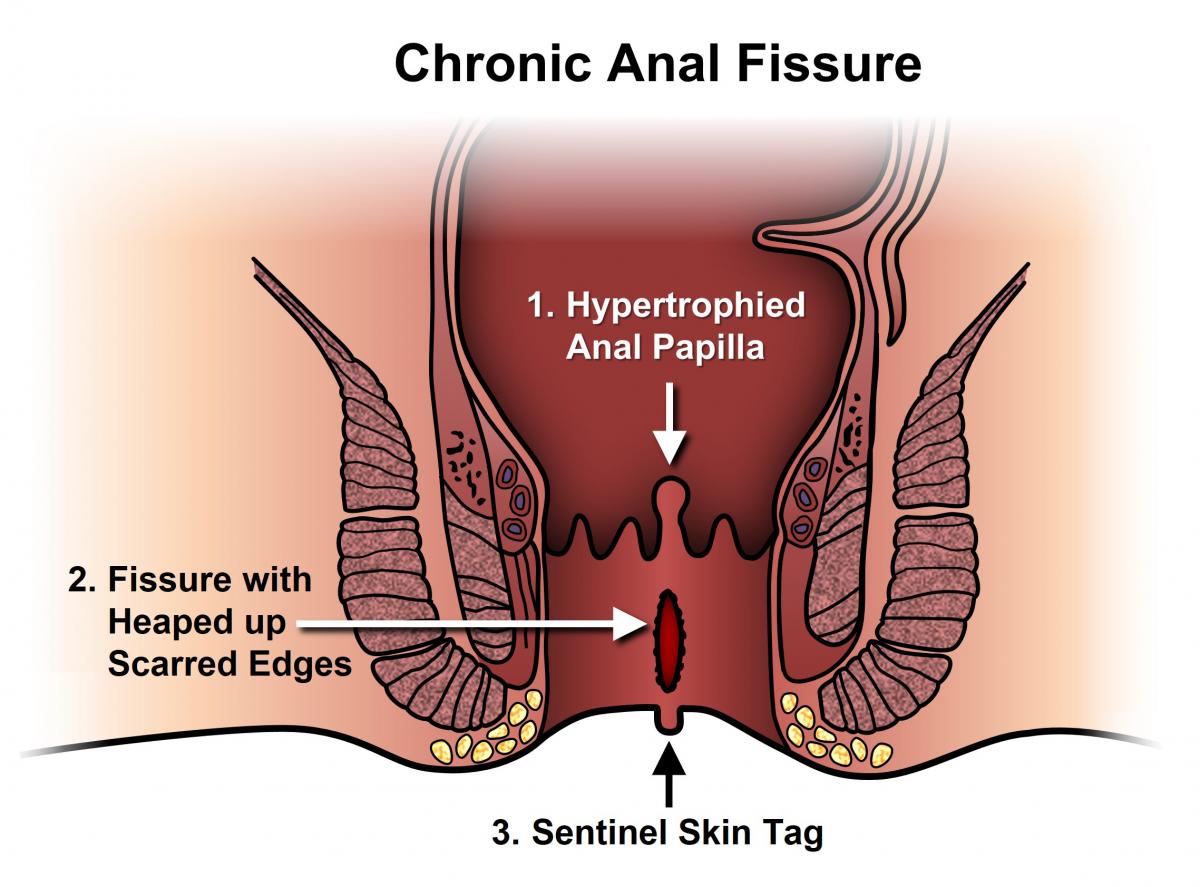
- Chronic changes: over time, the edges of the fissure become thickened, a small skin tag (sentinel pile) may form at the outer end, and an enlarged anal papilla may develop at the inner end. Muscle fibres of the internal sphincter may be visible at the base.
Fissures that are not in the midline, or are multiple, may be due to other conditions such as Crohn's disease, infection or cancer.
Why the symptoms happen
- Sharp pain during bowel movements is caused by stretching of the torn, sensitive lining.
- Burning or aching pain afterwards results from sphincter spasm.
- Bright red blood comes from small vessels in the tear.
- Itching results from irritation and discharge.
How treatment acts on the mechanism
Stool softeners and fibre reduce trauma to the tear. Glyceryl trinitrate (GTN) or diltiazem ointment relaxes the internal sphincter and improves blood flow, allowing healing. Botulinum toxin injection temporarily paralyses the sphincter. Lateral internal sphincterotomy, a small surgical cut in the internal sphincter, permanently lowers pressure and has the highest healing rate, though with a small risk of incontinence.
Types
- Acute anal fissure: present for less than six weeks
- Chronic anal fissure: present for more than six weeks
- Primary: no underlying condition
- Secondary: due to another condition such as Crohn's disease
Signs and symptoms
- Sharp pain when passing stools
- Burning or aching pain lasting minutes to hours afterwards
- Bright red blood on toilet paper or on the stool
- Itching or irritation around the anus
- A small skin tag near the anus in chronic fissures
How it is diagnosed
- History of symptoms
- Gentle examination of the anus, which usually shows the fissure
- Internal examination is often avoided initially because of pain
- Further tests such as sigmoidoscopy or colonoscopy if the fissure is unusual, multiple, not healing, or if there are symptoms such as weight loss or change in bowel habit
Possible complications
- Chronic fissure
- Recurrence
- Fistula (rare)
- Anal stenosis
- Faecal incontinence after surgery (uncommon)
Goals of treatment
Treatment aims to relieve pain, soften stools, and help the fissure heal.
Medicines
- Laxatives: bulk-forming or osmotic laxatives to soften stools
- Pain relief: paracetamol, ibuprofen, or local anaesthetic gels before bowel movements
- GTN ointment applied to the anus for six to eight weeks; may cause headaches
- Diltiazem ointment, often better tolerated than GTN
- Botulinum toxin injection if ointments fail
Other treatments
- Increased fibre and fluid intake
- Warm baths (sitz baths) to relax the sphincter and ease pain
- Avoiding straining
- Lateral internal sphincterotomy for chronic fissures that do not heal
- Fissurectomy in some cases
Living with it and prevention
- Eat a high-fibre diet with fruit, vegetables and whole grains
- Drink plenty of water
- Respond promptly to the urge to open the bowels
- Avoid straining
- Treat constipation or diarrhoea early
Monitoring and follow-up
Most acute fissures heal within a few weeks. Review is needed if pain or bleeding continues beyond six to eight weeks.
Outlook
Most acute fissures heal with simple measures. Chronic fissures heal in many people with ointments, and surgery is highly effective when needed. Recurrence is common if constipation continues.
Keeping stools soft for several weeks after the pain settles is the best way to stop a fissure coming back. A fissure that does not heal, keeps returning, or sits in an unusual position should be checked again, because other conditions such as Crohn's disease can look similar.
Special considerations
- Babies: fissures are common and usually heal quickly with softer stools
- Pregnancy and after childbirth: common; stool softeners help
- Unusual fissures: need investigation for Crohn's disease, infection or cancer