Overview
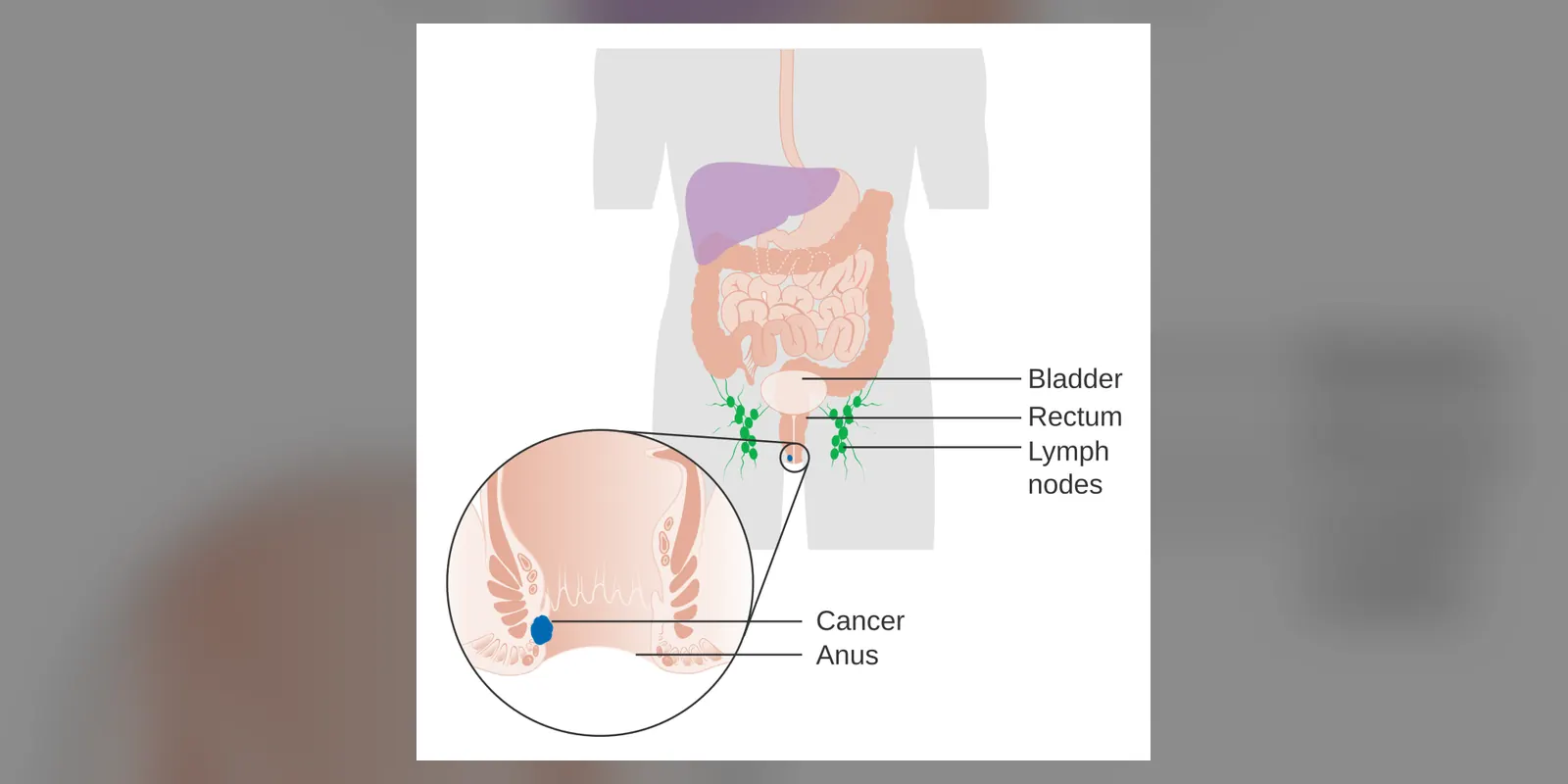
Anal cancer is a rare cancer that develops in the anal canal or the skin around the anus. Most anal cancers are squamous cell carcinomas, and the majority are caused by long-term infection with high-risk types of human papillomavirus (HPV), the same virus that causes most cervical cancers.
It is more common in women, older adults, people with weakened immune systems (including people living with HIV and organ transplant recipients), and people with a history of other HPV-related cancers. Symptoms such as bleeding, itching and lumps are often mistaken for piles, so it is important to have new or persistent symptoms checked. Anal cancer is often curable with combined chemotherapy and radiotherapy, and surgery is usually not needed.
When to get urgent help
See a doctor promptly for persistent anal bleeding, a lump or pain. Seek urgent help for heavy bleeding or inability to open the bowels.
Causes and risk factors
- High-risk HPV infection, especially HPV type 16
- Weakened immune system: HIV, organ transplant, long-term immunosuppressive medicines
- Receptive anal sex
- Many sexual partners
- Smoking
- History of cervical, vulval or vaginal pre-cancer or cancer
- Older age
- Chronic inflammation of the anus (rarely)
How it develops (pathophysiology)
Normal structure of the anus
The anal canal is about 3 to 4 cm long and lies between the rectum and the outside skin. Its lining changes along its length: the upper part has glandular cells like the rectum, the lower part is lined by squamous epithelium, similar to skin, and between them is the transformation zone, where the two types meet. This zone is especially vulnerable to HPV, as is the transformation zone of the cervix.
What goes wrong
- HPV infection: HPV infects basal cells of the squamous lining through tiny breaks. Most infections are cleared by the immune system within two years.
- Persistent infection: in some people, especially those with weakened immunity, high-risk HPV persists and its DNA integrates into the host cells.
- Viral oncogenes: HPV produces proteins called E6 and E7. E6 promotes the breakdown of p53, a protein that stops damaged cells from dividing. E7 inactivates retinoblastoma protein (Rb), which controls the cell cycle. Without these brakes, cells divide uncontrollably and accumulate further genetic damage.
- Pre-cancer: cells become increasingly abnormal, a condition called anal intraepithelial neoplasia (AIN) or high-grade squamous intraepithelial lesion (HSIL).
- Invasive cancer: abnormal cells break through the basement membrane into deeper tissue. The cancer can spread to lymph nodes in the groin and pelvis, and less often to the liver or lungs.
Smoking adds carcinogens and weakens local immunity, increasing progression.
Why the symptoms happen
- Bleeding occurs because tumour tissue is fragile and bleeds easily.
- Pain or a lump results from the growing mass.
- Itching and discharge reflect irritation and ulceration.
- Change in bowel habit or incontinence occurs when the tumour affects the sphincter muscles.
- Swollen glands in the groin indicate spread to lymph nodes.
How treatment acts on the mechanism
Chemoradiotherapy combines radiotherapy, which damages tumour DNA, with chemotherapy (usually mitomycin and fluorouracil or capecitabine), which sensitises cells to radiation and kills dividing cells. This often cures the cancer while preserving the anal sphincter. HPV vaccination prevents infection with the high-risk types that cause most anal cancers. Immunotherapy can help some advanced cancers by restoring the immune response against HPV-related tumour cells.
Types
- Squamous cell carcinoma: about 85 to 90 percent
- Adenocarcinoma: rare, from glandular cells
- Basal cell carcinoma and melanoma: rare
- Classified as anal canal or anal margin (perianal skin) cancer
Signs and symptoms
- Bleeding from the bottom
- Pain, discomfort or a feeling of fullness in the anal area
- A lump near or inside the anus
- Itching
- Discharge of mucus
- Change in bowel habits
- Difficulty controlling the bowels
- Swollen lymph nodes in the groin
These symptoms are more often due to piles or fissures but should always be checked if they persist.
How it is diagnosed
- Examination, including a digital rectal examination
- Proctoscopy or anoscopy
- Biopsy of any abnormal area
- MRI of the pelvis to assess local spread
- CT or PET-CT to look for distant spread
- HIV test where appropriate
Possible complications
- Local spread into nearby tissues
- Spread to lymph nodes, liver or lungs
- Treatment effects: skin soreness, diarrhoea, bowel or bladder changes, sexual dysfunction and infertility
- Recurrence
Goals of treatment
The goal is to cure the cancer while preserving bowel function where possible.
Medicines
- Chemoradiotherapy with mitomycin and fluorouracil or capecitabine: standard first-line treatment
- Chemotherapy (such as carboplatin and paclitaxel) for spread disease
- Immunotherapy (such as retifanlimab or nivolumab) for some advanced cancers
Other treatments
- Local excision for small early tumours at the anal margin
- Abdominoperineal resection (removal of the anus and rectum with a permanent colostomy) if cancer persists or returns after chemoradiotherapy
- Supportive care for skin and bowel effects
Living with it and prevention
- HPV vaccination, ideally before becoming sexually active
- Not smoking
- Safer sex practices, though condoms do not fully protect against HPV
- Screening for high-risk groups, such as people living with HIV, through anal examination and anal cytology where available
- Treatment of high-grade pre-cancers
Monitoring and follow-up
After treatment, people are followed with regular examinations and MRI scans for several years. Recovery from chemoradiotherapy can take months.
Outlook
Anal cancer has a good outlook when found early: most people with localised disease are cured by chemoradiotherapy. Outcomes are poorer when it has spread.
Follow-up after treatment usually includes regular examinations and scans for several years, because most recurrences appear in the first few years. Many people also benefit from support for bowel, bladder and sexual changes after radiotherapy, and these problems often improve with time and specialist help.
Special considerations
- People living with HIV: higher risk; screening is recommended in many guidelines
- Organ transplant recipients: higher risk
- Women with cervical HPV disease: higher risk