Medical emergency? Call your local emergency number
First aid guides

Menu

What Happens to Sperm in the Male Body When Ejaculation Doesn’t Occur?

What Happens to Sperm in the Male Body When Ejaculation Doesn’t Occur? Sexual & reproductive health 2 min read
Not yet medically reviewed. This page has not been checked by a qualified medical reviewer. Use it for general education only and confirm anything important with a healthcare professional. Written by GeoMed Editorial Team. Last updated 24 October 2026.

Every day, the male body produces millions of sperm. Millions! But what happens when you don’t release them through ejaculation? Many men assume sperm just “sits there” or loses potency. The truth is far more fascinating. Your body is smarter than you think. It manages sperm, recycles it, and keeps your reproductive system running smoothly even during long periods of abstinence. By the end of this article, you’ll understand exactly how your body handles unreleased sperm, what it means for your health, and why this natural process is completely safe.

Sperm Production: A Continuous Process

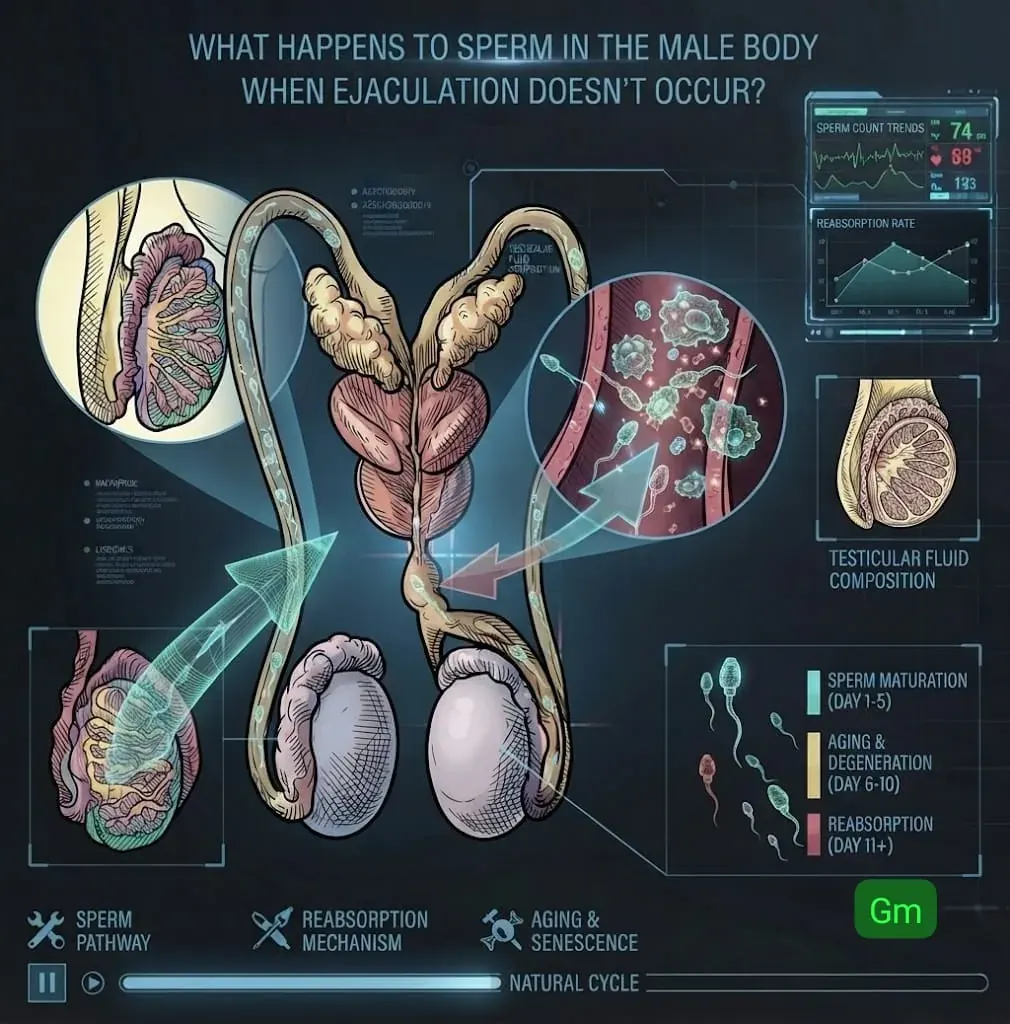
Sperm production is constant. The testes never stop. Through a process called spermatogenesis, sperm take roughly 64–72 days to fully develop. This isn’t just about reproduction it’s about maintaining your hormonal balance and reproductive health. Even if you haven’t ejaculated in weeks, your testes are still working. They’re producing, maturing, and storing sperm for potential use. This continuous cycle ensures your body is always ready for fertilization.

Storage and Maturation

Once sperm is produced, it’s stored in the epididymis, a coiled tube behind each testicle. Here, sperm matures and gains the ability to swim. Millions of sperm can be stored at a time, waiting for their moment. Without ejaculation, sperm remain in the epididymis for several weeks. They don’t just pile up indefinitely. The body has a natural system to handle unused sperm safely.

Natural Absorption of Unreleased Sperm

Sperm that aren’t ejaculated don’t go to waste they are absorbed and recycled by your body. Old sperm break down naturally in the epididymis. Cellular components, including proteins and nutrients, are reabsorbed. Your body uses these components to support ongoing sperm production and overall health. This process is completely normal, efficient, and a sign that your reproductive system is functioning exactly as it should.

Hormones Keep Everything in Balance

Even without sexual activity, hormone production continues. Testosterone, produced by the testes, fuels sperm production and libido. The pituitary hormones FSH and LH regulate the testes, ensuring the system runs smoothly. Short periods of abstinence won’t harm hormone levels. In fact, some research shows that sperm concentration can temporarily increase after a week or two without ejaculation. Your body adapt. It’s designed to do this.

Nocturnal Emissions: The Body’s Backup Plan

Sometimes, the body releases sperm automatically. This is called a nocturnal emission, or “wet dream.” It’s involuntary. It helps prevent old sperm from lingering too long. It’s a healthy, natural process, not a sign of a problem. Even if you don’t consciously ejaculate, your body has a built-in mechanism to maintain reproductive health.

Read more: Natural Penis Growth What Most Men Never Learn

Key Takeaways

Sperm is continuously produced and stored in the testes and epididymis. Unused sperm is naturally broken down and absorbed by the body. Hormonal balance continues normally, even during periods of abstinence. Nocturnal emissions are the body’s natural way of releasing excess sperm. These processes are entirely healthy and keep your reproductive system functioning efficiently.

Conclusion

The male body is more than capable of managing sperm without regular ejaculation. It produces, stores, absorbs, and recycles sperm efficiently. You don’t need to worry about buildup, hormone disruption, or health issues from abstinence. Understanding these processes gives insight into the incredible physiology at work every day. Your body is smart. And it’s always taking care of you even when you’re not paying attention!
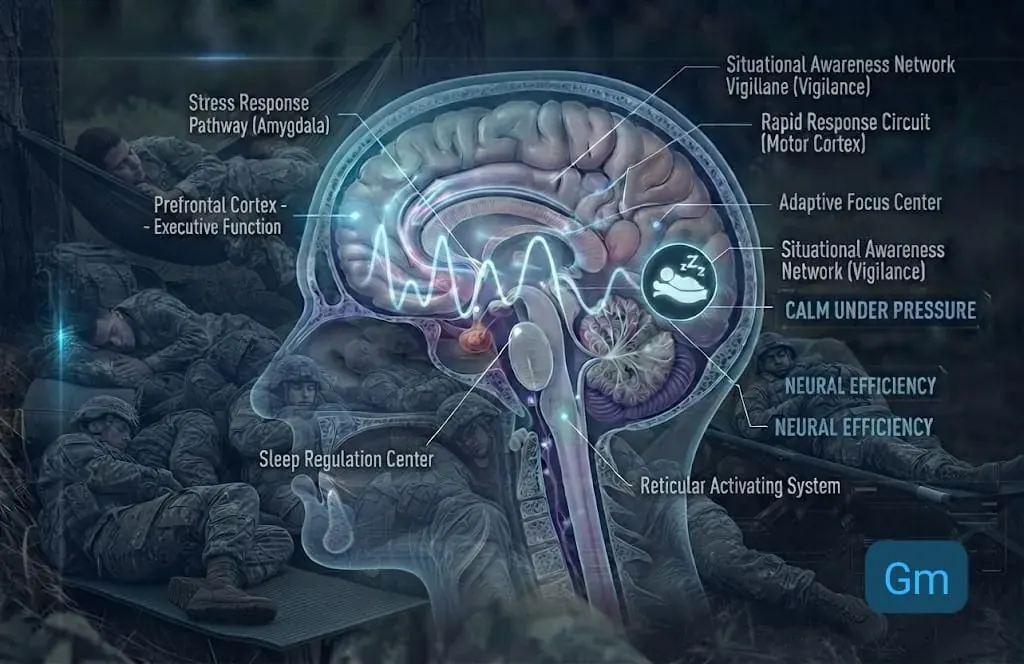
Image credits

  • Heading image: GeoMed

Comments (0)

Be the first to comment on this article!

Share your thoughts and start the discussion.

Leave a comment

Comments are public and reviewed by a moderator before they appear. Please don’t share personal medical details, as we can’t give individual medical advice in comments. Comments are not reviewed medical content.

By commenting you agree to our terms of use and comment policy. See our privacy policy for how we handle your data.

More articles

View all
How Soldiers Fall Asleep Fast Even in Chaos and How You Can Too Healthy living & wellness

How Soldiers Fall Asleep Fast Even in Chaos and How You Can Too

96 percent success rate. That's the number that made this military sleep technique go viral. But here's what most people don't know: this method wasn't designed for your cozy bedroom with blackout curtains and white noise machines. It was developed for fighter pilots who needed to sleep sitting upright, surrounded by engine roar and the stress of imminent combat missions. I've spent years studying sleep medicine, and I'll tell you straight most sleep advice is garbage. We're drowning in melatonin gummies, expensive mattresses, and apps that promise to "hack" your circadian rhythm. Meanwhile, the U.S. military figured out decades ago that falling asleep isn't about perfect conditions. It's about training your nervous system to shut down on command, even when everything around you is screaming danger.

8 min read
Unlock the Secret to Using Gym Machines the Right Way Exercise & fitness

Unlock the Secret to Using Gym Machines the Right Way

The gym is only intimidating until you learn the language of its machines.” This statement holds true for every beginner who has ever stepped into a fitness center, unsure of where to start. Research shows that nearly 50% of new gym-goers quit within the first six months, often due to confusion, fear of injury, or lack of proper guidance. But here’s the truth: once you understand how to use gym equipment safely and effectively, the entire environment transforms from overwhelming to empowering. This guide is designed to give you that confidence. As a professional trainer, I’ll walk you through the most common gym equipment, showing you how to use each correctly so you can train with purpose, prevent injuries, and maximize results.

4 min read
The Latest Breakthroughs In Cancer Treatment That Could Change Lives Forever Medical innovation & technology

The Latest Breakthroughs In Cancer Treatment That Could Change Lives Forever

For decades, the war on cancer was fought with three primary weapons: surgery, chemotherapy, and radiation. They are effective, but brutal. The collateral damage was often immense. Today, we are witnessing a profound shift. We are moving from a strategy of indiscriminate attack to one of precise, intelligent intervention. The future is not about poisoning the enemy and hoping our body withstands it longer. The future is smarter than that. It’s happening now. I’ve been in medicine for a long time. I have never seen a period of more rapid, breathtaking innovation than right now. The breakthroughs emerging from labs and clinical trials aren't just incremental; they are fundamentally changing what a cancer diagnosis means. They are providing hope where there was little. This is the most exciting time in oncology. Let's dive into the specific advancements that are genuinely changing lives.

4 min read
Why Intermittent Fasting Doesn’t Work for Many People and How to Fix It Properly Nutrition

Why Intermittent Fasting Doesn’t Work for Many People and How to Fix It Properly

You’ve heard countless stories of people losing weight and feeling more energetic simply by changing when they eat. So you tried intermittent fasting, skipped breakfast for several days in a row, limited your eating hours, and pushed through those early hunger cramps with determination. Here’s the surprising truth: a 2023 study published in the Journal of Clinical Nutrition found that up to 38% of individuals who practice intermittent fasting see little or no measurable results simply because of the quality of food consumed during their eating window.

4 min read