Medical emergency? Call your local emergency number
First aid guides

Menu

Lipid Profile: What Your Cholesterol Levels Reveal About Your Heart

Lipid Profile: What Your Cholesterol Levels Reveal About Your Heart Blood tests 3 min read
Not yet medically reviewed. This page has not been checked by a qualified medical reviewer. Use it for general education only and confirm anything important with a healthcare professional. Written by GeoMed Editorial Team. Last updated 24 October 2026.
Laboratory results must be interpreted by a healthcare professional in the context of your symptoms, history and other tests. Reference ranges differ between laboratories, so always use the range printed on your own report.

Heart disease remains the leading cause of death worldwide, and cholesterol plays a bigger role than you think." High cholesterol doesn’t cause obvious symptoms, but it quietly increases your risk of heart attack and stroke. That’s why a lipid profile is more than just a routine blood test, it’s a critical snapshot of your cardiovascular health. Your cholesterol levels can reveal a lot. Too much LDL ("bad" cholesterol) clogs your arteries, while HDL ("good" cholesterol) helps clear it out. And let’s not forget triglycerides, which store excess calories but can be dangerous in high amounts. These numbers matter. The good news? You can control them. Let’s break it down.

What Is a Lipid Profile?

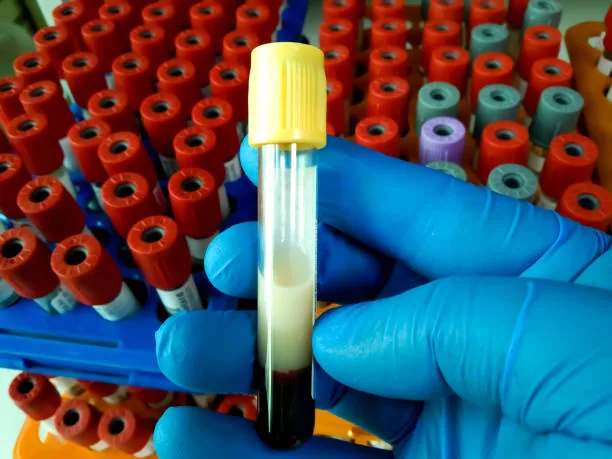
A lipid profile is a blood test that measures different types of fats (lipids) in your bloodstream. It’s a crucial tool for assessing your risk of heart disease and stroke. The test typically includes:

1. Total Cholesterol – The total amount of cholesterol in your blood.

2.LDL (Low-Density Lipoprotein) – "Bad" Cholesterol – High levels contribute to plaque buildup in arteries.

3.HDL (High-Density Lipoprotein) – "Good" Cholesterol – Helps remove excess cholesterol from the bloodstream.

4. Triglycerides – A type of fat that stores extra energy; high levels increase heart disease risk.

5.VLDL (Very Low-Density Lipoprotein) – Transports triglycerides; often calculated based on triglyceride levels.
Lipid Profile: What Your Cholesterol Levels Reveal About Your Heart

Why It Matters

High cholesterol doesn’t cause immediate symptoms. But over time, excess LDL and triglycerides lead to plaque buildup in the arteries, increasing the risk of heart attacks and strokes. This is why checking your cholesterol regularly is critical, it allows you to catch and manage issues before they become life-threatening.

Understanding Your Lipid Profile Results

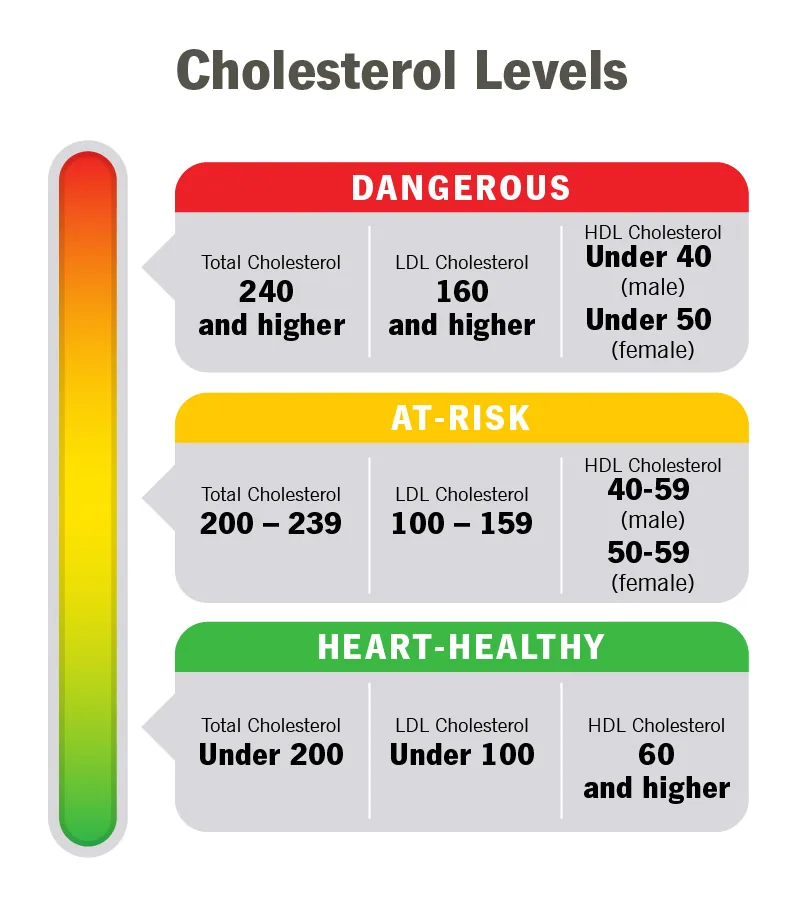
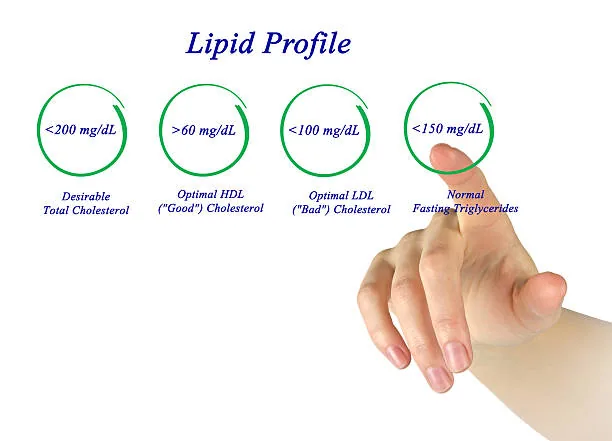
A healthy total cholesterol level is below 200 mg/dL. Levels between 200 and 239 mg/dL are considered borderline high, while anything above 240 mg/dL is classified as high.

For LDL ("bad" cholesterol), an optimal level is less than 100 mg/dL. Levels between 100 and 159 mg/dL are borderline high, and anything above 160 mg/dL is considered high risk. High LDL levels mean you have a greater chance of developing heart disease due to plaque buildup in your arteries.

On the other hand, HDL ("good" cholesterol) should be 60 mg/dL or higher to offer heart protection. If it falls between 40 and 59 mg/dL, it's acceptable, but anything below 40 mg/dL increases heart disease risk. The higher your HDL, the better your body can remove excess cholesterol.

Triglycerides should be under 150 mg/dL for a healthy heart. Borderline levels range from 150 to 199 mg/dL, while anything above 200 mg/dL is considered high. High triglycerides can contribute to heart disease, obesity, and metabolic disorders.

How to Improve Your Cholesterol Levels

  1. Eat a Heart-Healthy Diet

Choose healthy fats like those in olive oil, nuts, and avocados.

Increase fiber intake (oats, beans, fruits) to help lower LDL.

Cut back on processed foods, added sugars, and trans fats.

  1. Get Moving

Aim for 150 minutes of moderate exercise per week (walking, jogging, swimming).

Strength training can also help improve cholesterol levels.

  1. Maintain a Healthy Weight

Even losing 5-10% of body weight can significantly improve cholesterol levels.

Focus on sustainable, long-term lifestyle changes rather than crash diets.

  1. Avoid Smoking and Limit Alcohol

Smoking lowers HDL, making it harder for your body to clear excess cholesterol.

Excess alcohol raises triglycerides, increasing heart disease risk.

  1. Consider Medication If Necessary

If lifestyle changes aren’t enough, doctors may prescribe statins or other cholesterol-lowering medications.
Lipid Profile: What Your Cholesterol Levels Reveal About Your Heart

When Should You Get Tested?

Most adults should get a lipid profile at least every 4-6 years. More frequent testing is recommended if you:

  • Have a family history of heart disease.

  • Have high blood pressure, diabetes, or obesity.

  • Smoke or follow an unhealthy diet.

Final Thoughts

Cholesterol isn’t something you can feel, but it’s something you can control. A lipid profile gives you the information you need to make heart-healthy choices. Know your numbers. Take action. Protect your heart.
Image credits

  • Heading image: GeoMed

More Laboratory tests

View all
Thyroid Function Test (TFT): What Your Results Reveal About Your Health Blood tests

Thyroid Function Test (TFT): What Your Results Reveal About Your Health

Your thyroid controls almost everything, your energy levels, metabolism, mood, and even your heart rate. Yet, millions of people walk around with an undiagnosed thyroid disorder, feeling exhausted, struggling with unexplained weight changes, or dealing with brain fog without realizing their thyroid is to blame. Here’s a startling fact: Over 20 million Americans have a thyroid condition, but up to 60% of them don’t even know it. That means millions of people are living with symptoms that could be easily managed, if only they got tested.

4 min read
Radiopharmaceuticals: A Modern Tool in Diagnosis and Therapy Imaging & scans

Radiopharmaceuticals: A Modern Tool in Diagnosis and Therapy

Radiopharmaceuticals are specialized medicinal preparations that contain a radioactive isotope and play a vital role in the field of nuclear medicine. Unlike traditional medications, their action is based not only on pharmacological effects but also on the radiation emitted by the radionuclide they carry. These agents are designed to precisely target specific organs or tissues, providing clinicians with accurate diagnostic information or delivering focused therapeutic radiation.

2 min read
Stool Tests: What Your Gut Can Reveal About Your Health Stool tests

Stool Tests: What Your Gut Can Reveal About Your Health

Let’s be honest no one likes talking about poop. But the truth is, your stool can tell you a lot about what’s going on inside your body. A simple stool test can uncover parasites, harmful bacteria, hidden blood, and even early signs of colon cancer. If you've been dealing with persistent stomach issues, unexplained weight loss, or changes in your digestion, your doctor may recommend a stool test. It’s a quick, non-invasive way to check for underlying health problems. Let’s break down what these tests look for, how they work, and when you might need one.

3 min read
What Your Pee Says About Your Health (And Why You Should Listen) Urine tests

What Your Pee Says About Your Health (And Why You Should Listen)

Ever handed over a urine sample at the doctor’s office and wondered, What exactly are they looking for? It might seem like a routine test, but your pee holds valuable clues about your health. In fact, a simple urinalysis can detect kidney disease, diabetes, infections, and even signs of dehydration, sometimes before you notice any symptoms. The best part? It’s quick, painless, and can give you answers faster than most lab tests. Let’s break down what urinalysis is, what it can tell you, and when you should pay extra attention to your results.

3 min read