
Overview
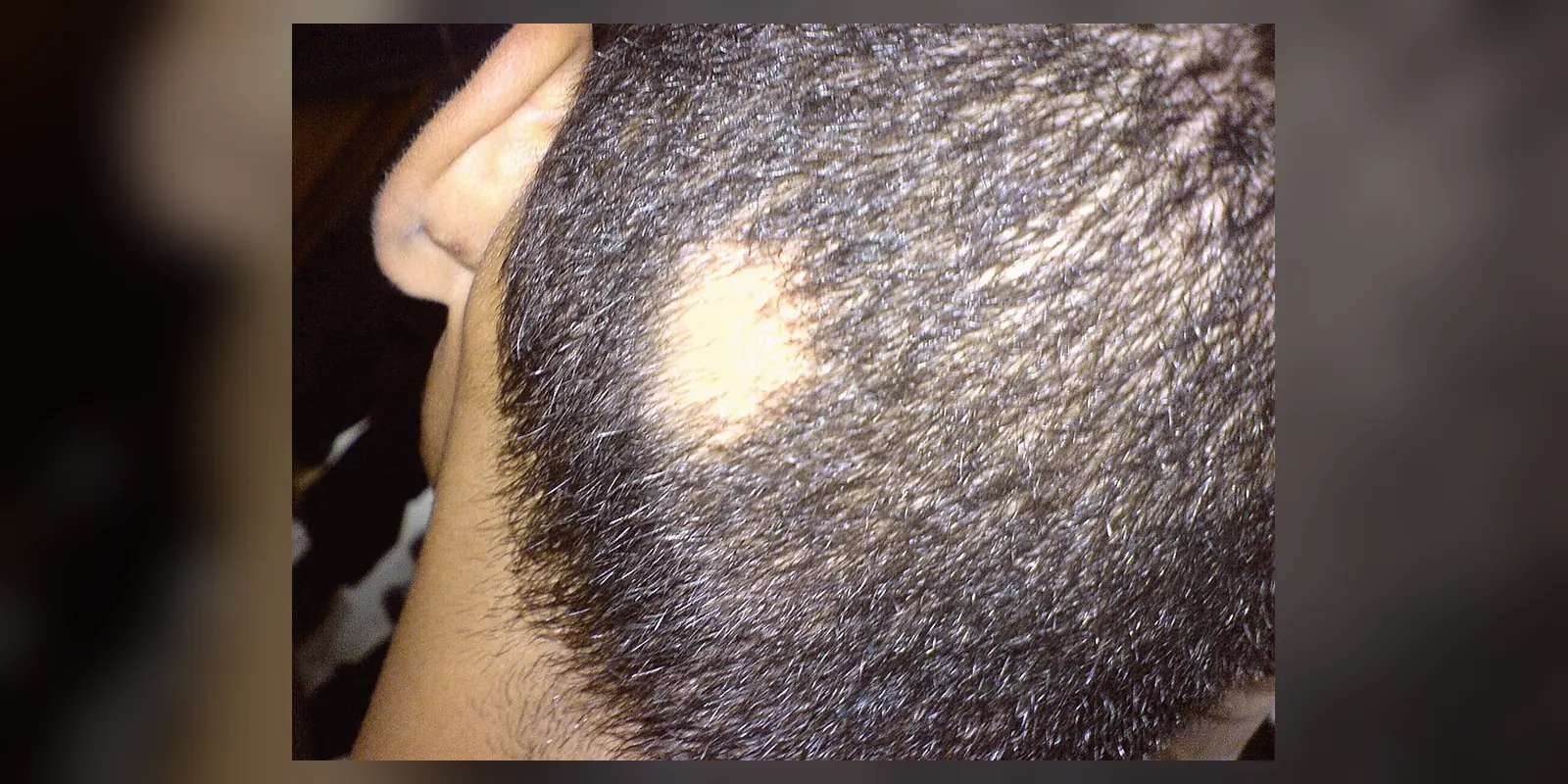
Alopecia areata is an autoimmune condition in which the body's immune system attacks the hair follicles, causing hair to fall out, usually in round or oval patches on the scalp. It can also affect the beard, eyebrows, eyelashes and body hair. In some people, all scalp hair is lost (alopecia totalis) or all body hair (alopecia universalis).
It affects about 1 to 2 percent of people at some point in their lives, often starting in childhood or early adulthood. Alopecia areata is not contagious and is not caused by stress alone, although stress may trigger flares. The hair follicles are not destroyed, so hair can grow back, and many people with small patches recover within a year. However, the condition is unpredictable and can recur. New treatments have improved outcomes for severe forms.
When to get urgent help
Seek medical advice promptly for rapidly spreading hair loss, hair loss with scarring, redness or scaling, or if hair loss is causing significant distress.
Causes and risk factors
Alopecia areata is caused by the immune system attacking hair follicles. Risk factors include:
- Family history: about one in five people with alopecia areata has a relative with it
- Genetic variants in immune system genes
- Other autoimmune conditions, such as thyroid disease, vitiligo, type 1 diabetes and coeliac disease
- Atopic conditions such as eczema, asthma and hay fever
- Down syndrome
- Possible triggers: infections, stress and vaccination have been suggested
How it develops (pathophysiology)
Normal hair follicle immune privilege
Hair follicles cycle through growth (anagen), regression (catagen) and rest (telogen). During the growth phase, the lower part of the follicle has immune privilege, meaning it is protected from attack by the immune system. This protection is maintained by:
- Low levels of MHC class I molecules, which normally display proteins to immune cells
- Local production of immune-suppressing signals such as transforming growth factor beta and alpha-melanocyte-stimulating hormone
What goes wrong
In alopecia areata, this immune privilege collapses:
- A trigger, possibly an infection, stress or local injury, increases interferon gamma in the follicle.
- Follicle cells start displaying more MHC class I and other molecules, exposing proteins from melanocytes and keratinocytes as targets.
- Cytotoxic CD8+ T cells, particularly a type expressing a receptor called NKG2D, gather around the base of growing follicles, forming a dense cluster often described as a "swarm of bees".
- These T cells release more interferon gamma, which acts through the JAK-STAT signalling pathway inside cells, creating a cycle that amplifies the attack and releases interleukin-15.
- The attacked follicles are forced out of the growth phase into a dystrophic resting state, and the hair shafts break and fall out.
Crucially, the stem cells in the upper part of the follicle (the bulge) are spared, so the follicle can regrow hair when inflammation subsides.
Why the symptoms happen
- Round, smooth patches form because follicles in an area are attacked together.
- Exclamation mark hairs, short broken hairs that are narrower at the base, result from damaged, weakened shafts.
- Nail pitting occurs because the same autoimmune process affects the nail matrix.
- White regrowth is common at first because pigment-producing melanocytes recover more slowly than other follicle cells.
- Sudden widespread loss reflects many follicles entering the dystrophic phase together.
How treatment acts on the mechanism
Corticosteroids, as injections into patches or creams, suppress the local T-cell attack. JAK inhibitors (such as baricitinib and ritlecitinib) block the JAK-STAT signalling that drives interferon gamma and interleukin-15 effects, allowing regrowth in many people with extensive disease. Contact immunotherapy creates a deliberate mild allergic reaction on the scalp, which diverts the immune response away from follicles. Minoxidil may support regrowth.
Types
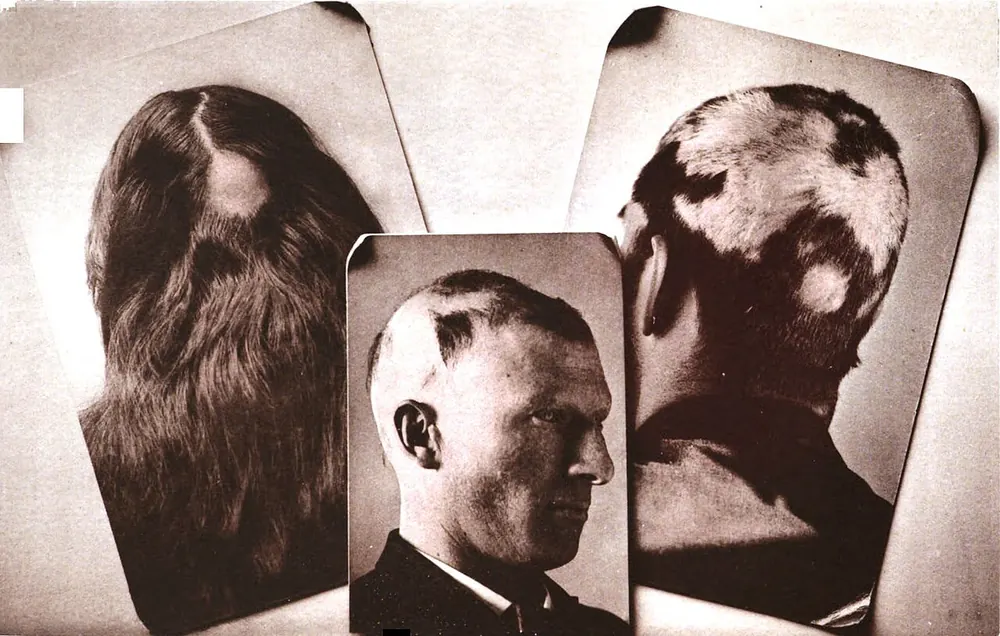
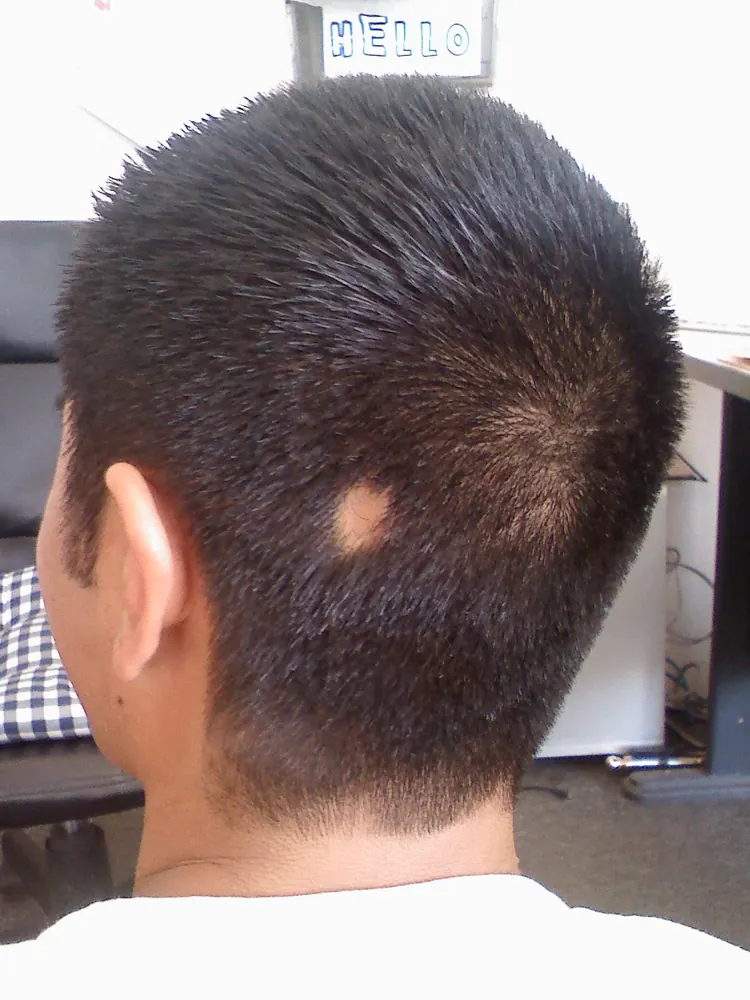
- Patchy alopecia areata: one or more round patches
- Alopecia totalis: loss of all scalp hair
- Alopecia universalis: loss of all scalp and body hair
- Ophiasis pattern: band-like loss along the sides and back of the scalp, often harder to treat
- Diffuse alopecia areata: sudden thinning across the scalp
Signs and symptoms
- Sudden round or oval patches of hair loss, often with smooth skin
- Short, broken "exclamation mark" hairs at the edges of patches
- Loss of eyebrows, eyelashes or beard hair
- Sometimes tingling or itching before hair falls out
- Pitting, ridges or roughness of the nails
- White or grey hair when regrowth begins
How it is diagnosed
- Examination of the scalp, nails and other hair-bearing areas
- Trichoscopy (dermoscopy) showing yellow dots, exclamation mark hairs and black dots
- Hair pull test at the edge of active patches
- Blood tests for thyroid disease and other autoimmune conditions in some cases
- Scalp biopsy occasionally, if the diagnosis is unclear
Possible complications
- Psychological distress, anxiety, depression and social withdrawal
- Loss of eyelashes and eyebrows, which protect the eyes
- Sunburn of the exposed scalp
- Association with other autoimmune conditions
Goals of treatment
Treatment aims to stop hair loss, encourage regrowth, support emotional wellbeing and manage associated conditions.
Medicines
- Steroid injections into small patches every four to six weeks
- Strong steroid creams, lotions or foams
- Topical minoxidil, sometimes alongside other treatments
- Contact immunotherapy (such as diphencyprone) in specialist clinics for extensive loss
- JAK inhibitor tablets (such as baricitinib or ritlecitinib) for severe alopecia areata where approved
- Oral steroids occasionally for rapidly progressing loss, short term only
Other treatments
- Watchful waiting for small patches, as many regrow on their own
- Wigs, hairpieces and scarves
- Eyebrow pencils, tattooing or microblading
- Sun protection for the scalp
- Psychological support and patient support groups
Living with it and prevention
Alopecia areata cannot be prevented. Living with it can be helped by:
- Connecting with support groups
- Using sun protection on exposed skin
- Protecting the eyes with glasses if eyelashes are lost
- Being aware that flares and regrowth are unpredictable
Monitoring and follow-up
Response to treatment is assessed every few months, often using photographs or scoring tools. People taking JAK inhibitors need regular blood tests for blood counts, liver function and cholesterol.
Outlook
Many people with limited patches regrow hair within a year, but recurrence is common. Extensive forms that begin in childhood, ophiasis and total loss are less likely to recover without treatment. JAK inhibitors have improved the outlook for severe disease.
Special considerations
- Children: often affected; school and emotional support are important
- Pregnancy: many treatments are avoided; options should be discussed with a specialist
- People with Down syndrome: higher risk and more extensive disease