

Overview
Anaphylaxis is a severe, potentially life-threatening allergic reaction that develops suddenly, usually within minutes of exposure to a trigger. It affects several body systems at once and can cause swelling of the throat, difficulty breathing, wheezing, a sudden drop in blood pressure and collapse.
Common triggers include foods (such as peanuts, tree nuts, shellfish, milk and eggs), insect stings, medicines and latex. Anaphylaxis is a medical emergency. The most important treatment is an injection of adrenaline (epinephrine) into the outer thigh as soon as possible, followed by calling emergency services. People at risk are often prescribed adrenaline auto-injectors to carry with them.
When to get urgent help
Call emergency services immediately if someone develops difficulty breathing, throat swelling, faintness or collapse after exposure to a possible trigger. Use an adrenaline auto-injector if available.
Causes and risk factors
- Foods: peanuts, tree nuts, shellfish, fish, milk, eggs, sesame, wheat and soy
- Insect stings: bees, wasps, hornets and fire ants
- Medicines: antibiotics (such as penicillin), anti-inflammatory drugs, anaesthetic agents, contrast dye, vaccines (rarely)
- Latex
- Exercise, sometimes combined with eating a particular food
- Idiopathic: no trigger found
Risk factors for severe reactions include asthma, previous anaphylaxis, older age, heart disease, and delayed adrenaline.
How it develops (pathophysiology)
Normal immune defence
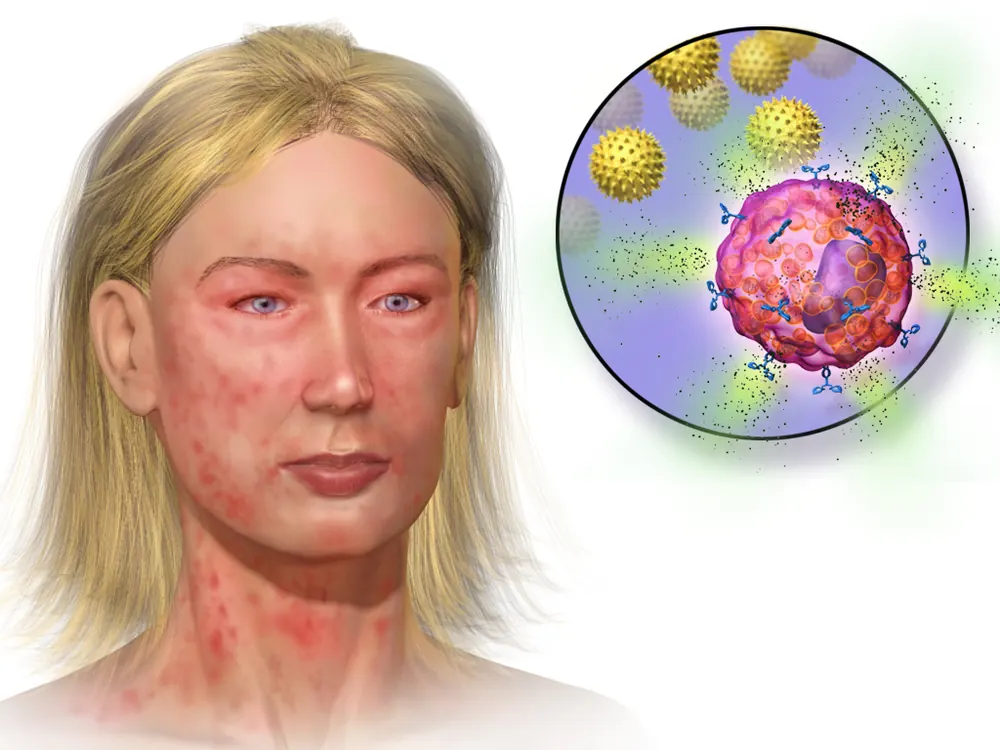
Mast cells in the skin, airways and gut and basophils in the blood contain granules filled with chemical messengers such as histamine. In allergy, the immune system has previously made immunoglobulin E (IgE) antibodies against a harmless substance (an allergen). These IgE antibodies sit on the surface of mast cells and basophils.
What goes wrong
- Trigger exposure: the allergen enters the body by eating, injection, sting or contact.
- Mast cell activation: the allergen binds to IgE on mast cells and basophils, cross-linking the antibodies.
- Massive degranulation: the cells rapidly release histamine, tryptase, leukotrienes, prostaglandins and platelet-activating factor into the circulation.
- Body-wide effects develop within minutes: - Blood vessels widen and become leaky, so fluid moves out of the circulation, causing low blood pressure and shock - Smooth muscle in the airways contracts, causing bronchospasm - Tissues swell, including the lips, tongue and throat (angioedema) - The gut contracts, causing pain, vomiting and diarrhoea
- Late-phase reaction: in some people, a second wave of symptoms (biphasic anaphylaxis) occurs hours later.
Some reactions occur without IgE, by triggering mast cells directly (for example with some medicines and contrast agents), but the effects are the same.
Why the symptoms happen
- Throat swelling and hoarse voice come from fluid leaking into tissues of the upper airway.
- Wheeze and breathlessness are caused by bronchospasm.
- Dizziness, collapse and a weak pulse reflect low blood pressure from blood vessel widening and fluid loss.
- Hives, flushing and itching are due to histamine effects on the skin.
- Abdominal pain and vomiting reflect gut smooth muscle contraction.
- Sense of doom is a common, early feature.
How treatment acts on the mechanism
Adrenaline reverses the key processes: it constricts blood vessels (raising blood pressure), relaxes airway muscle (opening the airways), reduces swelling, and stabilises mast cells to stop further release of chemicals. It must be given early. Lying the person flat with legs raised helps blood return to the heart. Oxygen and intravenous fluids support breathing and circulation. Antihistamines and steroids help skin symptoms and may reduce late reactions but are not life-saving.
Types
- Allergic (IgE-mediated) anaphylaxis: the most common
- Non-allergic anaphylaxis: direct mast cell activation
- Biphasic anaphylaxis: symptoms return hours later
- Food-dependent exercise-induced anaphylaxis
Signs and symptoms
- Swelling of the lips, tongue, face or throat
- Difficulty breathing, wheezing, persistent cough or noisy breathing
- Hoarse voice or difficulty swallowing
- Dizziness, fainting or collapse
- Pale, clammy skin and a fast heartbeat
- Hives, itching or flushing (absent in some cases)
- Abdominal pain, vomiting or diarrhoea
- Confusion, anxiety or a feeling of impending doom
Symptoms usually begin within minutes and can worsen rapidly.
How it is diagnosed
Anaphylaxis is a clinical diagnosis made at the time of the reaction. Treatment should never be delayed for tests.
- Mast cell tryptase blood test taken soon after the reaction can support the diagnosis
- Allergy testing (skin prick tests, specific IgE blood tests, or supervised challenges) afterwards by an allergy specialist to identify the trigger
Possible complications
- Airway obstruction
- Respiratory failure
- Cardiac arrest
- Brain injury from lack of oxygen
- Death
- Biphasic reactions
Goals of treatment
The goals are to reverse the reaction immediately, support breathing and circulation, identify the trigger, and prevent future reactions.
Medicines
- Adrenaline injection into the outer thigh immediately, repeated after five minutes if there is no improvement
- Oxygen
- Intravenous fluids
- Antihistamines for itching and hives
- Steroids in some cases
- Bronchodilators for persistent wheeze
Other treatments
- Call emergency services immediately
- Lie flat with legs raised, or sit up if breathing is difficult; do not stand or walk
- Observation in hospital for several hours because of the risk of biphasic reactions
- Referral to an allergy clinic
- Adrenaline auto-injector training and an anaphylaxis action plan
Living with it and prevention
- Avoid known triggers and read food labels carefully
- Carry two adrenaline auto-injectors at all times if prescribed
- Wear medical alert identification
- Tell schools, workplaces and restaurants about allergies
- Make sure family and friends know how to use the auto-injector
- Keep asthma well controlled
- Venom immunotherapy for people with severe insect sting allergy
Monitoring and follow-up
After anaphylaxis, people are followed up by allergy specialists. Auto-injectors are checked for expiry dates regularly. Action plans are reviewed, especially as children grow.
Outlook
With prompt adrenaline, most people recover fully. Delayed treatment increases the risk of severe outcomes and death. People who have had anaphylaxis are at risk of future reactions.
Special considerations
- Children: schools and carers need training and action plans
- People with asthma: at higher risk of severe reactions
- Older adults and people with heart disease: still need adrenaline; the benefits outweigh the risks
- Pregnancy: adrenaline is still the first-line treatment