
Overview
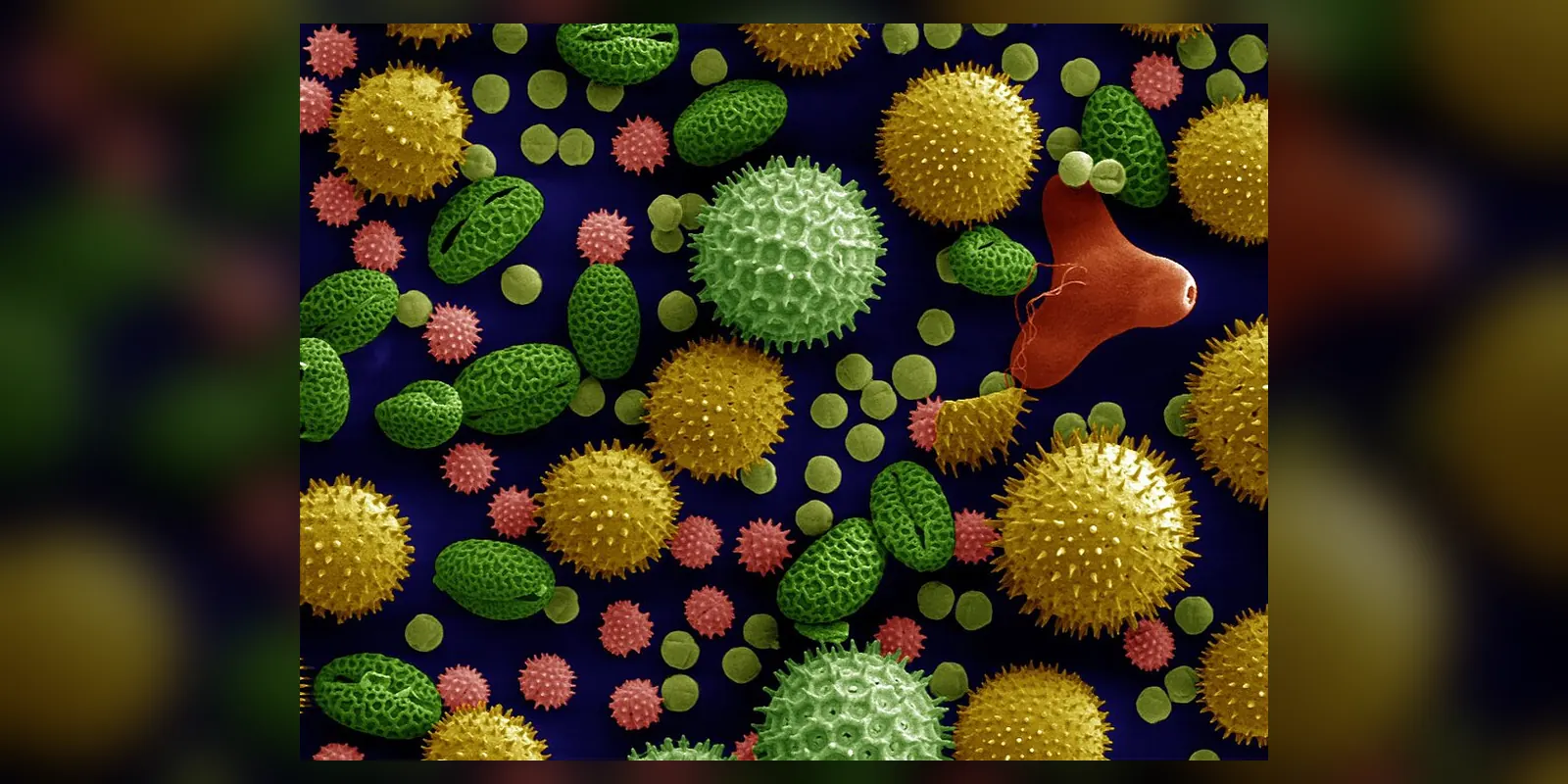
Allergic rhinitis is inflammation of the inside of the nose caused by an allergic reaction to substances in the air, such as pollen, house dust mites, pet dander or mould. When it is caused by pollen and happens seasonally, it is commonly called hay fever.
It is one of the most common long-term conditions, affecting up to a quarter of adults and many children. Symptoms include sneezing, a runny or blocked nose, and itching of the nose, eyes and throat. Although it is not dangerous, allergic rhinitis can disturb sleep, concentration, school performance and work, and it is closely linked with asthma. Avoiding triggers and using nasal sprays and antihistamines usually controls symptoms well.
When to get urgent help
Seek urgent help if hay fever is accompanied by severe wheezing or breathlessness, or swelling of the face or throat. See a doctor for one-sided blockage, bleeding or a reduced sense of smell that does not improve.
Causes and risk factors
- Pollen from trees (spring), grasses (early summer) and weeds (late summer and autumn)
- House dust mites
- Animal dander from cats, dogs, horses and rodents
- Mould spores
- Occupational allergens such as flour, latex and laboratory animals
Risk factors include a family history of allergy, having asthma or eczema, male sex in childhood, and exposure to tobacco smoke.
How it develops (pathophysiology)
Normal role of the nose
The nose warms, humidifies and filters the air we breathe. Its lining (mucosa) contains blood vessels, mucus glands, nerve endings and immune cells, including mast cells. Tiny hairs and mucus trap particles, which are then swallowed. Normally, harmless particles such as pollen are ignored by the immune system.
What goes wrong
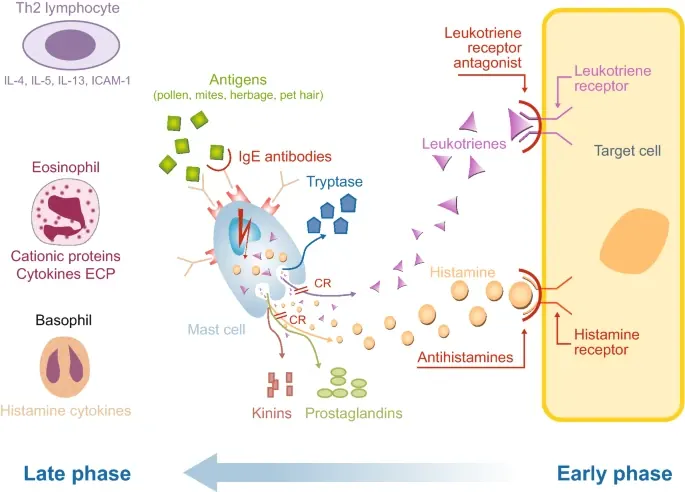
Allergic rhinitis is an IgE-mediated type I hypersensitivity:
- Sensitisation: in a genetically predisposed person, dendritic cells in the nasal lining present allergen proteins to T helper 2 (Th2) cells. These release interleukins 4, 5 and 13, which drive B cells to make allergen-specific IgE. IgE binds to mast cells and basophils.
- Early phase (minutes): re-exposure to the allergen cross-links IgE on mast cells, which release histamine, leukotrienes, prostaglandins and proteases.
- Late phase (4 to 8 hours): cytokines attract eosinophils, basophils and Th2 cells into the nasal lining, causing ongoing swelling and congestion.
- Priming: repeated exposure makes the nose more sensitive, so smaller amounts of allergen, and even irritants such as smoke, trigger symptoms.
Why the symptoms happen
- Sneezing and itching result from histamine stimulating sensory nerves.
- Runny nose is caused by nerve reflexes increasing mucus gland secretion and by leaky blood vessels.
- Blocked nose results from widening of large venous spaces in the nasal lining and swelling, driven mainly by leukotrienes and the late phase.
- Itchy eyes and throat reflect the same reaction in nearby tissues.
- Tiredness and poor sleep come from nasal blockage, mouth breathing and inflammatory mediators.
Links with asthma
The nose and lungs share the same type of lining and immune processes, often described as the "united airway". Inflammation in the nose can make asthma harder to control, and treating rhinitis often improves asthma.
How treatment acts on the mechanism
Antihistamines block H1 receptors, relieving sneezing, itching and runny nose. Nasal steroid sprays reduce the late-phase inflammation and congestion and are the most effective treatment for persistent symptoms. Leukotriene receptor antagonists block leukotrienes. Decongestants shrink swollen blood vessels but cause rebound congestion if used for more than a few days. Allergen immunotherapy shifts the immune response away from Th2 and IgE, giving lasting benefit.
Types
- Seasonal allergic rhinitis (hay fever): pollen-related
- Perennial allergic rhinitis: year-round, often dust mites or pets
- Intermittent (symptoms less than 4 days a week or less than 4 weeks) or persistent
- Mild or moderate to severe, depending on the impact on sleep and daily life
- Occupational rhinitis
Signs and symptoms
- Sneezing, often in bouts
- Runny nose with clear discharge
- Blocked or stuffy nose
- Itchy nose, throat, roof of the mouth or ears
- Itchy, red, watery eyes
- Reduced sense of smell
- Headache and facial pressure
- Tiredness and poor concentration
- Snoring and disturbed sleep
- Worsening asthma symptoms in people with asthma
How it is diagnosed
- History of symptoms, timing, triggers and family history
- Examination of the nose, which may show pale, swollen lining
- Skin prick tests or blood tests for specific IgE to identify allergens
- Nasal endoscopy if symptoms are one-sided or there are nasal polyps
Possible complications
- Poorly controlled asthma
- Sinusitis
- Nasal polyps
- Ear problems such as glue ear in children
- Sleep disturbance, poor school performance and reduced quality of life
Goals of treatment
The goals are to control symptoms, improve sleep and daily functioning, and reduce effects on asthma.
Medicines
- Non-drowsy oral antihistamines (such as cetirizine, loratadine or fexofenadine)
- Nasal steroid sprays (such as fluticasone or mometasone), used daily during the season
- Antihistamine nasal sprays (such as azelastine), sometimes combined with a steroid
- Antihistamine eye drops for eye symptoms
- Saline nasal rinses
- Short courses of decongestant sprays only
- Montelukast in selected people with asthma
- Allergen immunotherapy as tablets under the tongue or injections, for severe pollen or dust mite allergy
Other treatments
- Allergen avoidance
- Saline nasal irrigation
- Correct nasal spray technique: head tilted slightly forward, aiming away from the middle of the nose
Living with it and prevention
- Check pollen forecasts and limit outdoor time when counts are high
- Keep windows closed in the morning and evening
- Wear wraparound sunglasses
- Shower and change clothes after being outdoors
- Use dust mite-proof bedding and wash bedding hot weekly
- Keep pets out of bedrooms
- Start nasal steroid sprays about two weeks before the pollen season
Monitoring and follow-up
Symptoms are reviewed if treatment is not working. People with asthma should have their asthma reviewed. Immunotherapy requires regular follow-up over three years.
Outlook
Allergic rhinitis is usually lifelong but can be well controlled. Symptoms may lessen with age. Immunotherapy can reduce symptoms for years after it is completed.
Special considerations
- Children: hay fever can affect exam performance; non-drowsy antihistamines are preferred
- Pregnancy: some treatments are preferred; check with a pharmacist
- People with asthma: good rhinitis control helps asthma control
- Drivers: avoid sedating antihistamines