Medical emergency? Call your local emergency number
First aid guides

Menu

Types of Headaches by Location: Causes and How to Treat Them

Types of Headaches by Location: Causes and How to Treat Them Signs & symptoms 4 min read
Not yet medically reviewed. This page has not been checked by a qualified medical reviewer. Use it for general education only and confirm anything important with a healthcare professional. Written by GeoMed Editorial Team. Last updated 24 October 2026.

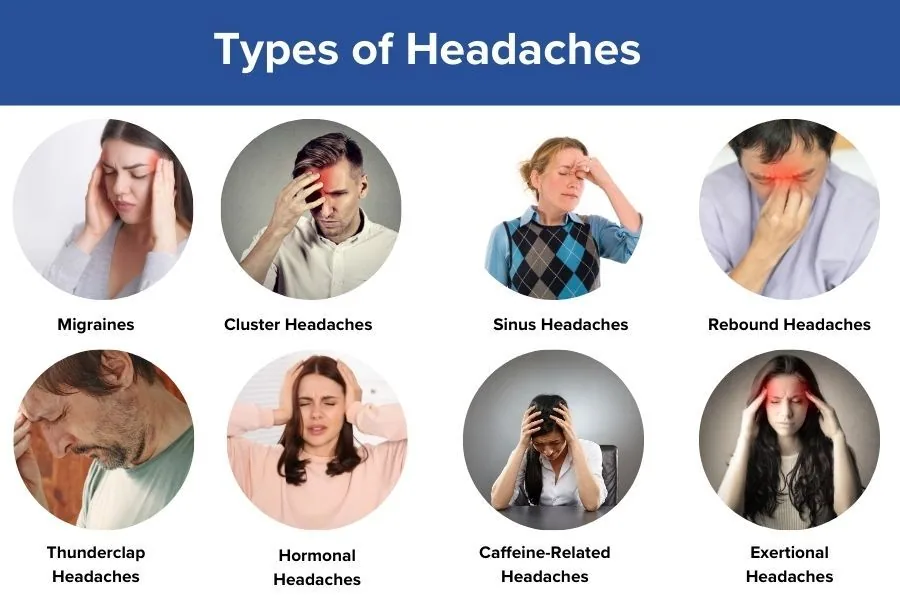
Headaches are among the most common health complaints, but they are not all created equal. While many people focus on how intense the pain is, where you feel the headache can often be just as important. The location of the pain in your head can give you valuable clues about the underlying cause whether it is stress, sinus issues, posture problems, or something more serious. Understanding this can help you treat the pain more effectively and avoid future episodes.

Forehead (Frontal Headaches)

Pain across the forehead or just above the eyebrows often points to tension headaches or sinus related issues. If it feels like a band tightening around your head, it is likely caused by stress, fatigue, or eye strain, especially from too much screen time. If the pain is more localized to the front of your face and comes with nasal congestion or facial pressure, it could be a sinus headache, often due to an infection or allergy. Staying hydrated, using a warm compress, and practicing deep breathing can help relieve the pressure in this area.

Temples (Temporal Headaches)

Pain on either side of your head, especially in the temple region, is often linked to tension headaches, jaw disorders (TMJ), or even migraines. This pain may feel throbbing or steady and can be triggered by emotional stress, clenching your jaw, or grinding your teeth. If it is one sided and pulsing, it may be a migraine, especially if you also feel nausea or sensitivity to light and sound. Managing stress, using a mouthguard at night, and taking breaks from screen use can often reduce this type of pain.

Back of the Head and Neck (Occipital Headaches)

When pain starts at the back of your head or travels up from your neck, it may be due to tension, poor posture, or cervicogenic headaches, which are headaches that originate from problems in the neck. This kind of pain is common in people who sit for long periods, especially with poor ergonomics. It may feel like a dull ache or a tight, pulling sensation. Gentle neck stretches, improving your posture, and using a supportive pillow can help ease this kind of discomfort.

Top of the Head (Crown Headaches)

Headaches that affect the very top of your head can feel strange and are often described as a weight pressing down. These are sometimes caused by tension headaches or nerve pain, such as from a compressed nerve in the neck. People who experience chronic stress or sleep issues may also feel pain in this area. Because it is not as common, it is important to track any other symptoms. Reducing stress, getting enough sleep, and using mindfulness techniques can reduce this type of headache.

One Side of the Head

Pain concentrated on one side of the head is a classic sign of a migraine or a cluster headache. Migraines typically cause throbbing pain that may last for hours or days and are often accompanied by visual disturbances, nausea, or sensitivity to light and sound. Cluster headaches, on the other hand, are more intense but shorter in duration, often coming in waves and focused around one eye. If this pain occurs frequently, medical evaluation is strongly recommended to rule out neurological causes. Identifying triggers such as certain foods, bright lights, or hormonal changes can help prevent them.

Behind the Eyes or Cheeks

If the pain feels like it is deep behind your eyes or in your cheekbones, sinus problems are likely the cause. These headaches often come with facial tenderness, congestion, and post nasal drip. They usually worsen when bending over or lying down. Allergies, colds, or sinus infections can lead to inflammation in these areas. Treating the sinus issue through nasal rinses, steam inhalation, or antihistamines can provide relief. If symptoms persist for more than a week or include fever, a doctor should evaluate for a possible infection.
Types of Headaches by Location: Causes and How to Treat Them

When to Seek Medical Advice

While most headaches are benign and treatable at home, certain signs mean you should see a doctor. These include sudden, severe headaches; headaches that get worse over time; or pain that is accompanied by neurological symptoms like numbness, confusion, or vision changes. Also, if your headache is different from your usual pattern or is triggered by coughing, exertion, or sneezing, it is wise to seek medical evaluation. Persistent headaches should never be ignored, especially if they interfere with your daily life.

Conclusion

Your head pain is not random its location can reveal a lot. By tuning in to where your headache starts and how it feels, you can begin to understand what is triggering it. This awareness empowers you to take smarter steps toward relief whether through posture changes, stress management, or medical care. Do not just dull the pain listen to what it is trying to tell you.
Image credits

  • Heading image: GeoMed

More Health articles

View all
What Science Says About Ignored Headaches and the Risk of Sudden Death Signs & symptoms

What Science Says About Ignored Headaches and the Risk of Sudden Death

Headaches are among the most common complaints in medicine, affecting nearly everyone at some point. Most people treat them as minor inconveniences, taking a painkiller and moving on. But in rare and alarming cases, headaches can be an early warning sign of life-threatening conditions. Some individuals experience recurring head pain, manage it with medication, feel better, and then shockingly suffer sudden medical collapse or death. What’s going on beneath the surface? Understanding the science behind serious headache causes can be life-saving.

4 min read
6 Ear Symptoms That Could Be Warning You About Serious Health Problems Signs & symptoms

6 Ear Symptoms That Could Be Warning You About Serious Health Problems

Your ears are more than just tools for hearing. They can actually offer early clues about what's going on inside your body. From cardiovascular problems to infections, certain changes in your ears can act like silent alarms, warning you before bigger health issues develop. Ignoring these signs could mean missing out on early treatment and prevention. In this article, we’ll break down six ear-related factors you should never overlook and what they might mean for your overall health.

4 min read
The Silent Warning Signs Your Kidneys Are Struggling Before a Stone Forms Signs & symptoms

The Silent Warning Signs Your Kidneys Are Struggling Before a Stone Forms

Here's a shocking reality: 90% of kidney function can be lost before you even notice symptoms. That's not a type your kidneys can be silently failing while you go about your daily routine, completely unaware that a health crisis is brewing beneath the surface. Most of us only think about our kidneys when the excruciating pain of a kidney stone hits. But what if I told you that your body has been sending you subtle warning signals long before that first stone ever forms? As someone who has spent years studying kidney health and patient outcomes, I've witnessed countless cases where early intervention could have prevented significant complications. The truth is, kidney stones aren't just random events that strike without warning. They're often the end result of a cascade of kidney function changes that your body has been desperately trying to communicate through whisper-quiet symptoms. Today, I want to share the critical early warning signs that most people miss and the actionable steps you can take to protect your kidney health before it's too late.

6 min read
The Pain That Feels Like Fire Starting Deep in Your Lower Back Could Be Kidney Stones Signs & symptoms

The Pain That Feels Like Fire Starting Deep in Your Lower Back Could Be Kidney Stones

One in eight people will experience a kidney stone at some point in their lives and those who've had one describe it as pain so intense it rivals childbirth. I'm not exaggerating. This isn't your typical backache or muscle strain. We're talking about a sensation that feels like someone is driving a hot poker through your side while twisting it. Hard. And the worst part? That excruciating pain might be just the beginning of your journey with kidney stones. Let me tell you something important: if you're reading this because you've felt that distinctive, radiating pain from your back to your groin, you're not alone. Recent research shows that the lifetime prevalence of renal colic That's the medical term for kidney stone pain affects a staggering 43% of adults at some point. Yes, you read that right. Nearly half of us will experience these symptoms! Nature

5 min read