
Overview
An asthma attack is a sudden worsening of asthma symptoms caused by tightening and swelling of the airways. Acute severe asthma is a serious attack that does not respond well to the usual reliever inhaler and can become life-threatening.
During an attack, people may struggle to breathe, wheeze, cough, feel tight in the chest and find it hard to speak in full sentences. Attacks are often triggered by colds and other viral infections, allergens, cold air, exercise or stopping preventer medicines. Most attacks can be managed at home with a reliever inhaler following an asthma action plan, but severe attacks need urgent hospital treatment. Every year, people die from asthma attacks that might have been prevented, so recognising warning signs and acting early is vital.
When to get urgent help
Call emergency services if:
- Your reliever inhaler is not helping
- You are too breathless to speak, eat or sleep
- Your lips or fingers are turning blue or grey
- You feel drowsy, confused or exhausted
While waiting: sit up, take one puff of the reliever every 30 to 60 seconds, up to 10 puffs, using a spacer if available, and repeat after 10 minutes if help has not arrived.
Causes and risk factors
- Viral respiratory infections, such as colds and flu: the most common trigger
- Allergens: pollen, house dust mites, pet dander, mould
- Irritants: cigarette smoke, air pollution, strong smells, fumes
- Cold air and sudden weather changes
- Exercise
- Stopping or not taking preventer inhalers
- Medicines: aspirin and NSAIDs in sensitive people, beta-blockers
- Emotional stress
- Risk factors for severe attacks: previous severe or near-fatal attacks, frequent reliever use, hospital admissions, poor adherence to preventers, smoking, and difficulty accessing care
How it develops (pathophysiology)
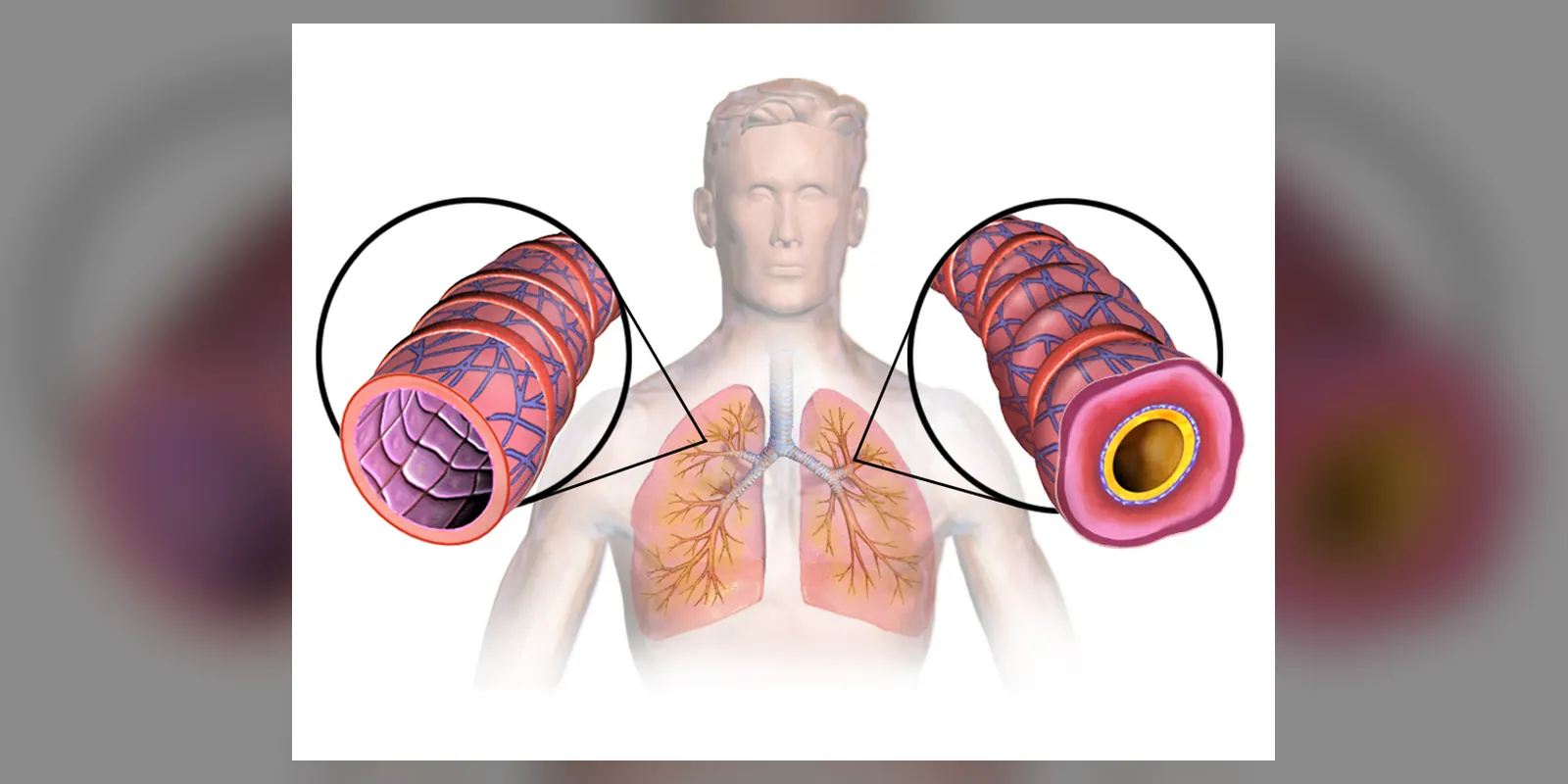
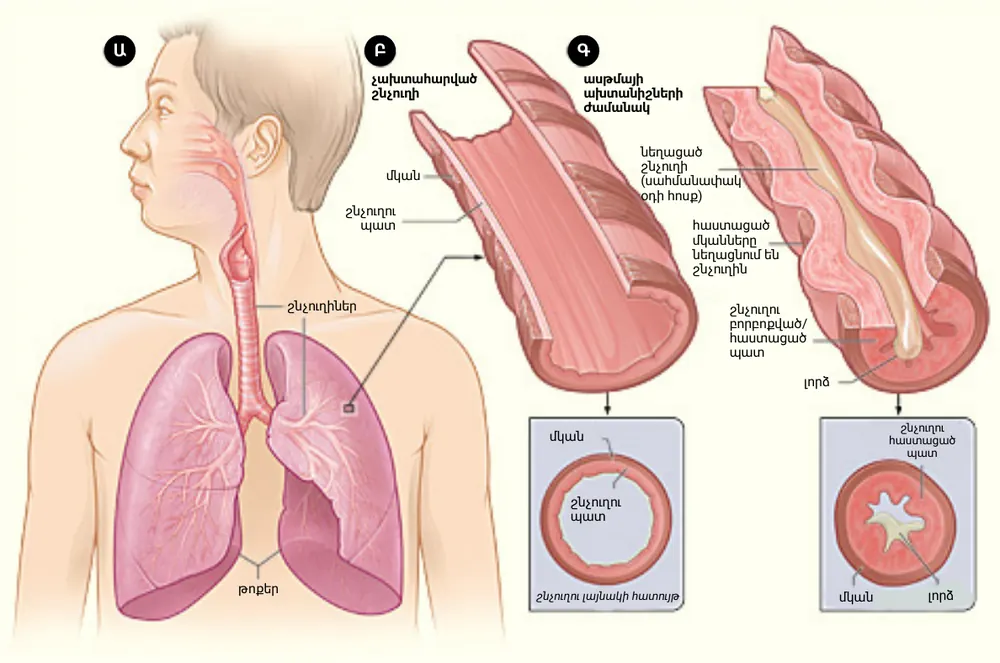
Normal airways
Air flows through the trachea and branching bronchi to reach the air sacs. The airway walls contain smooth muscle, mucus glands and a lining that clears particles. In healthy people, airways stay open with only minor changes in width.
What goes wrong in asthma
Asthma is a long-term condition in which the airways are inflamed and hyperresponsive, meaning they narrow too easily in response to triggers. During an attack:
- Trigger exposure: a virus, allergen or irritant activates immune cells in the airway lining.
- Early-phase reaction: mast cells release histamine, leukotrienes and prostaglandins, causing rapid smooth muscle contraction (bronchospasm).
- Late-phase inflammation: over hours, eosinophils, T helper 2 cells and other immune cells flood the airways, releasing cytokines (such as IL-4, IL-5 and IL-13) that cause swelling, more mucus and further narrowing. Viral infections also trigger neutrophilic inflammation.
- Mucus plugging: thick mucus blocks small airways.
- Airflow obstruction: narrowed airways increase resistance, especially when breathing out. Air becomes trapped in the lungs (hyperinflation).
What happens in a severe attack
- Ventilation-perfusion mismatch: some lung areas get blood but little air, so oxygen levels fall.
- Increased work of breathing: breathing muscles work harder against narrowed airways and an over-inflated chest.
- Early in the attack, rapid breathing lowers carbon dioxide.
- As the person tires, breathing becomes less effective and carbon dioxide rises. A normal or rising carbon dioxide level in a severe attack is a warning sign of exhaustion and impending respiratory failure.
- Silent chest: when airways are so narrow that little air moves, wheeze may disappear, a life-threatening sign.
Why the symptoms happen
- Wheeze results from turbulent airflow through narrowed airways.
- Breathlessness and chest tightness reflect airway narrowing and hyperinflation.
- Cough results from airway irritation and mucus.
- Difficulty speaking reflects severe breathlessness.
- Blue lips (cyanosis) indicate low oxygen.
- Drowsiness or confusion reflect rising carbon dioxide and low oxygen.
How treatment acts on the mechanism
Short-acting beta-2 agonists (such as salbutamol) relax airway smooth muscle within minutes. Ipratropium blocks nerve signals that tighten the airways. Corticosteroids (tablets or injections) suppress the inflammation that drives the late phase and prevent relapse. Magnesium sulphate relaxes smooth muscle in severe attacks. Oxygen corrects low oxygen. In life-threatening attacks, intensive care and ventilation support breathing.
Types
Attacks are graded by severity:
- Moderate: worsening symptoms, peak flow 50 to 75 percent of best
- Acute severe: peak flow 33 to 50 percent, unable to complete sentences, fast breathing and heart rate
- Life-threatening: peak flow below 33 percent, low oxygen, silent chest, exhaustion, confusion, blue lips
- Near-fatal: rising carbon dioxide or needing ventilation
Signs and symptoms
- Increasing wheeze, cough and chest tightness
- Breathlessness
- Reliever inhaler not helping or needed more than every four hours
- Difficulty speaking, eating or sleeping
- Fast breathing
- Fast heartbeat
- Feeling anxious or panicky
- Using neck and shoulder muscles to breathe
- Danger signs: blue or grey lips, exhaustion, confusion, drowsiness, a quiet chest
How it is diagnosed
- Assessment of symptoms and ability to speak
- Peak expiratory flow (PEF) compared with the person's best or predicted value
- Oxygen saturation with pulse oximetry
- Heart rate and breathing rate
- Arterial blood gas in severe or life-threatening attacks
- Chest X-ray if pneumothorax, infection or another cause is suspected
Possible complications
- Respiratory failure
- Pneumothorax (collapsed lung)
- Pneumonia
- Cardiac arrest
- Death
Goals of treatment
The goals are to rapidly open the airways, correct low oxygen, reduce inflammation, prevent relapse and identify why the attack happened.
Medicines
- Salbutamol (reliever), given by inhaler with spacer or nebuliser, repeatedly if needed
- Ipratropium bromide by nebuliser in severe attacks
- Oral prednisolone or intravenous hydrocortisone
- Intravenous magnesium sulphate for severe attacks
- Oxygen to maintain safe oxygen levels
- Intravenous bronchodilators in intensive care
- Antibiotics only if bacterial infection is suspected
Other treatments
- Sitting upright and staying calm
- Hospital admission for severe attacks
- Intensive care, with non-invasive or invasive ventilation, if needed
- Review of the asthma action plan and inhaler technique before discharge
Living with it and prevention
- Use preventer inhalers every day as prescribed
- Follow a written asthma action plan
- Check inhaler technique regularly
- Avoid known triggers and smoke
- Get yearly flu vaccination and other recommended vaccines
- Seek help early when symptoms worsen
- Attend a review within 48 hours after an attack, and an annual asthma review
Monitoring and follow-up
After an attack, people should see their GP or asthma nurse within two working days. Peak flow monitoring helps track recovery. Frequent attacks need review of treatment, including consideration of specialist care or biologic medicines.
Outlook
Most asthma attacks respond well to treatment. Good long-term control greatly reduces the risk of future attacks. Deaths from asthma are often preventable.
Special considerations
- Children: attacks are common with viral infections; parents need clear action plans
- Pregnancy: asthma control is important for mother and baby; treatments are safe
- People with previous near-fatal attacks: need close specialist follow-up
- Older adults: may have coexisting COPD or heart disease