
Overview
Anal warts (condylomata acuminata) are small, soft growths that appear around or inside the anus. They are caused by certain low-risk types of the human papillomavirus (HPV), mainly types 6 and 11, and are one of the most common sexually transmitted infections.
Warts may be single or clustered, flat or raised, and can sometimes look like a cauliflower. They are often painless but may itch, bleed or cause discomfort. Anal warts are not dangerous in themselves, but they can be embarrassing and tend to come back. Treatment removes visible warts, and HPV vaccination prevents most cases.
Many people with HPV never develop warts, and warts may appear weeks, months or even years after infection, so it is often impossible to know when or from whom the infection came. Having warts does not mean a partner has been unfaithful.
When to get urgent help
See a doctor promptly if warts bleed heavily, grow rapidly, become painful, or look different from usual.
Causes and risk factors
- HPV types 6 and 11, spread by skin-to-skin contact during sex, including anal, vaginal and oral sex
- Spread can occur even without penetration and from partners without visible warts
- Risk factors: unprotected sex, multiple sexual partners, weakened immunity (HIV, transplant), smoking
- Rarely, spread from mother to baby during birth, or from hands
How it develops (pathophysiology)
Normal skin and HPV
The skin and anal lining are covered by layers of epithelial cells. New cells form in the bottom (basal) layer and move upwards as they mature. HPV infects only epithelial cells.
What goes wrong
- Entry: HPV enters through tiny breaks in the skin or lining and infects basal cells.
- Latency: the virus can remain hidden in basal cells for weeks to months, which explains why warts can appear long after exposure.
- Viral replication: as infected cells mature and move upwards, the virus uses them to make new viral particles. Viral proteins E6 and E7 push the cells to keep dividing.
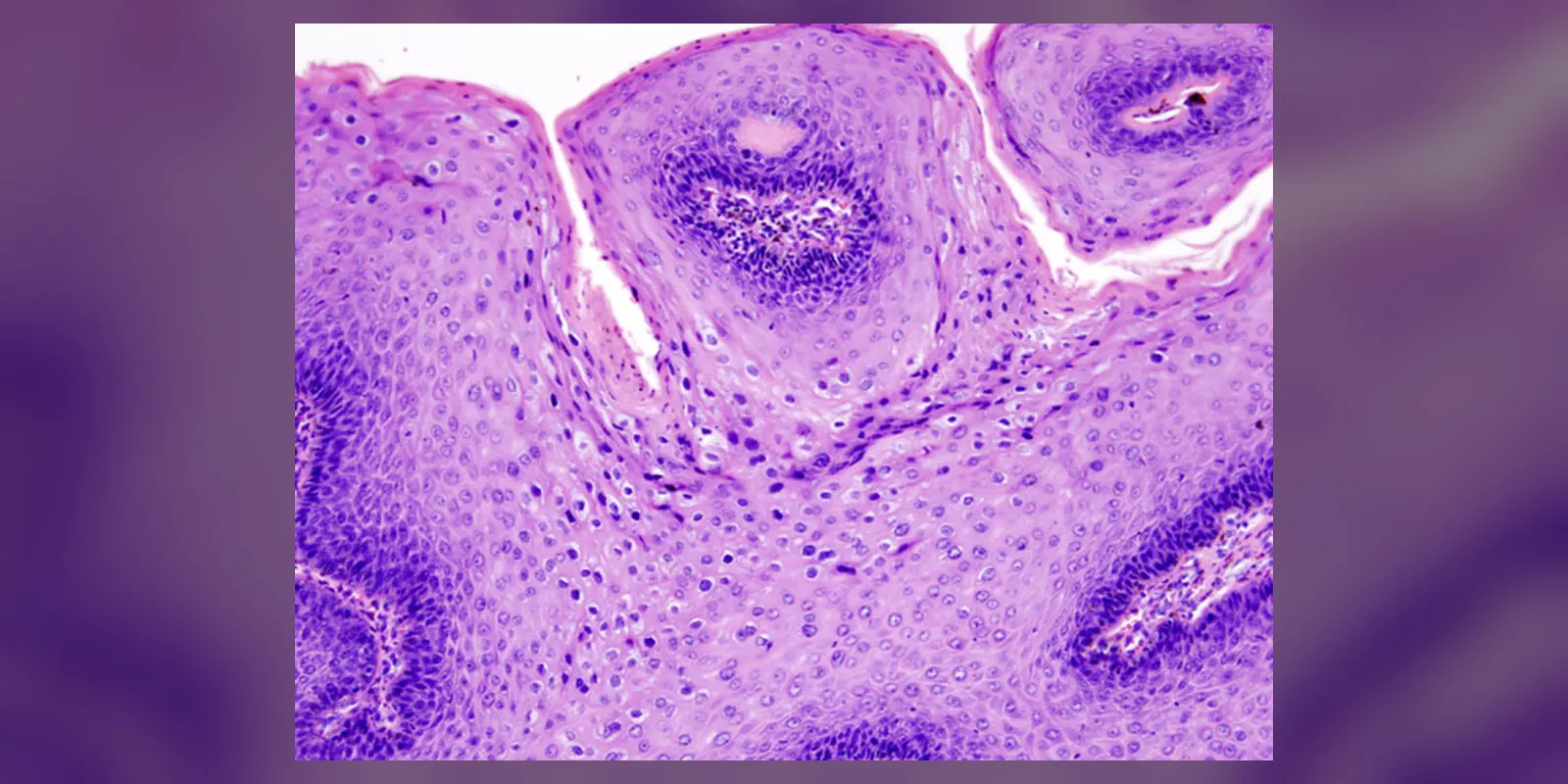
- Wart formation: excessive cell growth and thickening of the epithelium create a visible wart, often with a central blood vessel in each projection.
- Shedding: mature infected cells at the surface shed virus, allowing spread.
Low-risk types 6 and 11 do not integrate into the cell DNA, which is why they rarely cause cancer, unlike high-risk types such as HPV 16 and 18. However, people with anal warts may also have high-risk types.
Why the symptoms happen
- Visible lumps result from overgrowth of infected epithelium.
- Itching and irritation occur from moisture and friction.
- Bleeding happens when fragile warts are rubbed during wiping or sex.
- Discomfort may occur when warts become large.
How treatment acts on the mechanism
Treatments destroy infected cells or boost the immune response. Podophyllotoxin stops wart cells dividing. Imiquimod stimulates the immune system to attack infected cells. Cryotherapy freezes warts. Surgical removal or laser removes larger warts. The virus may remain in surrounding skin, so recurrence is common. HPV vaccination prevents infection with types 6 and 11.
The immune system plays a key role in controlling HPV. In most people, T cells eventually recognise infected cells and clear the warts. This is why warts often recur in the first months after treatment but become less frequent over time, and why people with weakened immunity tend to have more persistent and extensive warts.
Types
- External anal warts: on the skin around the anus
- Internal anal warts: inside the anal canal
- Warts may be flat, raised, cauliflower-like or pedunculated
Signs and symptoms
- Small bumps around or inside the anus
- Itching
- Bleeding, especially after wiping or sex
- A feeling of a lump or moisture
- Discomfort
- Often no symptoms at all
Warts are usually skin-coloured, pink or slightly darker than the surrounding skin. They can range from a few millimetres to larger clusters. Internal warts may cause a feeling of a lump or difficulty keeping the area clean.
How it is diagnosed
- Examination of the anal and genital area
- Proctoscopy to look for internal warts
- Biopsy if the diagnosis is unclear, warts are unusual, or do not respond to treatment
- Testing for other sexually transmitted infections, including HIV
Possible complications
- Recurrence
- Spread to sexual partners
- Discomfort and psychological distress
- Rarely, in people with weakened immunity, giant warts or coexisting high-risk HPV pre-cancer
Goals of treatment
Treatment aims to remove visible warts, relieve symptoms, reduce spread and identify any coexisting conditions.
Medicines
- Podophyllotoxin cream or solution
- Imiquimod cream
- Sinecatechins ointment in some countries
- Some treatments are not suitable for internal warts or in pregnancy
Home treatments are applied in cycles, for example a few days on and a few days off, over several weeks. They may cause redness, soreness or burning of the skin. Over-the-counter wart treatments for hands and feet should not be used on the anal or genital area.
Other treatments
- Cryotherapy (freezing)
- Surgical excision
- Electrocautery or laser treatment
- Trichloroacetic acid application in clinics
Living with it and prevention
- HPV vaccination, which prevents most anal and genital warts
- Condoms, which reduce but do not eliminate risk
- Fewer sexual partners
- Not smoking
- Avoid sex while warts are being treated
Partners should be offered a sexual health check. Avoid sharing towels during treatment, and wash hands after applying creams.
Monitoring and follow-up
People are reviewed after treatment to check for clearance and recurrence. People with HIV or other immune problems may need anal cancer screening.
Outlook
Treatment removes visible warts in most people, but recurrence is common in the first few months. Over time, the immune system often clears the virus.
Special considerations
- Pregnancy: warts may grow; some treatments are avoided; cryotherapy is often used
- People living with HIV: warts may be more extensive and harder to treat
- Children: anal warts need careful assessment, including for safeguarding concerns