
Overview
Alcoholic liver disease (also called alcohol-related liver disease) is damage to the liver caused by drinking too much alcohol over many years. It is one of the most common causes of liver disease and liver-related death worldwide.
The disease usually progresses through stages:
- Alcoholic fatty liver (steatosis): fat builds up in the liver; this is very common in heavy drinkers and usually reversible
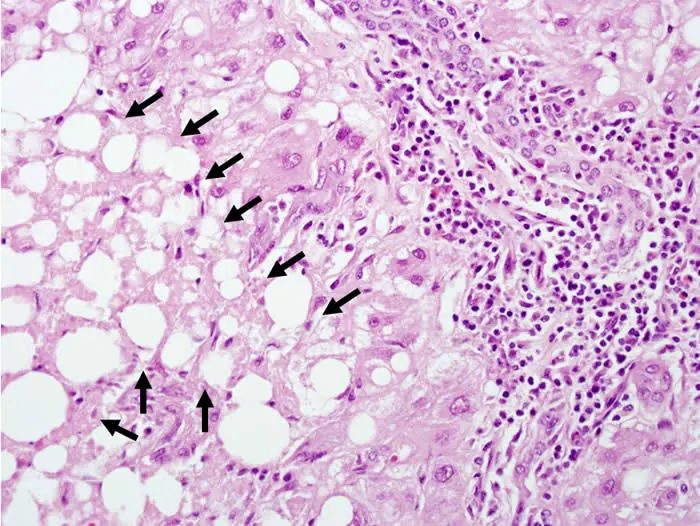
- Alcoholic hepatitis: inflammation and liver cell damage, which can range from mild to life-threatening
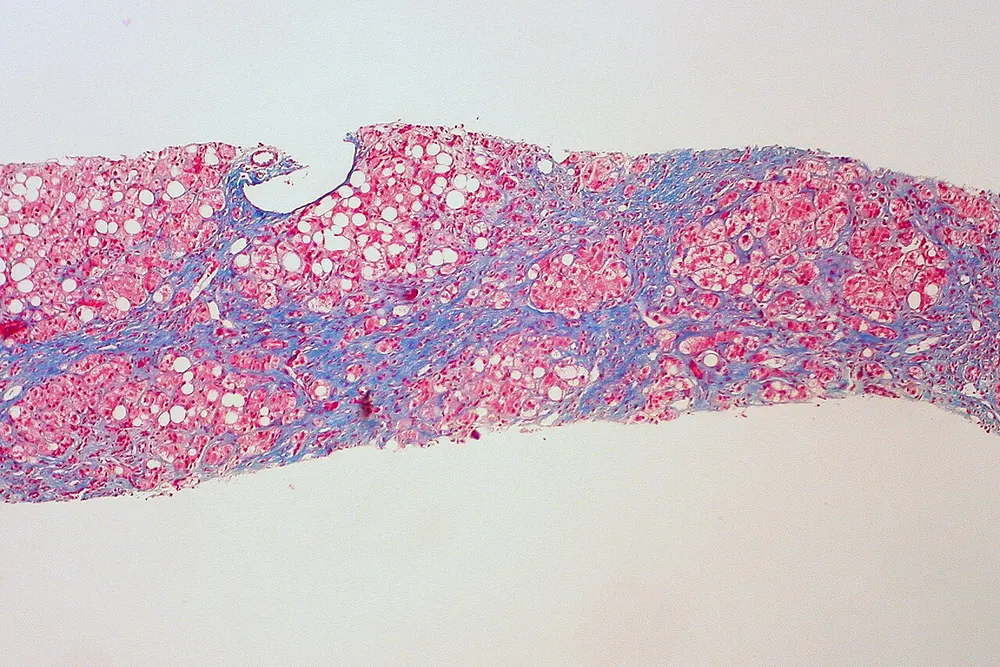
- Cirrhosis: permanent scarring of the liver, which can lead to liver failure and liver cancer
Many people have no symptoms until the disease is advanced. Stopping drinking is the most important treatment at every stage. Even in cirrhosis, stopping alcohol improves survival and can prevent further damage. For selected people with end-stage disease who have stopped drinking, liver transplantation is possible.
When to get urgent help
Seek emergency care immediately for:
- Vomiting blood or passing black, tarry stools
- Confusion, extreme drowsiness or behaviour changes
- Severe abdominal pain or fever with a swollen abdomen
- Rapidly worsening jaundice
- Very little urine output
Causes and risk factors
Alcoholic liver disease is caused by long-term heavy drinking. Risk increases with the amount and duration of drinking. Factors that increase risk include:
- Drinking pattern: daily drinking and binge drinking
- Female sex: women develop liver damage at lower levels of alcohol
- Obesity and metabolic syndrome
- Genetic factors, such as variants in the PNPLA3, TM6SF2 and MBOAT7 genes
- Other liver conditions: viral hepatitis B or C, haemochromatosis
- Smoking
- Poor nutrition
Not everyone who drinks heavily develops severe liver disease, which reflects the role of genetics and other factors.
How it develops (pathophysiology)
Normal liver function and alcohol metabolism
The liver is the body's main metabolic organ. Its cells, hepatocytes, process nutrients, make proteins such as albumin and clotting factors, store glucose as glycogen, produce bile and detoxify drugs and toxins. Blood flows through tiny channels called sinusoids, lined by specialised cells:
- Kupffer cells: liver macrophages that remove bacteria and toxins arriving from the gut
- Hepatic stellate cells: in the space between sinusoids and hepatocytes, which normally store vitamin A
- Sinusoidal endothelial cells: with small pores (fenestrations) that allow exchange between blood and hepatocytes
Most alcohol is broken down in hepatocytes:
- Alcohol dehydrogenase (ADH) converts ethanol to acetaldehyde, generating NADH.
- Aldehyde dehydrogenase (ALDH) converts acetaldehyde to acetate, also generating NADH.
- With heavy drinking, the CYP2E1 enzyme system is induced, metabolising more alcohol but producing reactive oxygen species (ROS).
What goes wrong
1. Fat accumulation (steatosis). Alcohol metabolism generates large amounts of NADH, shifting the liver's chemical balance (the NADH/NAD+ ratio). This:
- Inhibits fat breakdown (fatty acid beta-oxidation) in mitochondria
- Promotes fat production (lipogenesis), partly by activating the transcription factor SREBP-1c
- Reduces activity of PPAR-alpha, which normally stimulates fat burning
- Impairs export of fat from the liver as lipoproteins
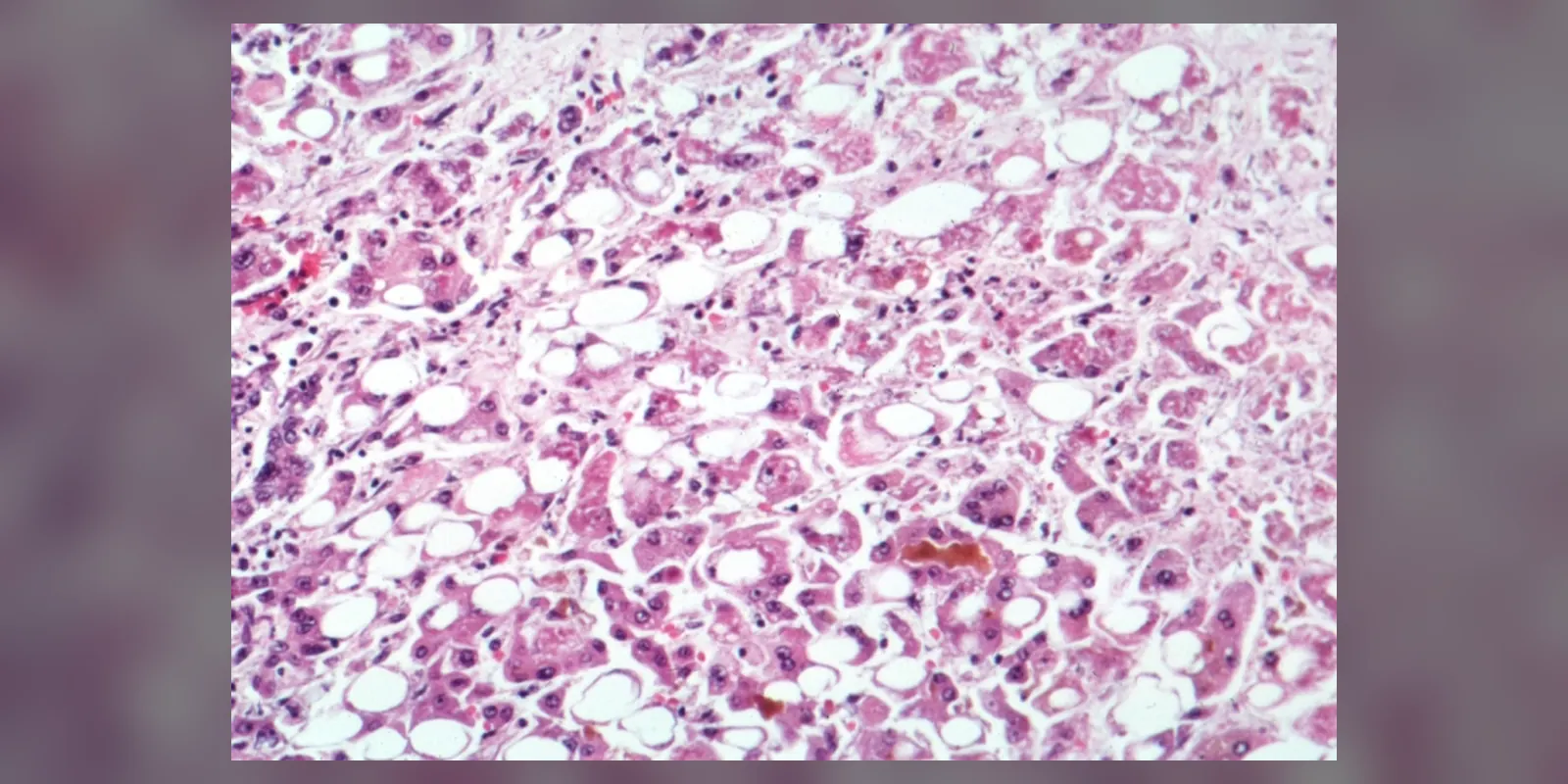
Fat droplets accumulate inside hepatocytes, mainly around the central veins (zone 3), where alcohol-metabolising enzymes are most concentrated and oxygen levels are lowest. Fatty liver develops within days to weeks of heavy drinking and is usually reversible within weeks of stopping.
2. Acetaldehyde toxicity. Acetaldehyde is highly reactive. It binds to proteins and DNA, forming adducts that:
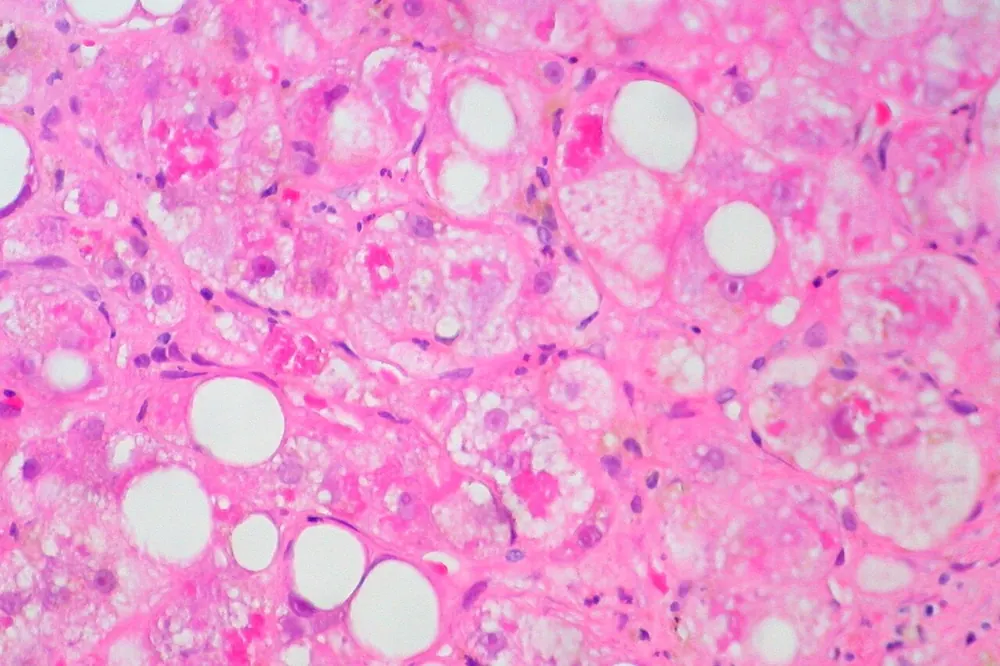
- Disrupt protein function, including microtubules needed for protein secretion, causing hepatocytes to swell (ballooning)
- Act as new antigens, triggering immune responses
- Damage mitochondria
- Damage DNA, contributing to cancer risk
3. Oxidative stress. CYP2E1 activity and damaged mitochondria generate reactive oxygen species. Alcohol also depletes the liver's main antioxidant, glutathione. Oxidative stress damages cell membranes (lipid peroxidation), proteins and DNA, and triggers cell death.
4. Gut-liver axis and inflammation. Alcohol damages the intestinal lining and loosens the tight junctions between gut cells, making the gut "leaky". It also changes the gut bacteria. Bacterial products, especially lipopolysaccharide (endotoxin), pass into the portal vein and reach the liver. There, they activate Kupffer cells through toll-like receptor 4 (TLR4), which release inflammatory cytokines such as tumour necrosis factor alpha (TNF-alpha), interleukin-1 beta and interleukin-8. Interleukin-8 attracts neutrophils, which infiltrate the liver and damage hepatocytes. This inflammatory cascade drives alcoholic hepatitis.
5. Fibrosis. Repeated injury and inflammation activate hepatic stellate cells. Under the influence of signals such as transforming growth factor beta (TGF-beta), acetaldehyde and ROS, stellate cells lose their vitamin A stores and transform into myofibroblasts. These cells produce large amounts of collagen and other scar tissue. Scarring typically begins around the central veins and around individual hepatocytes, forming a "chicken-wire" pattern, before spreading to link different areas of the liver.
How the disease progresses
Alcoholic hepatitis features hepatocyte ballooning, Mallory-Denk bodies (clumps of damaged keratin proteins inside cells), neutrophil infiltration and fibrosis. Severe alcoholic hepatitis can cause liver failure, with jaundice, clotting problems and multi-organ dysfunction, often after a period of particularly heavy drinking.
Cirrhosis develops when extensive fibrosis divides the liver into nodules of regenerating hepatocytes surrounded by scar tissue. The normal structure of the liver is destroyed, with three main consequences:
- Liver failure: fewer functioning hepatocytes, so the liver cannot make proteins or clear toxins effectively
- Portal hypertension: scar tissue and contracted stellate cells increase resistance to blood flow through the liver, raising pressure in the portal vein. Blood is diverted through alternative channels (collaterals) in the oesophagus, stomach, rectum and abdominal wall
- Cancer risk: constant regeneration, inflammation and DNA damage increase the risk of hepatocellular carcinoma
Why the symptoms happen
- Tiredness, weakness and poor appetite reflect impaired liver function and malnutrition.
- Jaundice (yellow skin and eyes) occurs because the liver cannot process and excrete bilirubin.
- Swollen abdomen (ascites) develops because portal hypertension forces fluid out of blood vessels, low albumin reduces the ability to hold fluid in the blood, and the kidneys retain salt and water through activation of the renin-angiotensin-aldosterone system.
- Swollen legs reflect low albumin and fluid retention.
- Easy bruising and bleeding result from reduced clotting factor production and low platelets (because the enlarged spleen traps platelets).
- Vomiting blood or black stools occur when oesophageal or gastric varices, swollen veins caused by portal hypertension, rupture.
- Confusion, drowsiness and personality changes (hepatic encephalopathy) arise because the liver cannot clear ammonia and other toxins from the gut, which affect brain function.
- Spider veins (spider naevi) and red palms are due to altered hormone metabolism, particularly increased oestrogen.
- Breast enlargement in men and testicular shrinkage reflect hormonal changes.
- Itching results from bile salt accumulation.
- Fever and tender, enlarged liver occur in alcoholic hepatitis.
How complications develop
- Variceal bleeding: high portal pressure stretches thin-walled veins, which can rupture
- Ascites and spontaneous bacterial peritonitis: infection of ascitic fluid due to bacterial translocation from the gut
- Hepatorenal syndrome: kidney failure caused by severe blood vessel changes in advanced liver disease
- Hepatic encephalopathy
- Hepatocellular carcinoma
- Malnutrition and muscle wasting (sarcopenia)
- Infections due to immune dysfunction
How treatment acts on the mechanism
- Stopping alcohol removes the source of acetaldehyde, oxidative stress and inflammatory triggers. Fat clears, inflammation settles, and early fibrosis can partly reverse as stellate cells become inactive and scar tissue is broken down.
- Nutritional support replaces deficient vitamins (especially thiamine and folate) and protein, supporting liver regeneration and muscle mass.
- Corticosteroids (prednisolone) reduce inflammation in severe alcoholic hepatitis in selected patients.
- Beta-blockers (such as propranolol or carvedilol) reduce portal pressure, lowering bleeding risk from varices.
- Diuretics and salt restriction reduce ascites by counteracting fluid retention.
- Lactulose and rifaximin reduce ammonia production and absorption in the gut, treating encephalopathy.
- Liver transplantation replaces the scarred liver in end-stage disease.
Types
- Alcoholic fatty liver (steatosis)
- Alcoholic hepatitis: mild, moderate or severe
- Alcohol-related cirrhosis: compensated (no major complications) or decompensated (with jaundice, ascites, bleeding or encephalopathy)
Signs and symptoms
Early stages often have no symptoms. As the disease progresses, symptoms may include:
- Tiredness and weakness
- Loss of appetite and weight loss
- Nausea and vomiting
- Pain or discomfort in the upper right abdomen
- Yellowing of the skin and eyes
- Swollen abdomen and legs
- Easy bruising or bleeding
- Itchy skin
- Spider-like blood vessels on the skin
- Red palms
- Confusion, drowsiness or personality changes
- Vomiting blood or black, tarry stools
- Fever (in alcoholic hepatitis)
How it is diagnosed
- Alcohol history, using questionnaires such as AUDIT
- Blood tests: liver enzymes (AST is often higher than ALT), GGT, bilirubin, albumin, INR, full blood count and kidney function
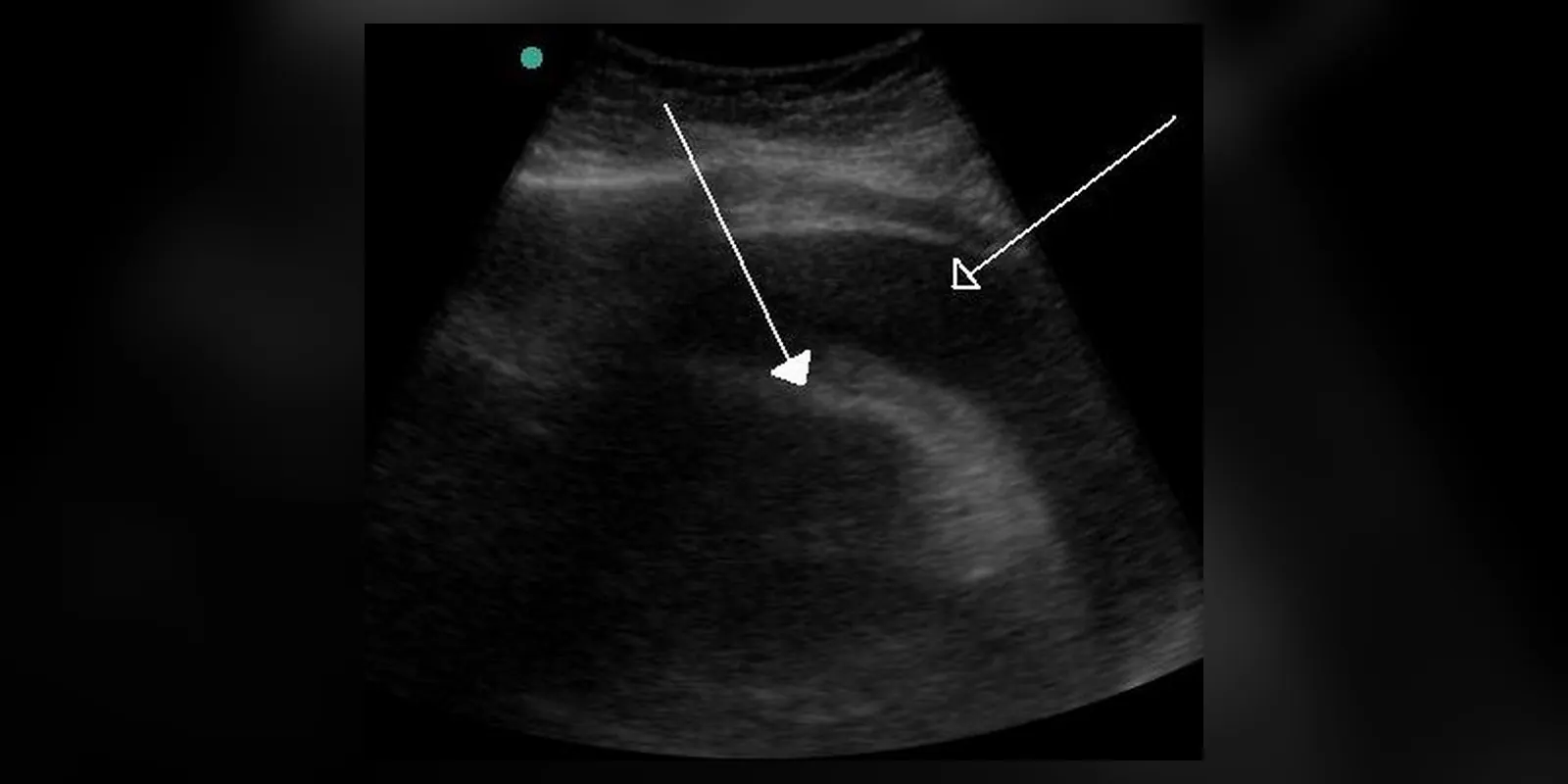
- Ultrasound of the liver to look for fat, cirrhosis, ascites and tumours
- Elastography (FibroScan) to measure liver stiffness and estimate scarring
- Blood fibrosis scores, such as ELF or FIB-4
- Endoscopy to check for varices in cirrhosis
- Liver biopsy occasionally, when diagnosis is uncertain
- Tests to exclude other causes, such as viral hepatitis
- Severity scores for alcoholic hepatitis, such as the Maddrey discriminant function or MELD score
Possible complications
- Variceal bleeding
- Ascites and infection of the ascitic fluid
- Hepatic encephalopathy
- Kidney failure (hepatorenal syndrome)
- Liver cancer
- Liver failure
- Malnutrition and muscle wasting
- Death
Goals of treatment
The goals are to stop alcohol use, allow the liver to recover where possible, prevent progression, treat complications, support nutrition and, when appropriate, assess for liver transplantation.
Medicines
- Medicines to help stop drinking, such as acamprosate or baclofen (naltrexone and disulfiram are generally avoided in significant liver disease)
- Managed alcohol withdrawal, with careful choice of benzodiazepine
- Thiamine and other vitamins
- Prednisolone for severe alcoholic hepatitis in selected patients
- Beta-blockers to prevent variceal bleeding
- Diuretics (such as spironolactone and furosemide) for ascites
- Lactulose and rifaximin for hepatic encephalopathy
- Antibiotics for infections
Other treatments
- Alcohol treatment services and psychological support
- Nutritional support, including high-protein diet and late-evening snacks
- Band ligation of varices during endoscopy
- Paracentesis to drain large volumes of ascites
- TIPSS (a shunt inside the liver) for refractory ascites or bleeding in some cases
- Liver cancer surveillance with ultrasound every six months in cirrhosis
- Liver transplantation for selected patients
Living with it and prevention
- Drink within recommended limits, or not at all
- Have several alcohol-free days each week
- Seek help early if you are worried about your drinking
- Get vaccinated against hepatitis A and B
- Maintain a healthy weight
- Stop smoking
If you have alcoholic liver disease:
- Stop drinking completely
- Eat a balanced diet with enough protein
- Limit salt if you have ascites
- Avoid NSAIDs and check all medicines and supplements with your doctor
- Attend regular check-ups
Monitoring and follow-up
People with cirrhosis need regular follow-up, including blood tests, liver scans every six months for cancer, endoscopy to check for varices, and monitoring for complications. Alcohol use is reviewed regularly to support abstinence.
Outlook
Fatty liver usually reverses within weeks of stopping alcohol. Alcoholic hepatitis can be severe, with a significant risk of death, especially in severe cases. Cirrhosis cannot be reversed, but stopping alcohol greatly improves survival and quality of life. Continued drinking leads to progressive liver failure.
Special considerations
- Women are more susceptible to liver damage from alcohol
- People with obesity or diabetes are at higher risk of rapid progression, as metabolic and alcohol-related damage add together
- Older adults may have more complications and medication interactions
- Liver transplant candidates usually need to demonstrate commitment to abstinence and engage with alcohol support