

Overview
Alcohol withdrawal is a group of symptoms that develop when someone who has been drinking heavily and regularly suddenly stops or significantly reduces their alcohol intake. Symptoms usually begin within 6 to 24 hours of the last drink and can range from mild anxiety, shakiness and sweating to severe complications such as seizures and delirium tremens (DTs), a medical emergency.
Alcohol withdrawal happens because the brain adapts to the constant presence of alcohol. When alcohol is removed, the brain becomes overexcited. It can occur in people with alcohol use disorder, but also in people who drink heavily every day without recognising they are dependent, and in hospital patients who stop drinking suddenly because they have been admitted for another reason.
With proper medical support, alcohol withdrawal can be managed safely. People who are dependent on alcohol should not stop suddenly without advice from a healthcare professional.
Many people are surprised to learn that alcohol withdrawal can be more dangerous than withdrawal from some other drugs. The severity is hard to predict without a proper assessment, which is why medical advice is important. Managed withdrawal, sometimes called detox, can be done safely at home for some people, while others need care in hospital.
When to get urgent help
Call emergency services immediately if someone withdrawing from alcohol:
- Has a seizure
- Becomes confused, disoriented or severely agitated
- Sees or hears things that are not there
- Has a high fever or very fast heartbeat
- Has severe vomiting and cannot keep fluids down
- Becomes very drowsy, unsteady or has eye movement problems
Causes and risk factors
Alcohol withdrawal occurs in people who are physically dependent on alcohol and:
- Stop drinking suddenly
- Significantly reduce the amount they drink
- Are admitted to hospital or prison and cannot access alcohol
- Become unwell and stop drinking due to illness or vomiting
Factors that increase the risk of severe withdrawal include:
- Long duration and high amount of daily drinking
- Previous episodes of severe withdrawal, seizures or delirium tremens (the "kindling" effect)
- Older age
- Other illnesses, such as infections, liver disease or injuries
- Low potassium, magnesium or sodium
- Use of other sedatives, such as benzodiazepines
- Drinking in the morning to relieve symptoms
How it develops (pathophysiology)
Normal balance of brain activity
The brain maintains a balance between inhibitory (calming) and excitatory (stimulating) signals:
- GABA (gamma-aminobutyric acid) is the main inhibitory neurotransmitter. It acts on GABA-A receptors, which open chloride channels and make neurons less likely to fire.
- Glutamate is the main excitatory neurotransmitter. It acts on several receptors, including NMDA receptors, which allow calcium and sodium into neurons, making them more likely to fire.
- Noradrenaline from the locus coeruleus in the brainstem increases alertness and activates the sympathetic nervous system.
- Dopamine in reward pathways influences motivation and, at high levels, can contribute to hallucinations.
What alcohol does to this balance
Alcohol acts as a central nervous system depressant:
- It enhances GABA-A receptor activity, increasing inhibition.
- It blocks NMDA glutamate receptors, reducing excitation.
The net effect is sedation, relaxation and, at higher doses, impaired coordination and consciousness.
Neuroadaptation with chronic drinking
When alcohol is present most of the time, the brain adapts to restore balance (homeostasis):
- GABA-A receptors become less sensitive: their number decreases and their composition changes (for example, fewer receptors containing the alpha-1 subunit and more containing alpha-4), so they respond less to both GABA and alcohol.
- NMDA receptors increase in number and sensitivity, particularly those containing the NR2B subunit, to overcome alcohol's blocking effect.
- Voltage-gated calcium channels increase.
- Noradrenaline activity rises.
These changes allow the person to function with alcohol in their system (tolerance), but the brain now depends on alcohol to maintain balance.
What happens during withdrawal
When alcohol is suddenly removed:
- The already reduced GABA inhibition loses alcohol's extra boost, so inhibition falls sharply.
- The upregulated NMDA receptors are no longer blocked, so glutamate excitation surges.
- Noradrenaline release increases, activating the sympathetic nervous system.
- Dopamine release increases, contributing to agitation and hallucinations.
- Neurons become hyperexcitable, with increased calcium entry that can damage cells (excitotoxicity).
This produces a state of central nervous system hyperexcitability and autonomic overactivity.
The kindling effect
Each episode of withdrawal can leave lasting changes in the brain, making future withdrawals more severe. This is called kindling. Repeated cycles of drinking and withdrawal are thought to progressively sensitise excitatory pathways, increasing the risk of seizures and delirium tremens with each episode. This is why a history of previous severe withdrawal is a strong predictor of future severe withdrawal.
Timeline of withdrawal
- 6 to 24 hours: minor withdrawal symptoms begin, including tremor, anxiety, sweating, nausea, headache and insomnia, as GABA inhibition falls and noradrenaline rises.
- 12 to 48 hours: withdrawal seizures may occur, usually generalised tonic-clonic, as neuronal hyperexcitability peaks. Alcoholic hallucinosis, with mainly visual or auditory hallucinations while the person is otherwise alert and oriented, may develop.
- 48 to 72 hours (up to 5 days): delirium tremens can develop in a minority, with confusion, disorientation, severe agitation, hallucinations, fever, sweating, rapid heart rate and high blood pressure.
- Symptoms usually peak at 24 to 72 hours and settle over five to seven days, although sleep disturbance, anxiety and low mood can persist for weeks to months (protracted withdrawal).
Why the symptoms happen
- Tremor ("the shakes") results from increased noradrenaline and neuronal excitability affecting motor pathways.
- Sweating, fast heart rate, high blood pressure and fever reflect overactivity of the sympathetic nervous system.
- Anxiety, restlessness and irritability arise from reduced GABA inhibition and increased noradrenaline in emotional circuits.
- Insomnia and vivid dreams reflect disrupted sleep regulation and rebound REM sleep.
- Nausea and vomiting are due to autonomic overactivity and gastric irritation.
- Seizures occur when excitation overwhelms inhibition in the cerebral cortex.
- Hallucinations may result from increased dopamine and disrupted sensory processing.
- Confusion and disorientation in delirium tremens reflect widespread brain dysfunction, worsened by fever, dehydration, electrolyte imbalance and infections.
How complications develop
Delirium tremens can lead to dehydration, electrolyte disturbances, dangerous heart rhythms, aspiration pneumonia, injury and death if untreated. Seizures can cause injuries and may progress to status epilepticus. Wernicke's encephalopathy may be triggered or unmasked, especially if glucose is given without thiamine, because thiamine is needed for glucose metabolism in brain cells. Low magnesium, potassium and phosphate increase seizure and arrhythmia risk. Refeeding syndrome may occur when nutrition is restarted in malnourished people.
How treatment acts on the mechanism
- Benzodiazepines (such as chlordiazepoxide, diazepam or lorazepam) act on GABA-A receptors at a different site from alcohol, restoring inhibition and calming hyperexcitability. Doses are gradually reduced over several days, allowing the brain to readjust.
- Thiamine replaces vitamin B1, protecting the brain from Wernicke's encephalopathy, and is given before glucose.
- Correcting magnesium, potassium and phosphate reduces seizure and arrhythmia risk.
- Fluids and nutrition treat dehydration and malnutrition.
- Antipsychotics may be added cautiously for severe hallucinations or agitation, but they lower the seizure threshold and are not used alone.
- Phenobarbital or other agents may be used in severe or benzodiazepine-resistant withdrawal in hospital.
Types
- Mild withdrawal: tremor, anxiety, sweating, nausea, insomnia
- Moderate withdrawal: more pronounced symptoms with marked autonomic overactivity
- Withdrawal seizures
- Alcoholic hallucinosis
- Delirium tremens: the most severe form
Signs and symptoms
- Shaking hands (tremor)
- Sweating
- Anxiety, restlessness and irritability
- Nausea, vomiting and loss of appetite
- Headache
- Fast heartbeat and high blood pressure
- Difficulty sleeping and nightmares
- Seeing, hearing or feeling things that are not there
- Seizures
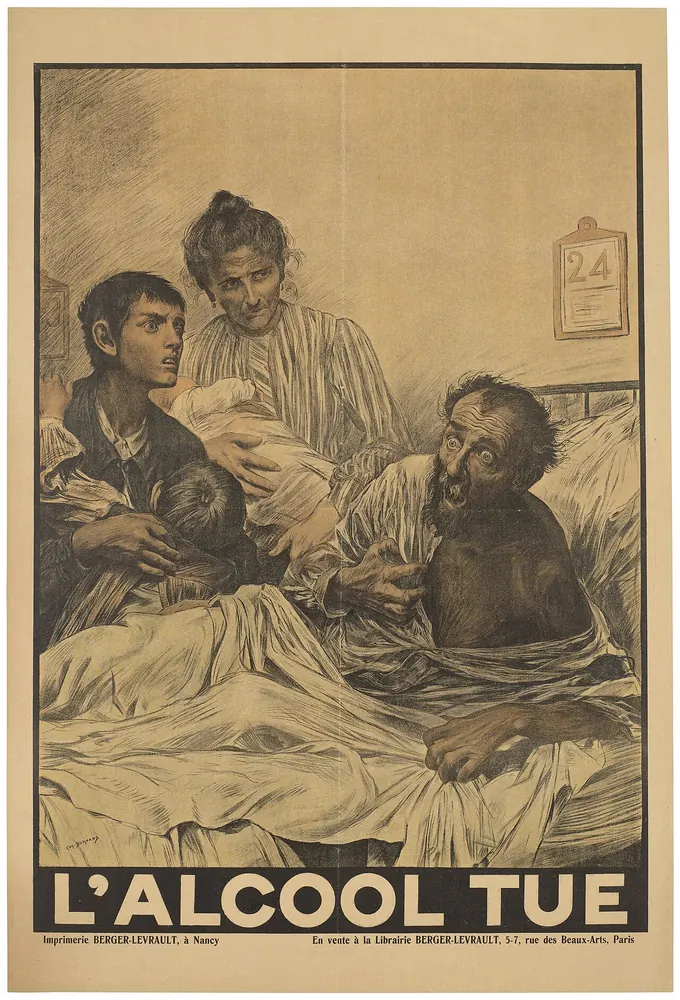
- Confusion, disorientation and severe agitation (delirium tremens)
- Fever
Symptoms are often worst in the early morning, after a night without drinking, and some people drink in the morning to relieve them. Hallucinations can involve seeing insects or small animals, feeling things crawling on the skin, or hearing voices. People with delirium tremens may not recognise familiar people or know where they are.
How it is diagnosed
- History of alcohol use, including amount, duration and time of last drink
- Previous withdrawal history, including seizures or delirium tremens
- Withdrawal severity scales, such as the CIWA-Ar, to guide treatment
- Blood tests: blood alcohol level, electrolytes (sodium, potassium, magnesium, phosphate), glucose, liver and kidney function, full blood count
- Assessment for infections, head injury, liver disease and other medical problems
- Brain scan if there is a head injury, focal neurological signs or an unusual pattern of symptoms
Possible complications
- Withdrawal seizures
- Delirium tremens
- Wernicke's encephalopathy
- Dehydration and electrolyte imbalances
- Heart rhythm problems
- Aspiration pneumonia
- Falls and injuries
- Death in severe untreated cases
Withdrawal can also worsen existing mental health conditions, and some people experience intense low mood or anxiety during and after withdrawal, which increases the risk of relapse.
Goals of treatment
The aims are to relieve symptoms safely, prevent seizures and delirium tremens, correct nutritional deficiencies, treat medical complications, and connect the person with ongoing support to prevent relapse.
Medicines
- Benzodiazepines in a reducing regimen or symptom-triggered approach using a withdrawal scale
- Thiamine given early, often by injection in people at high risk
- Electrolyte replacement: magnesium, potassium, phosphate
- Vitamins and nutritional support
- Anti-sickness medicines
- Antipsychotics cautiously for severe hallucinations
- Treatment of complications such as infections
Other treatments
- Community-based managed withdrawal for people at low risk with good support
- Inpatient managed withdrawal for those at high risk of complications, such as previous seizures or delirium tremens, serious medical or mental health conditions, or lack of support
- Quiet, calm, well-lit environment to reduce agitation
- Fluids and nutrition
- Referral to alcohol treatment services for ongoing recovery support
Living with it and prevention
- If you drink heavily every day, speak to a healthcare professional before stopping or cutting down
- Avoid stopping suddenly on your own if you have had withdrawal symptoms before
- Plan managed withdrawal with medical support
- Make a relapse prevention plan with alcohol services
- Tell hospital staff about your drinking if you are admitted, so withdrawal can be anticipated
Cutting down gradually under medical guidance may be suitable for some people who are not severely dependent. Keeping a drinking diary and agreeing a reduction plan with a healthcare professional can help.
Monitoring and follow-up
During withdrawal, symptoms, vital signs and withdrawal scores are checked frequently. After withdrawal, follow-up with alcohol services supports ongoing recovery, and relapse prevention medicines may be offered.
People at home during managed withdrawal are usually seen or contacted daily by a healthcare professional, and a family member or friend should stay with them for the first few days.
Outlook
Most people with mild to moderate withdrawal recover within a week with appropriate support. Delirium tremens is serious but has a much lower death rate when treated in hospital. Successful withdrawal is the first step, and ongoing support is needed to maintain recovery.
Special considerations
- Older adults: higher risk of severe withdrawal and complications; shorter-acting benzodiazepines may be preferred if liver function is poor
- People with liver disease: benzodiazepine choice and dosing need adjustment
- Pregnancy: withdrawal must be medically managed to protect mother and baby
- Hospital patients: unexpected withdrawal can complicate surgery or illness; screening for alcohol use on admission helps