Overview
Cervical cancer is largely preventable through vaccination and screening.
When to get urgent help
See a doctor promptly for abnormal vaginal bleeding.
Causes and risk factors
Long-lasting infection with high-risk human papillomavirus (HPV), smoking and weakened immunity.
How it develops (pathophysiology)
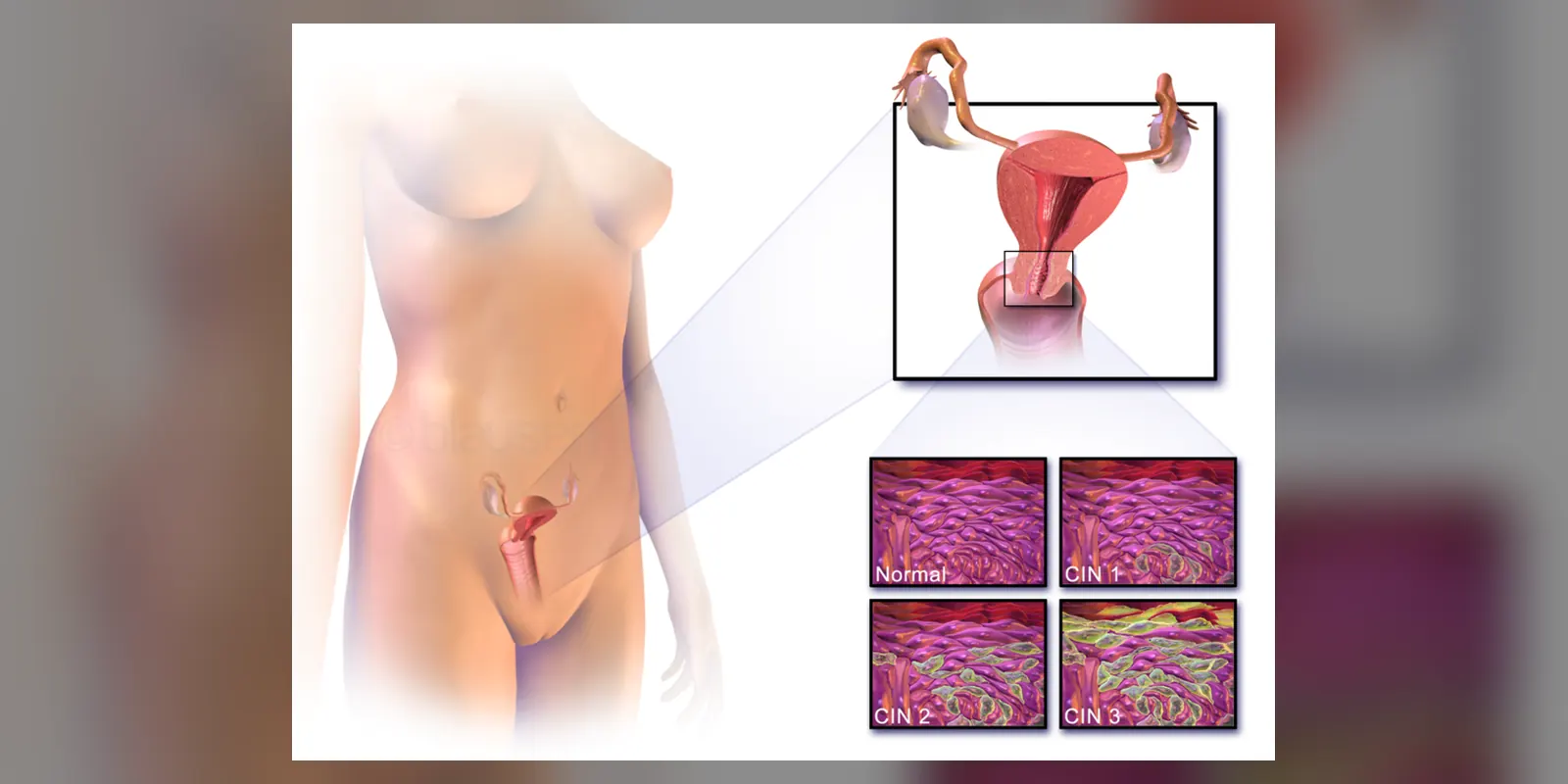
High-risk HPV inserts its genes into cervical cells. Viral proteins (E6 and E7) switch off the cell's tumour-suppressor proteins p53 and Rb, so damaged cells keep dividing. Over years, precancerous changes (CIN) can become invasive cancer.
Signs and symptoms
Bleeding after sex or between periods, unusual discharge and pelvic pain; early stages often have none.
How it is diagnosed
Screening tests, colposcopy, biopsy and scans.
Possible complications
Spread to nearby organs and infertility after treatment.
Medicines
Chemotherapy with radiotherapy and immunotherapy for advanced disease.
Other treatments
Surgery for early cancer; treatment of precancerous cells by LLETZ.
Living with it and prevention
HPV vaccination, regular screening and not smoking.
Outlook
Very good when found early.