
Overview
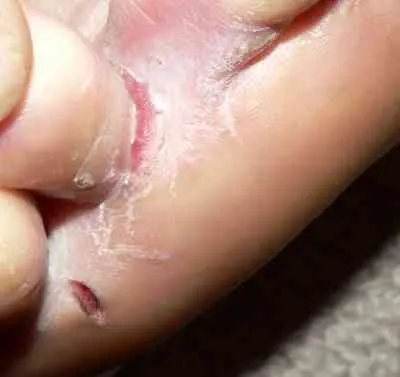
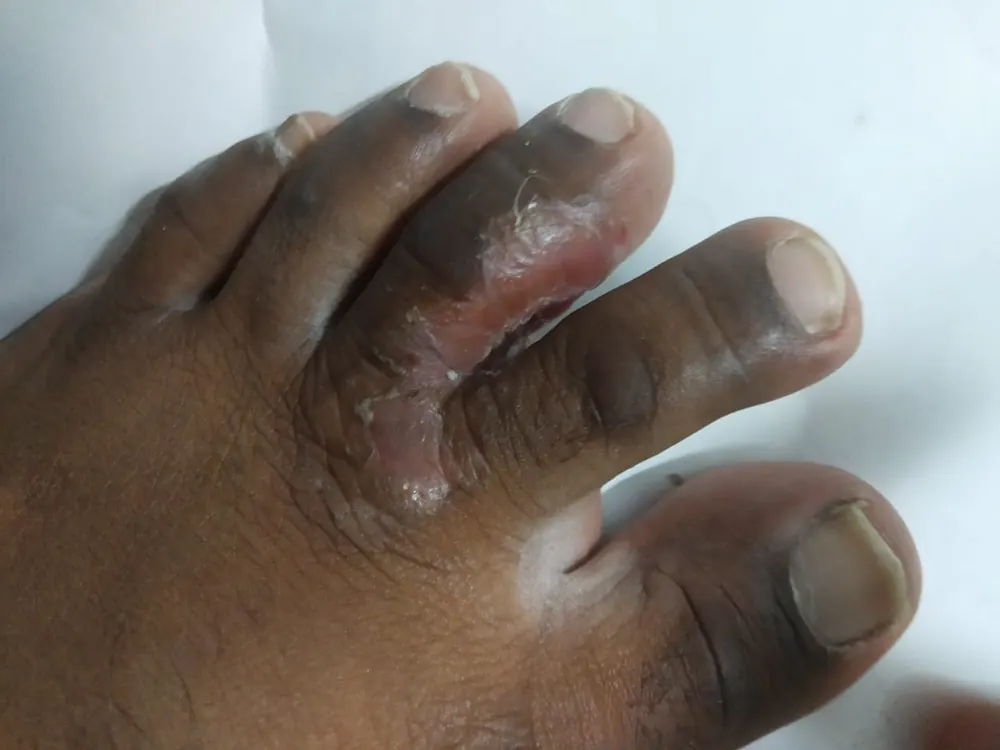
Athlete's foot, or tinea pedis, is a common fungal infection of the skin on the feet. It usually starts between the toes, causing itching, scaling, cracking and sometimes soreness. It can also affect the soles and sides of the feet and sometimes causes blisters.
It is called athlete's foot because it spreads easily in warm, moist places such as changing rooms, showers and swimming pools, and thrives in sweaty feet inside closed shoes. It affects up to one in five adults at any time. Athlete's foot is not serious and is easily treated with antifungal creams, sprays or powders, but it often comes back and can spread to the toenails, groin or hands if not treated.
Despite its name, anyone can get athlete's foot, and many people have it without realising, mistaking it for dry skin. Treating it early stops it spreading to the toenails, where it is much harder to clear.
When to get urgent help
See a doctor promptly if your foot becomes very red, hot, swollen or painful, you have a fever, or you have diabetes and develop any break in the skin.
Causes and risk factors
- Dermatophyte fungi, most commonly Trichophyton rubrum, Trichophyton interdigitale and Epidermophyton floccosum
- Spread by direct contact with infected skin or contaminated floors, towels, socks and shoes
- Risk factors:
- Sweaty feet and tight, non-breathable shoes
- Walking barefoot in communal areas
- Sharing towels or footwear
- Diabetes and poor circulation
- Weakened immune system
- Male sex and older age
- Existing fungal nail infection
How it develops (pathophysiology)
Normal skin defence
The outer layer of the skin, the stratum corneum, is made of dead cells filled with keratin and surrounded by lipids. It forms a barrier against microbes, is naturally slightly acidic, and constantly sheds, removing organisms on its surface. Sweat contains antimicrobial substances, and the skin's normal bacteria compete with harmful organisms.
What goes wrong
- Contact and adherence: dermatophyte spores (arthroconidia) from floors or other people attach to the skin, especially where it is moist and macerated.
- Germination: in warm, moist conditions, spores germinate into thread-like hyphae.
- Keratin digestion: dermatophytes produce keratinases and other enzymes that break down keratin, allowing them to invade and feed on the stratum corneum. They usually remain in the dead outer skin layer and do not invade living tissue.
- Immune response: fungal proteins trigger inflammation in the underlying skin, causing redness, itching and scaling. In some people, a strong immune reaction causes blisters.
- Chronic infection: T. rubrum has ways to dampen the immune response, which explains why some infections become long-lasting and dry.
- Secondary bacterial infection: cracks between the toes allow bacteria to enter, which can cause cellulitis, particularly in people with diabetes.
Why the symptoms happen
- Itching and burning reflect inflammation.
- White, soggy skin between the toes results from moisture and fungal breakdown of skin.
- Scaling and cracking reflect damage and rapid shedding of infected skin.
- Blisters result from a strong immune reaction.
- Unpleasant odour may result from bacteria in damaged skin.
How treatment acts on the mechanism
Antifungal creams such as terbinafine block the fungus's ability to make ergosterol, a key component of its cell membrane, killing it. Azoles (clotrimazole, miconazole) also block ergosterol production. Keeping feet dry removes the moist environment the fungus needs. Oral antifungals are used for extensive infection or when nails are affected.
Types
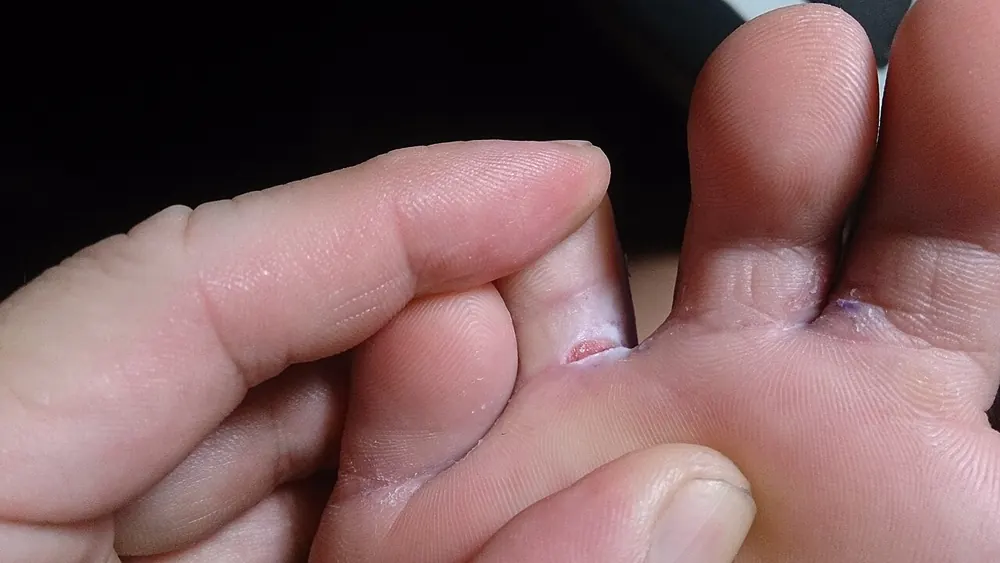
- Interdigital: between the toes, the most common form
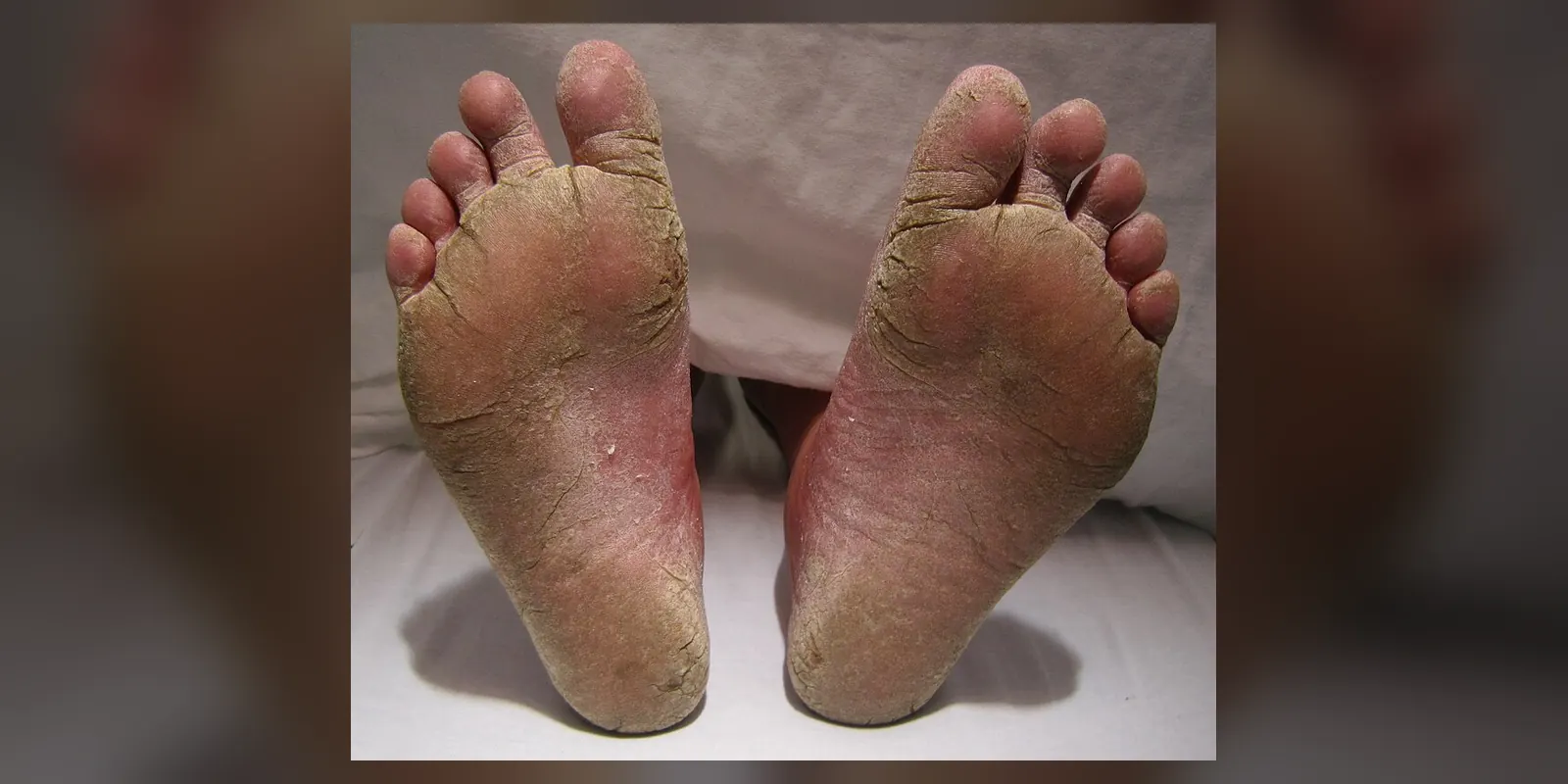
- Moccasin (chronic hyperkeratotic): dry, thickened, scaly skin over the sole and sides
- Vesiculobullous: blisters, usually on the instep
- Ulcerative: rare, with sores and secondary infection
Signs and symptoms
- Itchy, white, peeling skin between the toes
- Cracked, sore or flaky skin
- Redness and burning
- Dry, scaly skin on the soles or sides of the feet
- Small blisters
- Unpleasant smell
- Discoloured, thickened or crumbly toenails if the nails are infected
How it is diagnosed
- Examination of the feet, usually enough to diagnose
- Skin scrapings for microscopy and fungal culture if the diagnosis is unclear or treatment fails
- Nail clippings if nails are affected
Possible complications
- Fungal nail infection (onychomycosis)
- Spread to the groin (jock itch), hands or body
- Bacterial skin infection (cellulitis), especially in people with diabetes or poor circulation
- Allergic skin reaction elsewhere (id reaction)
- Recurrence
Goals of treatment
Treatment aims to clear the infection, relieve symptoms and prevent recurrence and spread.
Medicines
- Antifungal creams, sprays or powders: terbinafine, clotrimazole, miconazole or econazole
- Continue treatment for one to two weeks after the skin looks clear
- Oral antifungals such as terbinafine or itraconazole for severe infection, moccasin type or nail involvement
- Mild steroid cream combined with an antifungal for short periods if very inflamed
- Antibiotics for secondary bacterial infection
Other treatments
- Wash feet daily and dry carefully, especially between the toes
- Wear breathable shoes and cotton or moisture-wicking socks
- Change socks daily
- Alternate shoes to let them dry
- Use antifungal powder in shoes
Living with it and prevention
- Wear flip-flops in communal showers and changing rooms
- Do not share towels, socks or shoes
- Keep feet clean and dry
- Treat athlete's foot promptly to prevent spread to nails
- People with diabetes should check their feet daily
Monitoring and follow-up
Most infections clear within two to four weeks. Recurring infections may need longer treatment and treatment of nails and shoes.
Outlook
Athlete's foot usually clears with treatment, but recurrence is common unless feet are kept dry and preventive steps are followed.
Special considerations
- People with diabetes: higher risk of complications; prompt treatment and foot care are important
- Children: less common before puberty; other causes of foot rashes should be considered
- Older adults: more prone to nail involvement