
Overview
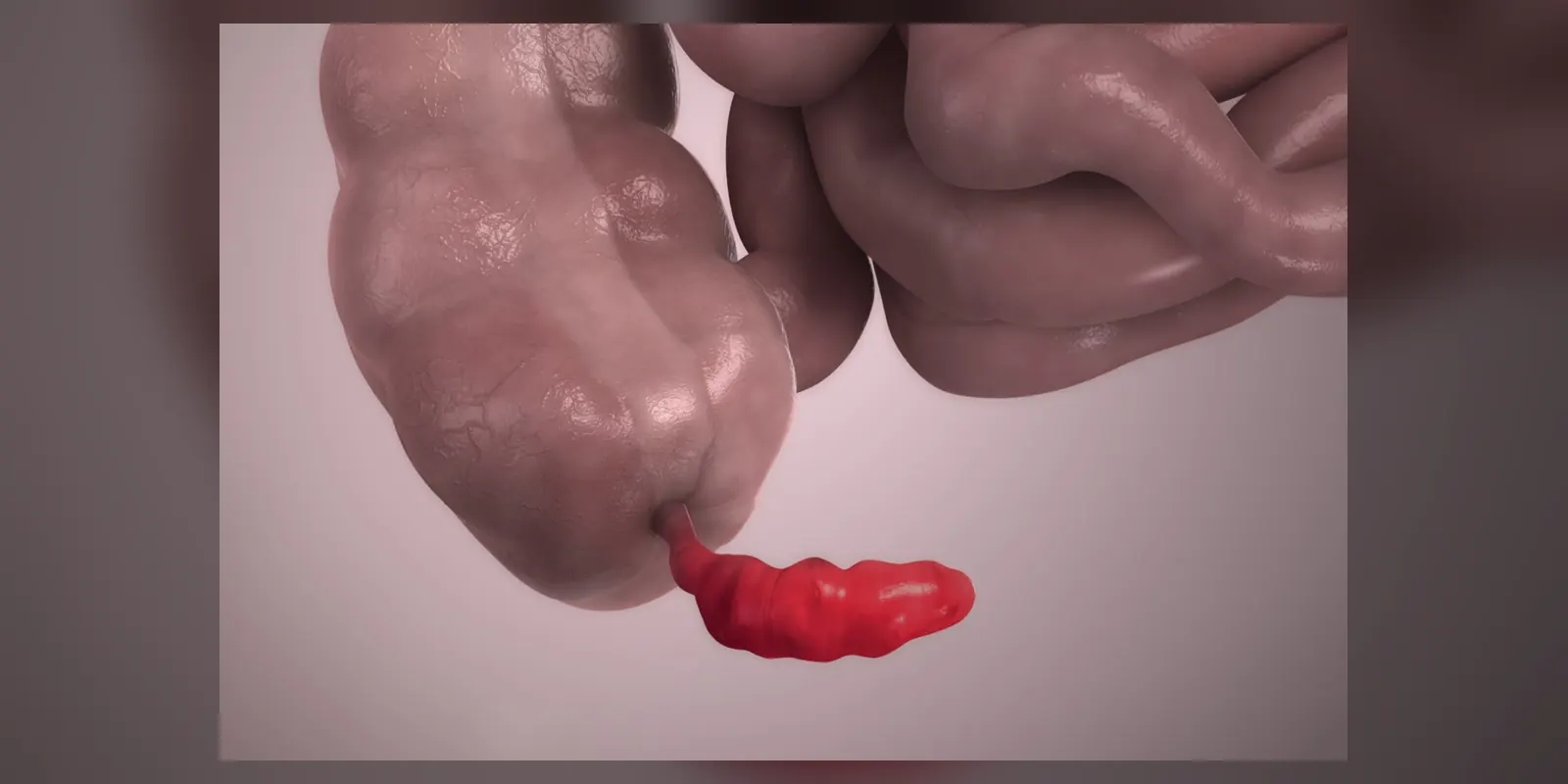
Appendicitis is inflammation of the appendix, a small finger-shaped pouch attached to the large bowel on the lower right side of the abdomen. It is one of the most common causes of sudden abdominal pain needing surgery, and can happen at any age, though it is most common between 10 and 30.
Pain typically starts around the belly button, then moves to the lower right side and becomes sharper and worse over hours. If untreated, the appendix can burst (perforate), spreading infection inside the abdomen, which can be life-threatening. Appendicitis is usually treated by removing the appendix (appendicectomy), often by keyhole surgery. Some people with uncomplicated appendicitis can be treated with antibiotics alone.
Anyone with worsening abdominal pain should be assessed promptly, because early treatment greatly reduces the risk of the appendix bursting and of a longer, more complicated recovery.
When to get urgent help
Seek emergency care for abdominal pain that worsens over hours, especially in the lower right side, pain with fever and vomiting, severe pain that makes it hard to move, or a hard, swollen abdomen.
Causes and risk factors
- Blockage of the appendix opening by:
- Hardened stool (faecolith)
- Swollen lymphoid tissue, often after infections
- Rarely, parasites, foreign bodies or tumours
- Infection
- Risk factors include age between 10 and 30 and a family history
How it develops (pathophysiology)
Normal appendix
The appendix is a narrow tube, about 5 to 10 cm long, opening into the caecum, the first part of the large bowel. Its wall contains lymphoid tissue, part of the immune system, and it continuously produces mucus that drains into the bowel.
What goes wrong
- Obstruction: the narrow opening of the appendix becomes blocked, most often by a faecolith or swollen lymphoid tissue.
- Pressure build-up: mucus continues to be produced, so pressure inside the appendix rises and it swells.
- Bacterial overgrowth: bacteria normally present in the bowel multiply in the trapped contents.
- Reduced blood flow: rising pressure compresses veins first, then arteries, so the appendix wall becomes short of oxygen (ischaemia).
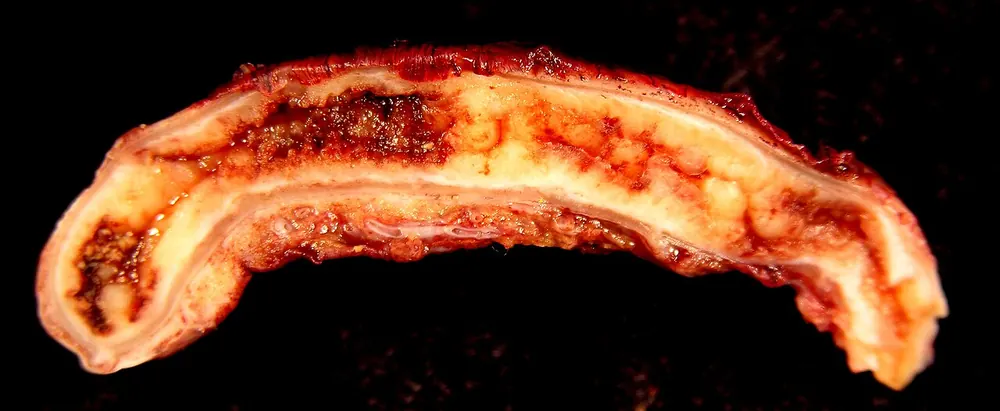
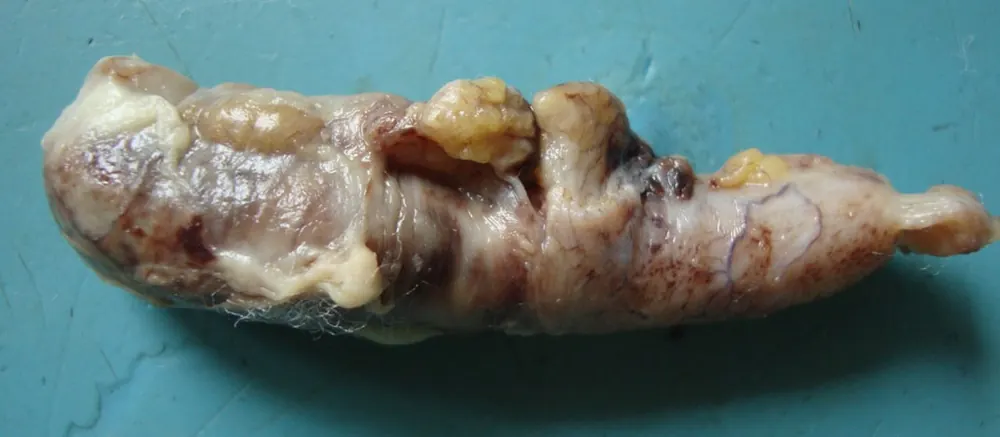
- Inflammation and infection: bacteria invade the damaged wall, causing inflammation, pus formation and tissue death (gangrene).
- Perforation: within 24 to 72 hours, the weakened wall may burst, releasing infected material into the abdomen. This can cause localised infection (abscess) if the body walls it off, or widespread infection (peritonitis).
Why the symptoms happen
- Pain starting around the belly button: early inflammation stimulates visceral nerves, which send vague signals perceived in the middle of the abdomen.
- Pain moving to the lower right abdomen: as inflammation reaches the outer surface of the appendix and irritates the lining of the abdominal wall (parietal peritoneum), pain becomes sharp and localised over the appendix (McBurney's point).
- Pain worse with movement, coughing or bumps: these move the inflamed peritoneum.
- Loss of appetite, nausea and vomiting: caused by inflammation and reduced bowel activity.
- Fever: reflects inflammation and infection.
- Sudden relief followed by worse pain: may indicate perforation.
The position of the appendix varies; if it lies behind the caecum or in the pelvis, pain may be felt in the back, side or groin, or cause urinary or bowel symptoms.
How treatment acts on the mechanism
Appendicectomy removes the inflamed organ, eliminating the source of infection. Antibiotics kill the bacteria, and in uncomplicated cases can settle inflammation without surgery, though recurrence is possible. Drainage treats abscesses after perforation.
Types
- Uncomplicated (simple) appendicitis
- Complicated appendicitis: gangrene, perforation, abscess or peritonitis
- Appendix mass: inflamed appendix wrapped by surrounding tissue
Signs and symptoms
- Pain starting near the belly button, moving to the lower right abdomen
- Pain worse when moving, walking, coughing or pressing on the area
- Loss of appetite
- Nausea and vomiting
- Mild fever
- Constipation or diarrhoea
- Feeling generally unwell
Children, older adults and pregnant women may have less typical symptoms.
How it is diagnosed
- History and examination: tenderness in the lower right abdomen, pain on releasing pressure (rebound tenderness)
- Blood tests: raised white cell count and CRP
- Urine test to rule out urinary infection and pregnancy test in women
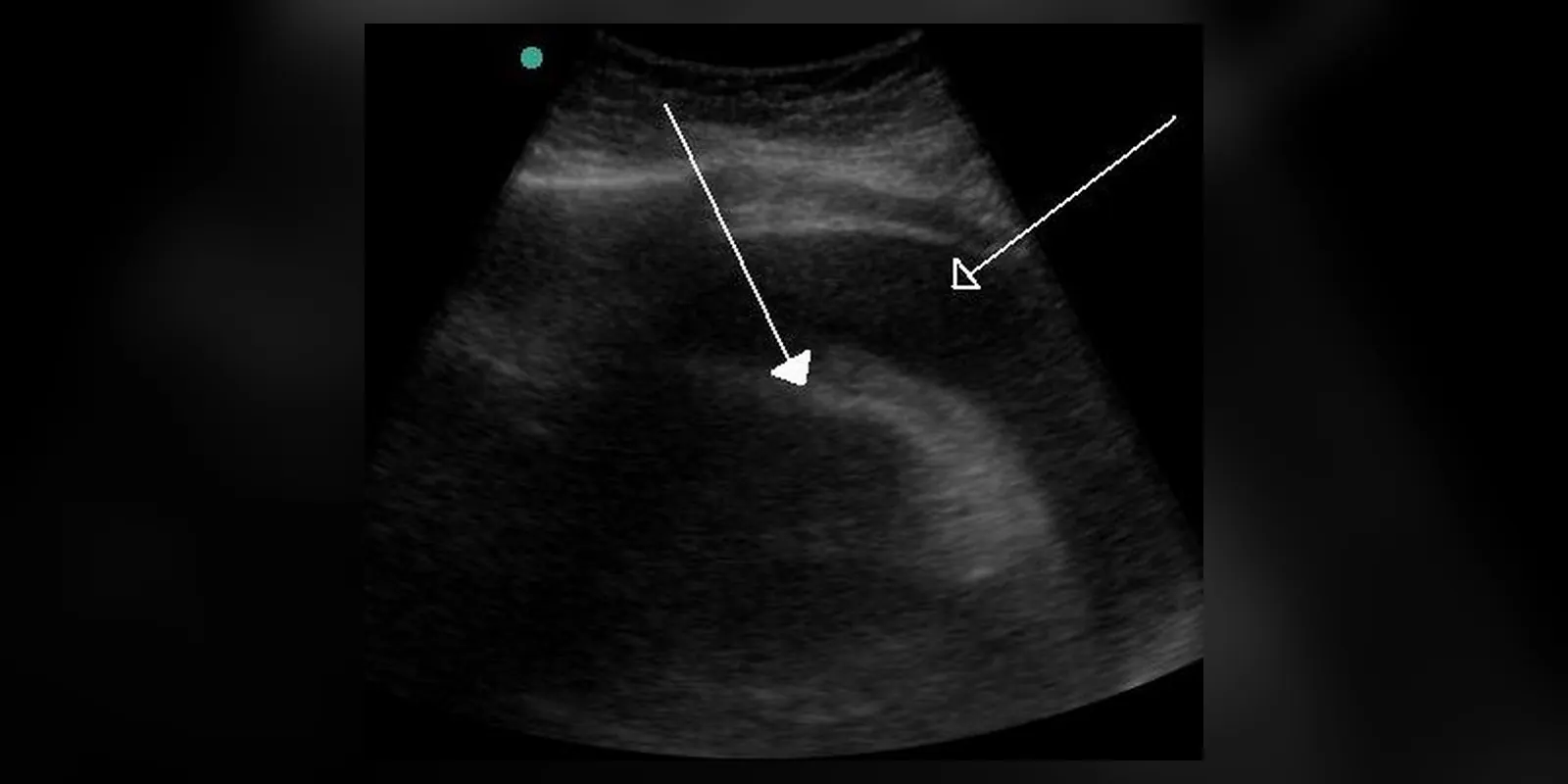
- Ultrasound, especially in children and pregnant women
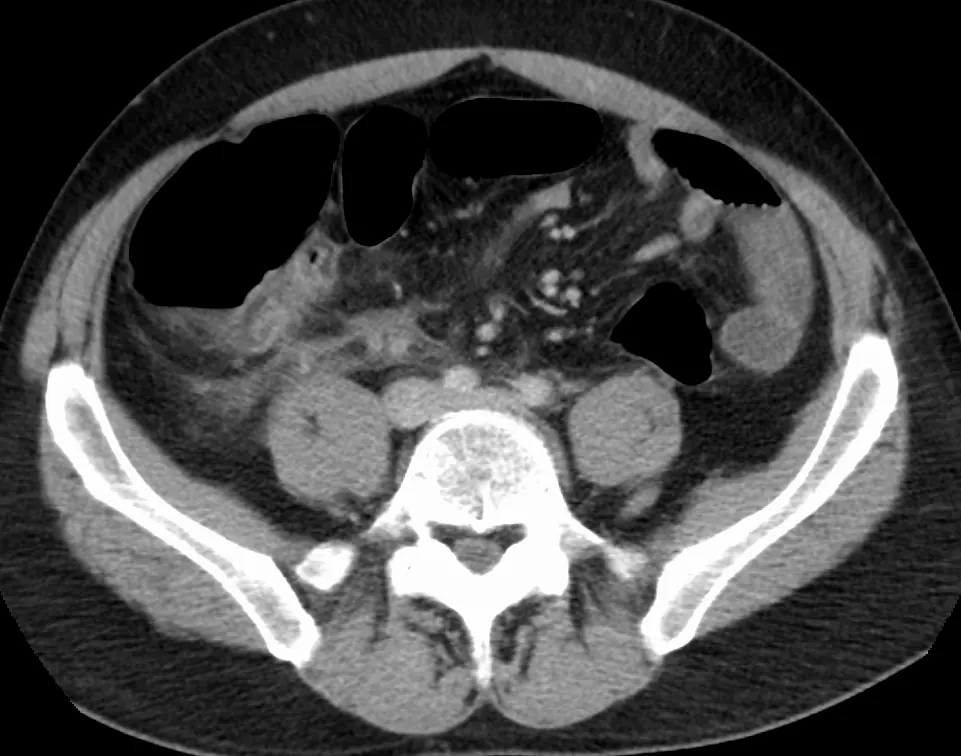
- CT scan in adults when the diagnosis is uncertain
- MRI in pregnancy if ultrasound is unclear
- Scoring systems, such as the Alvarado or AIR score
Possible complications
- Perforation
- Peritonitis
- Appendix abscess
- Sepsis
- After surgery: wound infection, abscess, bowel obstruction from adhesions
Goals of treatment
The goals are to remove or treat the inflamed appendix before it perforates, control infection and support a quick recovery.
Medicines
- Antibiotics, either alongside surgery or as the main treatment for selected uncomplicated appendicitis
- Pain relief
- Intravenous fluids
- Anti-sickness medicines
Other treatments
- Laparoscopic (keyhole) appendicectomy: the usual treatment
- Open appendicectomy in some cases
- Drainage of an abscess, sometimes followed by later appendix removal
- Non-operative management with antibiotics in carefully selected people
Living with it and prevention
Appendicitis cannot reliably be prevented. A diet high in fibre may reduce risk.
After surgery:
- Avoid heavy lifting for a few weeks
- Keep wounds clean
- Gradually return to normal activity
Monitoring and follow-up
After surgery, wounds are checked and people are advised to watch for signs of infection. Those treated with antibiotics are followed up because appendicitis can recur.
Outlook
Most people recover fully after appendicectomy within a few weeks. Perforated appendicitis takes longer to recover from but usually has a good outcome with treatment.
Special considerations
- Children: may struggle to describe pain; perforation is more common in young children
- Pregnancy: the appendix moves upwards as the womb grows, so pain may be higher
- Older adults: symptoms may be milder and perforation more common